
Committee advances dry-cleaner reforms, tourism definitions, oil-and-gas updates and other bills
Get AI-powered insights, summaries, and transcripts
Subscribe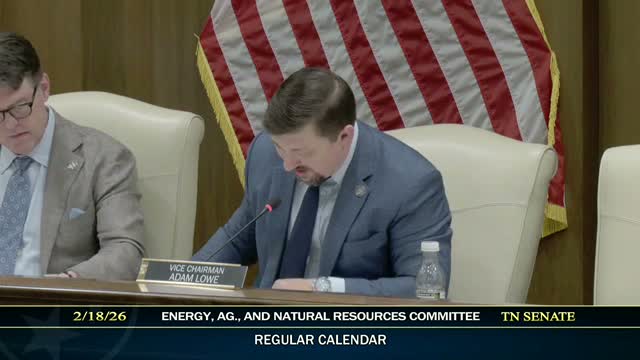
Summary
The Senate Energy, Agriculture and Natural Resources Committee moved a package of administration and conservation bills—including SB1884 (dry-cleaner fund changes), SB1887 (tourism definitions), SB2231 (oil and gas modernization) and SB1704 (raccoon-hunting cleanup)—to finance or the calendar by recorded votes.
The committee quickly advanced a set of measures during a midday "bill blitz," sending several administration and conservation bills to finance or the calendar.
SB1884, presented by Senator Harshbarger, would tighten eligibility and expenditure controls under the Tennessee Dry Cleaner Environmental Response Act, increase the annual per-site cap from $200,000 to $500,000 and move the program from reimbursement to direct expenditures; the committee voted to send the bill to finance.
SB1887 (Senator Seal) would modernize tourism terminology, update the regional tourism grant program and establish an annual process to certify regional tourism organizations; the committee passed it to finance without changing the existing 2-to-1 state match.
SB2231, carried by Chairman Reeves for TDEC, modernizes Tennessee’s oil-and-gas statutes — updating definitions, aligning permitting and enforcement procedures, strengthening bonding and reclamation timelines and eliminating obsolete provisions. The committee approved the bill for further consideration.
Other bills advanced included SB2073 (designating April as Tennessee Native Plant Month), SB2238 (the Hunting for Heroes Act providing license reimbursement mechanics for the Tennessee National Guard) and SB1704 (statutory cleanup to reaffirm state authority over raccoon hunting rules). SB2026 was presented to establish a process for legislative consideration of indemnity appropriations if the state veterinarian orders livestock eradication; that measure also advanced.
Most measures passed by recorded or unanimous voice votes and were forwarded to either the finance committee or the calendar for subsequent action.