Get Full Government Meeting Transcripts, Videos, & Alerts Forever!
Get email alerts on the Transportation topic
No spam. Unsubscribe anytime.
Hollywood to pilot one-way streets with widened on-street parking and bike lanes on 19th and 20th Avenues
Summary
City staff proposed—and commissioners approved moving forward with— a pilot converting two downtown blocks of 19th and 20th Avenues to one-way circulation, adding legal wider parallel parking and bike lanes. Estimated cost is $630,000 funded by the CRA; staff will measure safety, parking usage and traffic impacts.
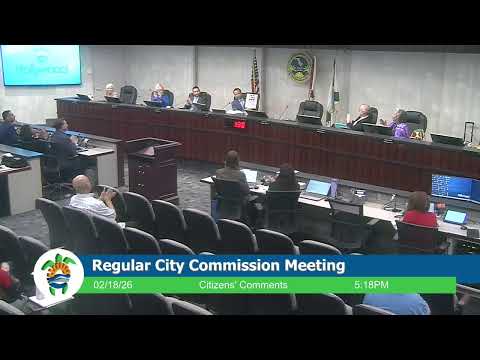
City staff presented a tactical pilot on Feb. 18 to change circulation on two downtown blocks—19th Avenue and 20th Avenue between Washington and Jackson Streets—so each becomes one‑way with wider, legalized parallel parking and a dedicated bike lane.
Andrea Winget, director of development services, said the existing on‑street spaces are substandard in width and sometimes force drivers to park partially on the swale; the pilot would restripe and reallocate street space to create wider 8½-by-22-foot parallel spaces, a 10‑foot travel lane and a 6.5‑foot bike lane. Staff estimated the pilot cost at about $630,000 and said those funds are in the CRA budget.
Winget described the pilot as reversible and testable. "We will continue to work in house and with police and others to see if we could come up with some measurable goals for the pilot project in terms of how many people are using the parking spaces, the bike lanes traveling through here, how has it modified our traffic flow, or is there an increase in accidents in this area?" she said.
Commissioners asked detailed operational questions about the pilot’s geographic limits, enforcement, marking treatments to keep cars out of bike lanes, and the educational and enforcement steps that would accompany implementation. Several commissioners expressed support for the pilot as a tactical, low‑cost way to improve safety and increase legal parking supply; staff will bring paving/striping contracts and implementation details to upcoming agendas.
What happens next: Staff will finalize a pilot design, procure pavement and striping services as needed, coordinate public outreach with affected residents and businesses, and return to the commission with implementation contracts and measurable performance goals.