
Salt Lake City board studies paraprofessional hiring, pay and turnover amid staffing shortages
Get AI-powered insights, summaries, and transcripts
Sign Up Free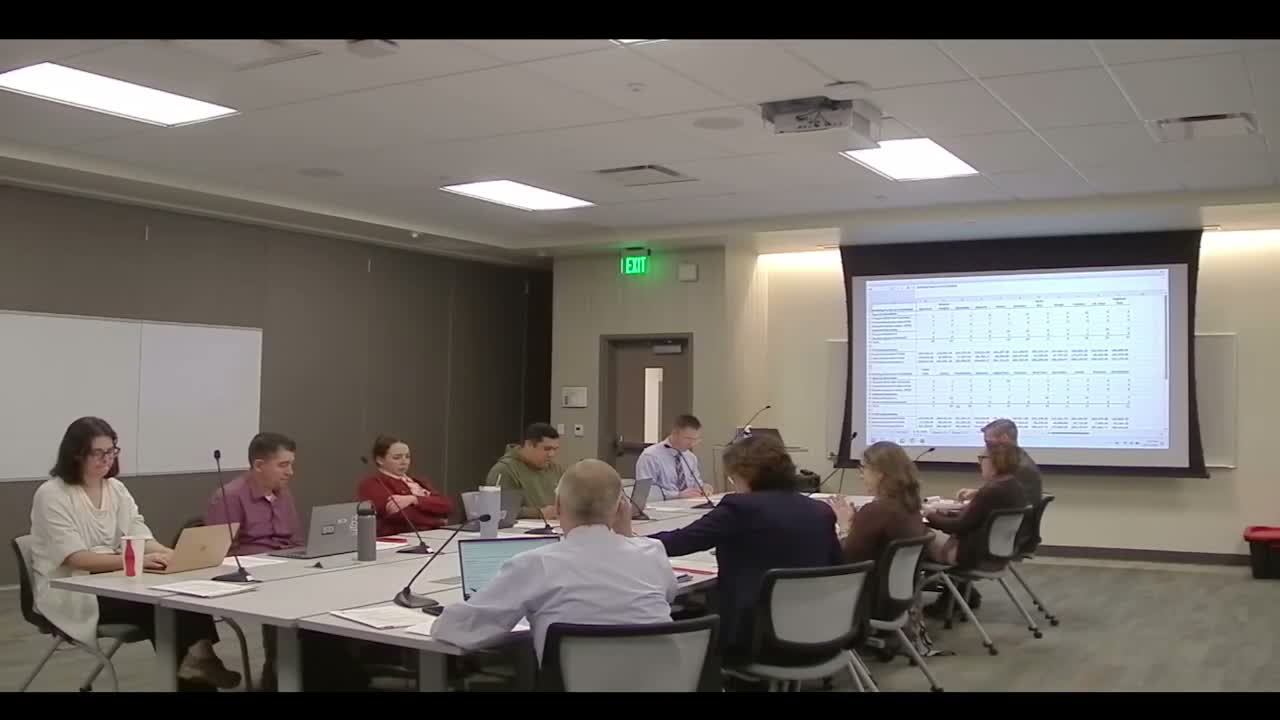
Summary
Board staff reviewed classifications, pay ranges and a $10 million annual paraprofessional payroll, highlighted 98 resignations this school year and discussed pilots to convert some part-time roles to full-time to reduce turnover.
SALT LAKE CITY — The Salt Lake County School Board heard detailed staffing and funding data on Feb. 17 as administrators and board members discussed hiring and retention of general‑education and special‑education paraprofessionals.
Business administrator (BA) Kearsley opened the study session by defining paraprofessionals and reviewing a corrected spreadsheet of district data. "Paraprofessionals provide instructional support to students under the direct supervision of a licensed teacher. They may not provide new instruction independently," Kearsley told the board while walking members through qualifications required under the Every Student Succeeds Act for Title I schools.
The presentation separated three job classifications. Logan, a district staff presenter, described Paraprofessional 1 (general‑education support), Paraprofessional 2 (resource or special‑education classrooms) and "self‑contained" paraprofessionals assigned to individualized special‑education units; pay differs across those categories. Logan also gave hourly ranges: "Paraprofessional 1 starts at $18.25 an hour [to] $20.25; Paraprofessional 2 starts at $18.75 [to] $20.75; self‑contained starts at $19.75 with a top step of $21.75," he said. Student support assistants, who do not meet "highly qualified" status, range from $17.25 to $19.25.
Kearsley directed members to the district payroll totals, reporting that in fiscal year 2024–25 the district spent "just over $10,000,000 in paraprofessional salaries." He noted most paraprofessionals are scheduled for up to 29.5 hours a week; crossing 30 hours generally requires the district to offer benefits under the Affordable Care Act.
Board members pressed staff on recent hiring patterns and turnover. Logan told the board that a common cycle is post‑break exits and replacements and reported, "We've had 98 paraprofessional resignations just this school year," a figure board members said helps explain a spike in hires seen in recent human resources reports.
Tiffany, a district presenter, explained how special‑education paraprofessionals are funded and allocated: federal and state special‑education funds are used first; if insufficient, the district uses the minimum school program and fund balance. She highlighted that certain allocations—such as IEP‑driven 1‑to‑1 aides—follow the student, not the classroom, and may be added anytime during the year.
Board members debated whether to convert part‑time paraprofessional roles into more full‑time positions to reduce turnover and support continuity in classrooms. One member noted the district's recent efforts to create full‑time paraprofessional roles and suggested piloting a time‑limited infusion of fund‑balance dollars to test stability effects. Another member warned that temporary funding can be problematic, citing the ESSER experience: "when the money is reduced to 0, the professionals go away," she said, urging strategic, sustainable funding if positions are expanded.
Staff described operational constraints to creating full‑time jobs: not all paraprofessional duties fill a 40‑hour contract and the district must weigh whether more full‑time but fewer total adults would serve classrooms best. Tiffany and Logan said the district is initiating exit interviews for ESP staff to gather longer‑term patterns; Logan estimated at least a year of data would be needed to see firm trends.
Members also raised volunteer programs and training retired professionals as a potential supplement. Staff noted volunteers are coordinated through the Salt Lake Education Foundation and HR oversees fingerprinting and background checks.
The study session ended with the board agreeing to continue the conversation in leadership and future agendas; the board then moved to a closed executive session. Kearsley and a board leader committed to bring the topic back for further planning.