
Landowners and agencies oppose bill that would allow transport and release of feral hogs; committee holds public hearing
Get AI-powered insights, summaries, and transcripts
Subscribe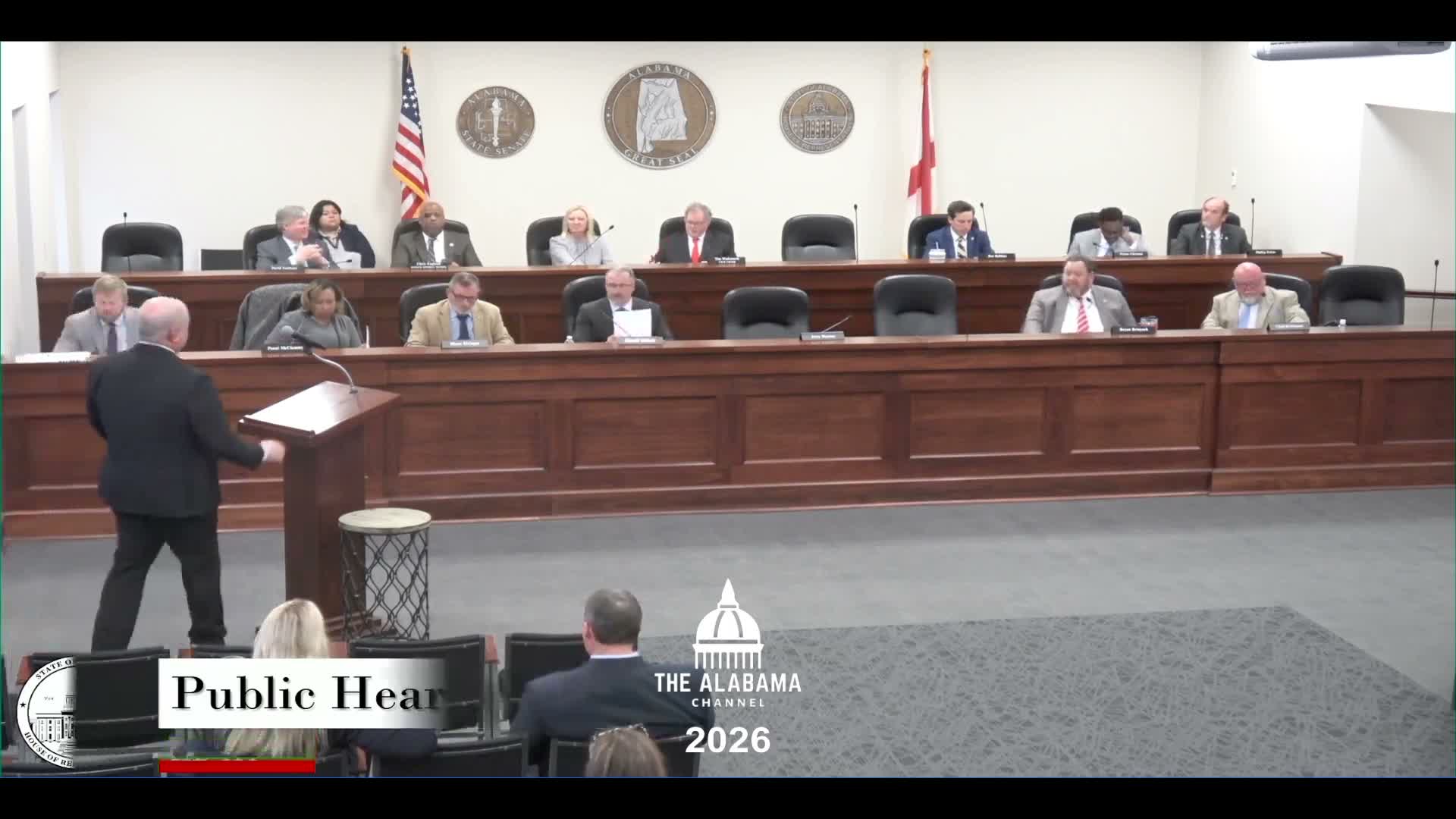
Summary
At a public hearing on HB414, witnesses from the Alabama Feral Hog Control Council, cattlemen, wildlife managers and state conservation officials opposed changing the law to allow transport/release of live feral hogs, warning of disease spread and significant agricultural damage; the committee carried the bill to next week without a vote.
A House committee held a public hearing on HB414, which would change current law by replacing the word "transport" with "release" in the statute governing wild hogs, effectively allowing live hogs to be moved and potentially released rather than requiring them to be killed.
Sponsor explanation: the sponsor said the bill "changes 1 word transport to release. You cannot release to the wild hog. He has to end up dead. Whether you take him home and put him in a pen and feed him up, butcher him or you take him to the stockyard and sell him? He has to end up dead." Several stakeholders testified in opposition.
Key testimony: - Tim Gothard (Alabama Feral Hog Control Council) said the 2015 law and increased fines (cited as $2,500) helped reduce transportation of live feral pigs; he warned removing that restriction would "open the lid back up to transportation and release" and urged federal and state coordination to secure tools and funding for control. - Mike Palmer, a wildlife manager, described feral hogs as dangerous and noted rapid reproduction (a healthy sow can produce as many as 30 pigs in a year), and warned moving animals spreads disease and damages ecosystems. - Erin Beasley of the Alabama Cattlemen's Association said feral hogs cause an estimated $50,000,000 a year in damages statewide and that stockyards and livestock businesses do not want live feral hogs due to liability and disease risks. - Chris Blankenship, commissioner of the Department of Conservation and Natural Resources, said the department spends about $2,000,000 a year addressing feral hogs on public lands and opposed allowing transport because it would exacerbate spread into areas not currently infested.
After testimony the chair closed the public hearing, said the committee would not vote on HB414 that day and carried the bill to next week for further consideration.
Sources: Sponsor presentation and four opponents during the public hearing.