Committee advances bill to move foster children from managed-care CMOs to fee-for-service Medicaid
Loading...
Summary
The committee voted to advance HB 1002, which would transfer foster-care medical coverage from care management organizations to fee-for-service Medicaid upon contract expiration or renewal. Supporters said it would reduce administrative barriers; state health officials warned prior authorization and enrollment rules remain in either system.
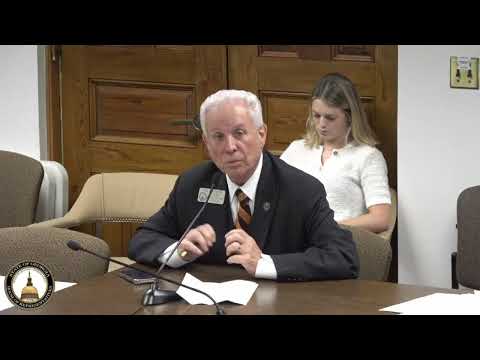
Representative Kemp, chair of the judiciary juvenile committee, told colleagues he sponsored House Bill 1002 to move medical coverage for children in state foster care out of managed-care contracts and back into fee-for-service Medicaid, arguing the change would cut administrative delays and improve access to care. "Moving children back to fee for service Medicaid would reduce administrative barriers, allow providers to deliver care without insurer gatekeeping, restore clear state oversight ... and it should be faster access and fewer delays," Kemp said.
Roland Behm, a public witness, gave specific examples of denials and delays under the current CMO, Amerigroup, and pressed for accountability. "Georgia's foster youth are trapped in a system," Behm said, citing a Children’s Hospital review that found follow-up care was not obtained in roughly 60% of sampled cases and that, when a hospital took responsibility for arranging care, it secured services for more than 96% of children.
Department of Community Health (DCH) officials did not endorse or oppose the bill but provided programmatic context. Emily Yona, chief of staff at DCH, and Lynette Rhodes, chief health policy officer, told the committee that provider enrollment, prior authorization and appeals processes exist under both managed care and fee-for-service. Rhodes emphasized that "you must be an enrolled Medicaid provider" to be reimbursed and that prior authorization requirements do not disappear under fee-for-service; they only move to a different reviewer.
Committee members sought fiscal detail. DCH said the Georgia Families 360 program had about 29,400 members as of Jan. 31 and that the foster-care cohort was the smallest group, described as "a little over 2,000" members; DCH cited a per-member capitation of about $949 per month for foster-care members. Members referenced an earlier fiscal estimate prepared in 2020 that suggested a roughly $9 million difference in certain cost calculations but noted the department is preparing an updated fiscal note.
Lawmakers debated access trade-offs: supporters argued fee-for-service would give caseworkers and foster families more direct routes to providers and reduce gatekeeping, while DCH cautioned that managed care can offer additional care coordination and value-added services that would be lost if the population moved to fee-for-service. DCH also warned the current managed-care procurement is in a protest phase; removing the foster cohort could have financial implications for the contract being procured.
After extended questioning and public comment, the committee took a voice vote and the chair announced HB 1002 received a "do pass" recommendation out of committee. The vote was taken by voice; the transcript records the result as passed but does not record a roll-call tally.