Get Full Government Meeting Transcripts, Videos, & Alerts Forever!
Get email alerts on the Controlled Substances Criminal Law topic
No spam. Unsubscribe anytime.
Committee debates new offense for delivering drugs that cause serious injury
Summary
Sponsors and the Oakland County Sheriff's Office told the House Judiciary Committee HB 5157/5158 would create a crime for delivery of a controlled substance (other than marijuana) resulting in 'serious injury'; lawmakers pressed witnesses on statutory definitions, causation and whether sentencing ranges (the draft lists life as the maximum) should include minimums.
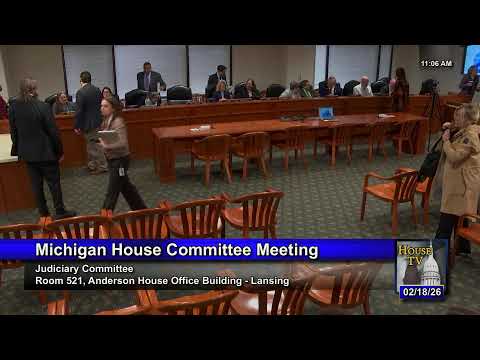
The House Judiciary Committee heard sponsor testimony and law-enforcement support for House Bills 5157 and 5158, which would create a crime for delivery of a controlled substance other than marijuana when that delivery results in serious injury.
The sponsor (name redacted in the transcript) told the committee the bills "create a new crime for delivery of a controlled substance other than marijuana resulting in serious injury," and that the term "serious injury" is defined objectively in the draft and mirrors definitions used in other states and federal law, according to the sponsor.
Representatives of the Oakland County Sheriff’s Office urged passage to provide "accountability when illegal drug distribution causes catastrophic life‑altering harm," noting that current Michigan law provides clearer penalties when drug delivery causes death than when a victim survives with permanent injuries.
Members raised multiple drafting questions. Several asked whether existing statutes could be applied now and whether the proposed new offense would create duplication with assault or other crimes; sheriff's office witnesses said they believe a new statute is necessary to capture all elements and provide prosecutorial tools. Lawmakers also debated sentencing. The draft sets a statutory maximum of life in prison; members, including one who suggested a 20‑year maximum and another who floated 5–10 years as a starting point, asked whether the committee should add a mandatory minimum to better deter trafficking.
Committee members also pressed witnesses on causation scenarios. Representative 12 asked whether the bill would apply where delivery was one factor among others — for example, a workplace or auto accident following drug use — and speaker responses emphasized the need to ensure "proximate cause" language and to review the draft for such scenarios.
Several civil‑liberties and defense organizations submitted cards opposing the bills (Noah Smith, Criminal Defense Attorneys of Michigan; Gabriel Dresner, ACLU of Michigan). Supporters included Matt Saxton of the Michigan Sheriffs' Association. Witnesses and members agreed to continue work on definitions and to consult stakeholders; no vote was taken at the hearing.
The committee adjourned after concluding questions and asking for follow‑up on drafting issues.