Get Full Government Meeting Transcripts, Videos, & Alerts Forever!
Get email alerts on the Recovery Funding topic
No spam. Unsubscribe anytime.
Committee hears bill to raise caps and add guardrails for Recovery Community Organization grants
Summary
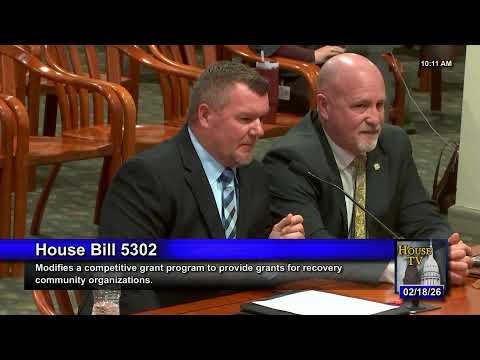
House Bill 5302 would modernize recovery-community funding by removing a $150,000 cap, setting a $250,000 minimum and capping awards at 50% of an RCO's operating expenses; witnesses said the changes would stabilize peer-run recovery services paid from opioid settlement dollars.
The House Health Policy Committee heard testimony on House Bill 5302, which would change how opioid settlement and other designated funds support Recovery Community Organizations (RCOs) in Michigan. Representative DeBoer introduced the bill and said it would expand grant funding and add reporting and eligibility guardrails for organizations that provide peer-led recovery support.
Patrick Patterson, executive director of Blue Water Recovery and a vice chair of the Michigan Opioid Advisory Commission, described RCOs as independent, peer-led nonprofits that are not clinical providers and do not bill Medicaid. He said the bill "removes the outdated $150,000 cap," "establishes a minimum of $250,000," and limits grant funding to no more than 50% of an RCO's operating expenses while allowing multi-year awards to improve stability for small organizations.
Allison Hurst of Recovery Action Network described consequences of unstable funding, saying short funding cycles forced layoffs, program cuts and uncertainty that threatens services such as youth prevention, recovery coaching, transportation and housing supports. "Short term funding cycles, sometimes only 7 months at a time, make it extremely difficult for us to build sustainable infrastructure," she testified.
Committee members asked about accountability and outcomes. Representative Frisbie asked whether RCOs would develop key performance indicators and Patterson said measuring "recovery capital" (a composite of supports such as coaching, housing and transportation) is central to defining success; he and other witnesses said the bill includes certification and annual reporting to provide oversight. Patterson also characterized $5 million as a floor rather than a sufficient total and urged ongoing review.
Members asked whether the funds would come from general revenue; witnesses and the sponsor said the changes would direct opioid settlement dollars and not the general fund. The bill would require reporting on grant amounts, spending, and number of individuals served, and would restrict awards to certified RCOs to protect program integrity.
Next steps: The committee engaged the witnesses in follow-up questions and thanked them; no formal committee vote on HB 5302 was recorded in this transcript.