Committee advances bill to create statewide business court, tightens shareholder inspection rules
Loading...
Summary
The Judiciary Committee passed legislation to establish a Georgia Statewide Business Court with expanded exclusive jurisdiction and tighter limits on shareholder records inspections; members debated language excluding inspections when litigation is 'expected to be' filed and rejected amendments to alter fee-shifting and the 'expected to be' phrase.
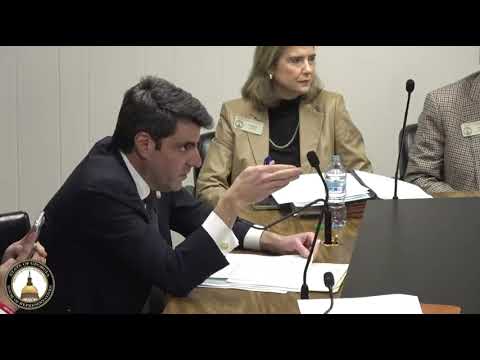
A Judiciary Committee on Feb. 18 advanced House Bill 1185 to establish a Georgia Statewide Business Court and tighten rules governing shareholder derivative actions and records inspections. Representative (bill sponsor) and counsel said the court would provide a chancery-style, business-focused forum to encourage incorporation and business stability in Georgia.
Sponsor remarks described three central changes: a new definition of “internal entity claim” covering fiduciary-duty and corporate-records disputes; a rule permitting the business court exclusive forum when corporate bylaws designate it; and stricter standing and inspection requirements for shareholders, including an ownership threshold set at up to 1% and limitations intended to prevent “fishing expeditions.” Mitch Fusitola, an attorney in the governor’s office, told the committee the bill “provides businesses with more flexibility, as well as shareholders, more flexibility, clearer laws, and ultimately, more stability in what the business laws in Georgia are.”
Representative Evans challenged language in Section 10 that bars record inspections when litigation is “expected to be” instituted, saying it could prevent shareholders from lawfully checking corporate books to determine whether a claim exists. Evans cited Delaware practice as a comparator and moved an amendment to strike the phrase “or are expected to be.” Sponsor and counsel replied the provision is intended to constrain requests made to manufacture litigation, not to bar legitimate, good‑faith inquiries. The committee voted on Evans’ amendment and, after a division by show of hands, the motion failed.
Evans also proposed removing mandatory fee‑shifting clauses on the grounds judges already have discretion to award fees for bad‑faith requests; that amendment likewise failed after a roll call and hand count resulted in equal numbers on each side. The sponsor said he would continue working with members on refinements but pressed for passage to move the business court proposal forward.
After debate and the defeated amendments, the committee voted to pass House Bill 1185. The bill’s supporters said the changes align Georgia with other states that court business disputes in a specialized forum and intended to balance corporations’ concerns about costly discovery with shareholders’ rights. Opponents warned the inspection limits could be read too broadly and requested follow‑up language. The bill will proceed to the next legislative stage.