Get Full Government Meeting Transcripts, Videos, & Alerts Forever!
Get email alerts on the White House Event topic
No spam. Unsubscribe anytime.
Trump highlights pardons, criminal justice reform and school choice at White House Black History Month event
Summary
President Donald J. Trump used a White House Black History Month event to spotlight his administration's criminal justice reforms and economic record, praise pardoned former inmate Alice Johnson and promote a broad school-choice proposal while introducing guests and business beneficiaries of recent tax policy changes.
WASHINGTON
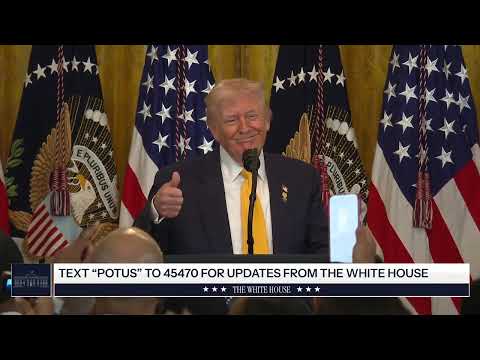
President Donald J. Trump onstage at a White House Black History Month event praised his administration's criminal justice reform and economic record, introduced guests whose stories he said illustrate those policies in action, and urged further moves on school choice and public-safety measures.
Trump opened the event by thanking attendees and noting a new ballroom under construction that will expand White House capacity. He offered condolences for the passing of Reverend Jesse Jackson and introduced several guests, including Scott Turner and Ben Carson, whom he credited with advancing opportunity zones and other initiatives.
The president framed his record around three themes: economic gains, criminal-justice intervention and school choice. He touted market milestones and wage gains, saying the Dow and S&P had hit new highs and asserting that "more Americans are working today than at any time in American history." He also credited passage of the First Step Act for early releases and described Alice Johnson's case as an example of a successful clemency decision.
Alice Johnson, whom Trump described as a recipient of a commute and a full pardon, told the audience that her release was "a miracle" and framed her return from incarceration as a second chance. "This president right here, president Donald Trump, brought me from the prison pit to the White House," she said, thanking the president for what she described as life-changing intervention.
Small-business owners and advocates were part of the program. Aneta Bradford, introduced as the owner of a coffee shop called Hebrews 11:1, told the audience that recent tax changes -- which she described as "no tax on tips" -- helped her hire more staff and open a second location. "No tax on tips has been an amazing blessing for me," Bradford said.
On public safety, Trump repeated that the administration had restored law and order in several cities, crediting deployments of the National Guard and other actions with reducing crime. He said murder rates had reached historic lows, asserting that murder numbers were "down from 125 years" in some places. He invited Felicia Cook, who lost her grandson to violence, to speak about her advocacy for tougher penalties; Cook described giving testimony to Congress and backing measures she said would hold violent offenders to harsher standards.
The program also included calls for broader school-choice legislation that Trump called the "great big beautiful bill," and a series of guest remarks praising expanded scholarship opportunities such as ACE Scholarships.
What the event did not produce were new formal policy texts, votes or specific timetables: speakers and the president described policy goals, touted past legislative wins and presented personal stories as illustrations of administration priorities. Several of the event's claims about job numbers, wage growth, crime statistics and program impacts were presented verbally by the president or attendees and were not accompanied by supporting documents in the remarks themselves.
The event closed with Trump thanking military leaders and staff in attendance and wishing the audience a "happy Black History Month" and a celebratory tone for the nation's upcoming 250th anniversary.