
Vacaville planning commission warns of shortfalls for lower‑income RHNA targets; forwards APR to council
Get AI-powered insights, summaries, and transcripts
Subscribe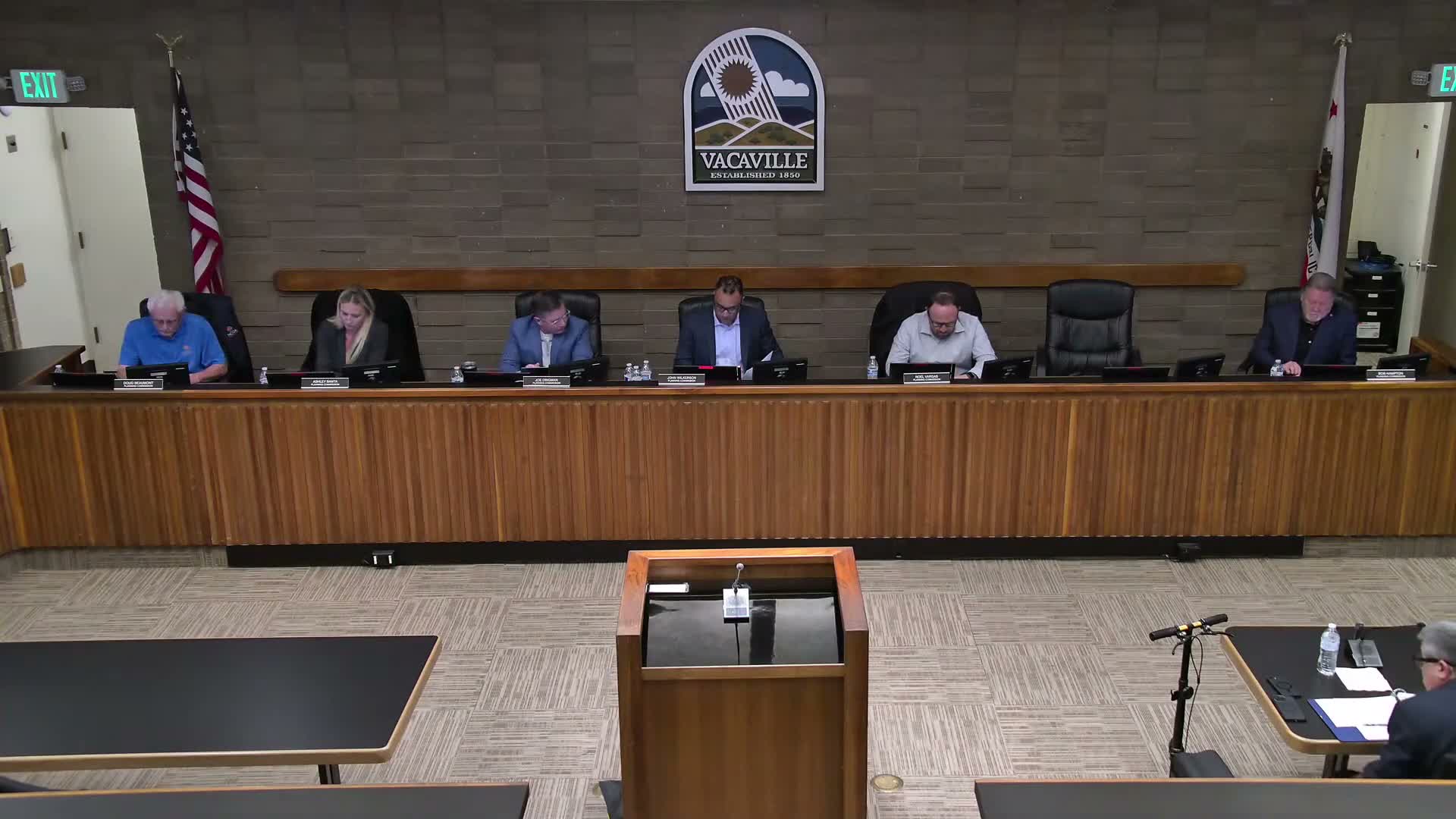
Summary
Staff told the commission the city exceeded above‑moderate RHNA targets but remains far behind for very low, low and moderate income units; commissioners pressed staff on financing, incentives and regional coordination and the commission voted to forward the annual progress report to City Council and HCD.
Vacaville planning staff presented the 2025 General Plan Annual Progress Report and housing element update on Feb. 17, saying the city has met its above‑moderate housing target but is lagging on very low, low and moderate income units and recommending the commission forward the report to the City Council and the State Department of Housing and Community Development (HCD).
The presentation summarized the city’s RHNA (regional housing needs allocation) numbers and permit activity. The staff presenter said the city averaged roughly 400 building permits per year and issued 445 permits in 2025. According to staff, above‑moderate units have exceeded the RHNA for that category, while “only 1 low and 28 moderate income units have been issued a permit so far in this cycle,” a shortfall commissioners said was concerning.
Commissioners pressed staff on how the city intends to close the gap. Commissioner Beaumont asked how land is moved from urban reserve into land for development and raised the prospect of the state imposing stricter requirements if the city does not meet targets. The staff presenter replied that council and staff are studying potential funding and implementation strategies and that the city’s housing director, Tamara (Director of Housing), has convened study sessions with council around funding options.
Commissioner Hampton asked whether the city is considering incentives for first‑time homebuyers. Staff said the housing and community services department runs a first‑time homebuyer program that may need additional funding and that staff can follow up with details. Commissioners and staff discussed non‑regulatory tools—fee deferral programs and design incentives—and regulatory tools such as inclusionary housing and commercial linkage fees. The presenter also noted SB 330’s fee‑freeze provision (benefits for developers who submit a preapplication) and the Pro Housing Designation Program as mechanisms that applicants can use.
Several commissioners pushed for clearer performance tracking. Commissioner Banta asked for regional comparisons and for staff to report which cities are meeting their RHNA numbers and which incentives are producing completed affordable projects. Staff said they will prepare a list of specific policies, performance metrics and a report of local usage of programs (for example, fee deferrals and SB 330 preapplication filings) at a future meeting.
On a motion to forward the APR and related items to City Council for approval and to transmit the APR to HCD, the commission voted in favor (motion made, firsted by Commissioner Vargas; seconded by Commissioner Beaumont). The commission also approved routine agenda and consent items earlier in the meeting.
Next steps: staff will present the APR to the City Council on March 10 and submit the APR and housing element annual progress report to HCD by April 1, and commissioners asked staff to return with policy‑level performance metrics and more detail on funding and specific incentives for incentivizing very low‑ and low‑income housing.