
Knox County commissioner to amend self‑defense resolution to clarify lessee firearm rules, propose $250 daily fine
Get AI-powered insights, summaries, and transcripts
Subscribe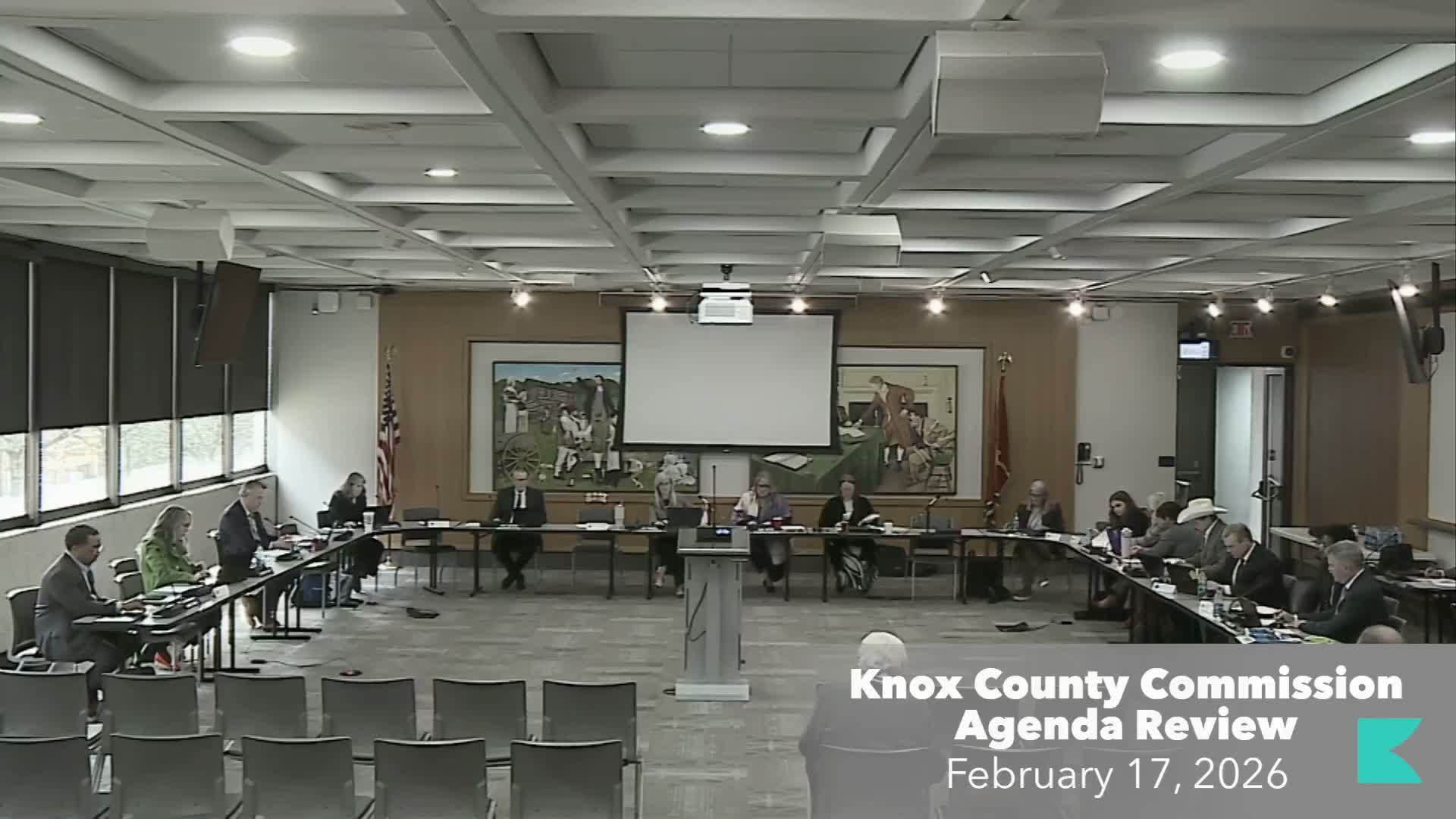
Summary
A Knox County commissioner said he will amend a self‑defense resolution to require lessees of county property to follow state handgun signage rules, propose a $250‑per‑day fine after a 30‑day compliance window and include a fee‑shifting provision; staff were asked to compile a list of leased county properties before first reading.
A Knox County commissioner said Feb. 17 he will amend a pending self‑defense resolution to clarify that third‑party lessees of county property must follow state rules on handgun signage and that violations could carry a $250 daily fine after a 30‑day compliance window.
The amendment, described by Commissioner Fox during the commission’s agenda review, is intended to resolve what he said is an example of ‘improper’ signage at the East Tennessee History Museum. Fox said he would introduce the $250‑per‑day penalty on the floor and that his draft includes a fee‑shifting clause to reimburse successful plaintiffs’ attorney fees.
Fox said the concern arose during a recent presentation by the museum’s director, when he observed signage that, in his view, prohibited all firearms on the premises. “Right now … the facility, in my opinion, is improperly posted,” Fox said, arguing that under state law the ability to bar permit holders depends on whether metal detectors and trained security are posted at each public entrance.
County attorney Moyers read and summarized the relevant statutory language for commissioners, saying the statute (verbally cited in discussion as “39 17 1359” and related subsections) permits entities to post that firearms are not allowed but also contains a subsection that limits a local government or its permittee from restricting possession by enhanced or concealed handgun permit holders unless specified security measures are in place. Moyers noted the term “permittee” is not defined in the statute and, read plainly, likely includes lessees who rent county property.
Commissioner Durrett asked whether the museum example was an isolated oversight or part of a larger pattern. Fox said he had not inspected other properties, but he framed the resolution as a clarification to avoid placing the burden on permit holders to file lawsuits to resolve disputes. Fox said the draft would give property occupants 30 days to come into compliance before fines would begin and includes a provision for Knox County to pay plaintiffs’ attorney fees in cases brought to enforce rights under the ordinance.
Commissioner Jay and others pressed staff for data about how many county properties might be affected. Moyers said the law department could notify lessees before an ordinance went into effect but would need a list of county properties leased to third parties; Director Snowden was asked to help compile counts. During the exchange, commissioners noted examples such as Kearns Sports Park, Kearns Senior Center and libraries and asked whether the statute’s reach extends beyond buildings to broader county property; Moyers said the statute uses the term “property,” which can be broader than a single building and could cover recreational facilities unless an explicit exception applies.
No vote was taken during the agenda review. Commissioners asked staff to assemble an inventory of leased county properties and related information before the item’s first reading so the scope and fiscal or operational impact can be assessed.
The agenda review concluded without formal action; item 41 remains on the agenda for future consideration and item 34 was withdrawn by the sponsor at the start of the session.