
Madison Plan Commission forwards Unified Development Ordinance with four amendments to City Council
Get AI-powered insights, summaries, and transcripts
Subscribe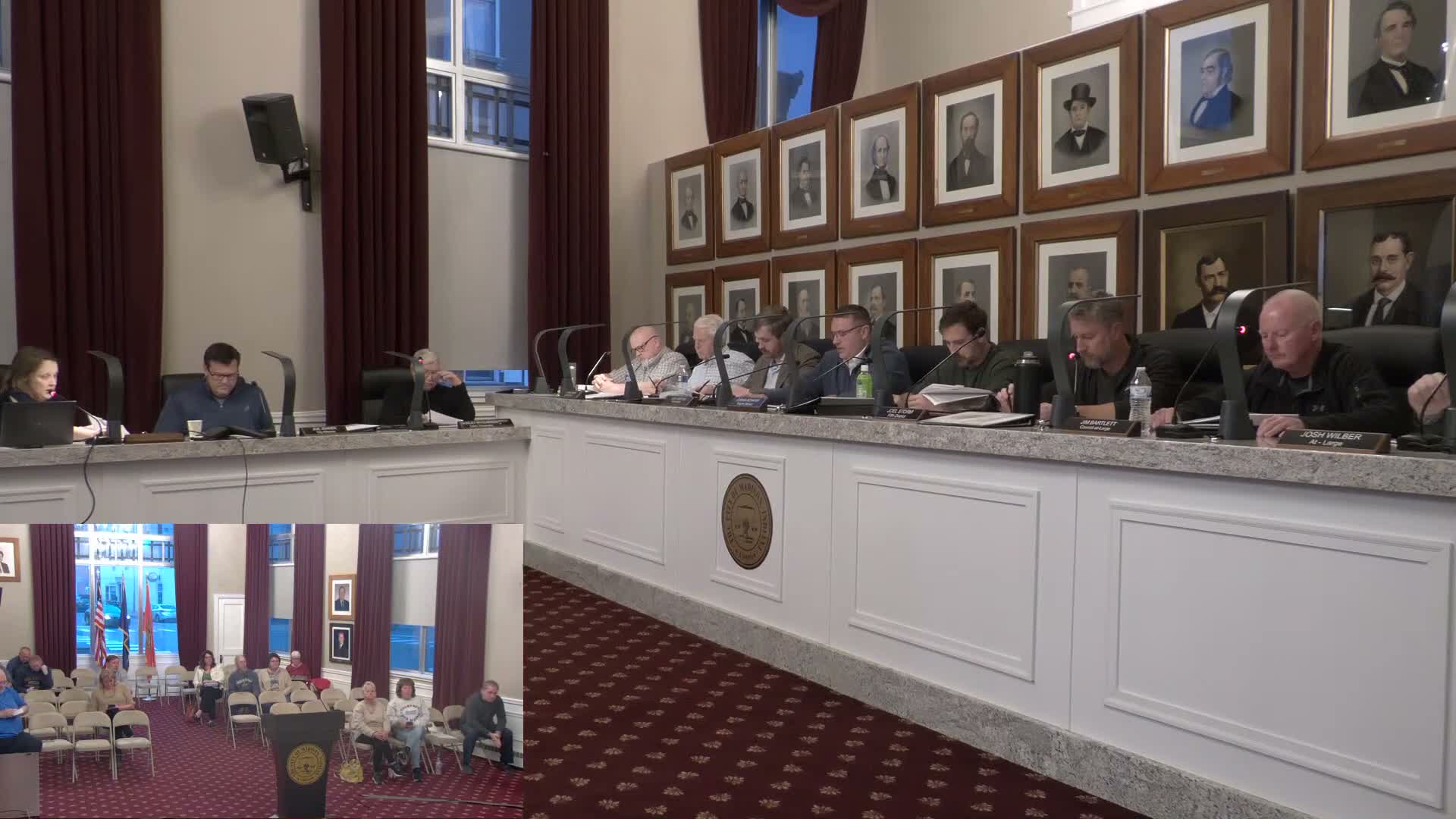
Summary
After a presentation and limited public comment, the Madison City Plan Commission voted unanimously Feb. 17 to recommend the 12/30/2025 Unified Development Ordinance and an updated zoning map to City Council, including four staff-proposed amendments addressing Riverfront setbacks, Open Space uses, parking encroachment and typographical fixes.
The Madison City Plan Commission voted unanimously Feb. 17 to forward a recommendation to City Council to adopt a new Unified Development Ordinance (UDO) and a converted official zoning map, incorporating four proposed amendments.
Staff and the ordinance consultant described the UDO as the product of an 18-month update process that included eight working committee meetings, public hearings and written comments. “This UDO is a great opportunity for the city of Madison,” the presenter said, describing the rewrite as intended to reduce ambiguity, consolidate zoning rules, modernize use tables and align local regulations with recent state statutes.
The draft before the commission is the 12/30/2025 adoption draft. Staff summarized the principal changes: conversion of legacy districts to new district names (for example, R4→R1, R8→R2, R32→R3), consolidation of several districts (manufactured-home park into R3; professional office and specialty into HDR), a new aviation business district covering airport-owned parcels, and three overlays (flood hazard, historic district and airport protection). The staff presentation also detailed chapter organization, minimum-living-area standards (950 square feet for single- and two-family units; 600 square feet for multifamily units), revised setbacks, new or clarified uses (including an explicit data-center use that is a special exception in industrial districts and prohibited in the historic district), and updated site standards for battery energy storage and solar that mirror county requirements.
Staff said parking standards were revised in several places. The adoption draft retains 1.5 spaces per unit as the base requirement for multifamily in many districts but sets 1 space per unit in downtown, riverfront and the central business district for most situations and exempts very small conversions (1–5 units) from parking requirements to encourage loft dwellings. For projects of 5–10 units the draft provides for a 50% parking requirement; projects greater than 10 units would generally be subject to the 1-space-per-unit standard included in downtown and riverfront under the draft. Staff noted a concurrent state proposal (House Bill 1001) that would cap multi‑family requirements at 1 space per dwelling, and said that legislative action could affect local rules.
Staff offered four specific amendments for the commission to consider in the resolution: (1) explicitly clarify rear setbacks in the Riverfront District to match existing riverfront standards; (2) modify uses in the Open Space District to remove general retail while allowing restaurants and service-oriented retail up to 1,500 square feet (to account for two existing riverfront restaurants and small service operations like kayak rentals); (3) allow limited encroachment of parking into setbacks provided parking stalls remain at least 5 feet from the property line and buffer-yard rules are preserved; and (4) correct miscellaneous typographical and cross-reference errors that do not change substantive rules.
Two members of the public spoke. Jan Vacherous of 701 East 2nd Street asked for clarification on what had been removed from permitted uses in the Riverfront District; staff explained that general retail was struck from Open Space, that restaurants and service-oriented retail were retained but limited to 1,500 square feet, and that uses such as parks, cemeteries and schools were otherwise treated per statute or as special exceptions. “Can you just clarify what you took out of permitted, and allowed uses in Riverfront District?” Vacherous asked.
Warren Archer of 3611 West Ohio River View Road commended the rewrite but urged caution on allowing large multifamily projects by right in business and riverfront districts. Archer said permitting more than 10 multifamily units by right in some locations could harm nearby properties and recommended stronger on-site parking requirements for new large multifamily construction, arguing that reduced parking could displace existing on-street spaces.
Following the presentation and public comment, a motion to provide a favorable recommendation on Resolution 2026-PC-1—including the four proposed amendments—was moved and seconded. Staff conducted a roll-call vote; all members present voted in favor. The commission chair announced the motion carried unanimously and the recommendation will be transmitted to City Council for final consideration.
The special meeting adjourned after the commission completed the vote. The next procedural step is City Council review and final action on the UDO and zoning map.
Sources: Plan Commission hearing transcript, Feb. 17, 2026 (presentation by planning staff and consultant; public comments by Jan Vacherous and Warren Archer).