
Committee hears HB 213 to allow online Social Security card replacements; tribal‑ID verification left to federal policy
Get AI-powered insights, summaries, and transcripts
Subscribe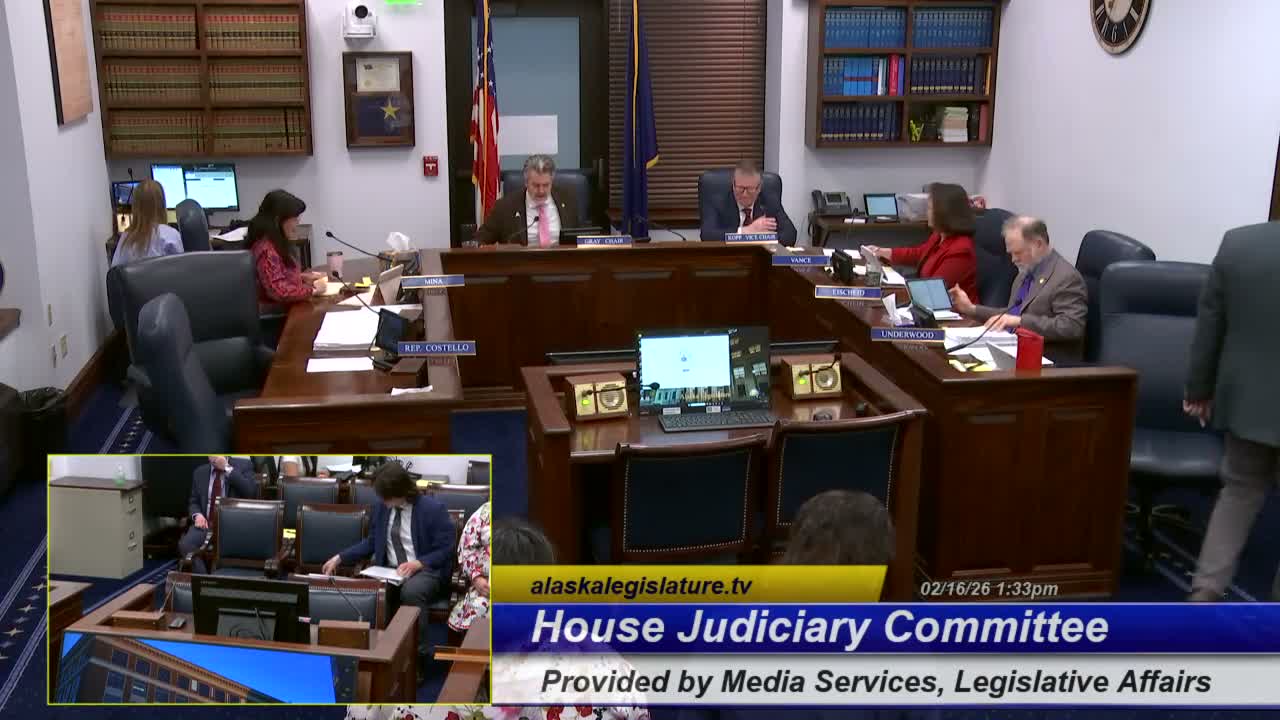
Summary
HB 213, introduced Feb. 9 and heard Feb. 16, would let Alaskans apply online for replacement Social Security cards by fixing a technical DMV statute; the bill does not change tribal‑ID rules, and SSA said any broad tribal‑ID verification would require federal policy or legislative change.
Sponsor Representative Jimmy and staff presented HB 213 on Feb. 16 as a technical fix to allow online replacement Social Security cards for Alaskans — a service the sponsor said Alaska currently lacks. Hayden Johnson, staff to the sponsor, told the committee the bill specifically addresses a DMV statute and does not authorize the use of tribal IDs for Social Security replacement cards.
Dustin Brown, head of legislative affairs for the Social Security Administration, and Kathleen Wallace, director of the Alaska DMV, joined remotely to answer questions. Johnson said the bill does not pertain to tribal IDs and fixes a specific technical issue with the DMV statute. Brown noted which data elements the American Association of Motor Vehicle Administrators (AAMVA) collects for identity verification — last name, date of birth, state driver’s license or ID number, state of issuance and address — and confirmed the tribal‑ID question is outside the scope of the bill.
Wallace told the committee the Alaska DMV does not register federal tribal identification and currently has no mechanism to do so; tribal IDs can be used as a secondary form of identification to assist in obtaining a state driver’s license or ID but are not accepted as a registered primary credential for the processes discussed.
Brown added that no state DMV currently receives tribal‑identification registrations in the manner discussed and that enabling the change would “require a federal, policy or legislative change, before that was enabled.” Representative Vance asked whether Congress is currently considering such verification changes; Brown said he was not aware of active congressional work on the issue.
The committee took no final action on HB 213 on Feb. 16 and placed the bill aside until the amendment deadline, Tuesday, Feb. 17 at 5 p.m. Committee staff were directed to accept amendments through that deadline. The committee adjourned at 1:40 p.m.
If HB 213 advances after the amendment deadline, the committee may consider amendments addressing identity‑verification scope or tribal‑ID policy only to the extent federal policy permits.