Senate hearing examines bill to create East Side administrative area for Cook Inlet set-net fishery
Loading...
Summary
Senate Bill 158 would direct the Commercial Fisheries Entry Commission to establish a new administrative area for East Side Cook Inlet set-net permit holders so CFEC can reassign permits, facilitate voluntary buybacks and allow locally driven management; the committee heard testimony and set the bill aside for further consideration.
Juneau — The Senate Resources Committee held a first hearing Feb. 13 on Senate Bill 158, a technical measure that would direct the Commercial Fisheries Entry Commission to create a separate administrative area for the East Side set-net fishery in Upper Cook Inlet.
Senator Jesse Bjorkman, sponsor of SB158, told the committee the measure is narrowly focused and “does not propose to change the allocation of fish in Cook Inlet” but would let CFEC redraw administrative boundaries so permit holders who fish six identified statistical areas can be managed separately. Bjorkman said the East Side fishery has been subject to paired restrictions and closures that, since 2017, have often reduced fishing opportunities for those permit holders to “0 or nearly 0.”
The bill would require CFEC to publish regulations defining the new area, open an application period and issue reassigned limited-entry permits to eligible holders. Conrad Jackson, staff to Bjorkman, explained the bill’s sections include an uncodified public-interest finding, explicit area definitions, reassignment rules, a provisional-permit and appeals process and a requested effective date of Jan. 1, 2027.
Glenn Haight, commissioner and chair of the Commercial Fisheries Entry Commission, said the agency would implement the change through a regulatory process and use Department of Fish and Game records to evaluate applications. “We would need to publish a post regulation,” Haight said, describing a limited-entry reassignment and noting that appeals could proceed to superior court rather than CFEC’s adjudication process in some cases. Haight said the change would likely carry a zero fiscal note for the state.
Committee members pressed on how the change would affect permit counts and fishery outcomes. Haight estimated there are about 340 people holding roughly 440 set-net permits in Upper Cook Inlet (permit stacking is common). Haight and the sponsor said the bill itself would not alter fishing seasons or allocation decisions handled by the Board of Fish; rather, it would give CFEC a distinct administrative area so industry-led solutions — including voluntary buybacks — could be pursued for that geography.
Multiple East Side permit holders called or phoned in to back the bill. Kenai resident and multi-permit operator Gary Hollier said he has fished the area since 1971 and that the East Side fishery “has been under considerable duress.” Hollier testified that seasons since 2022 have met federal disaster criteria and cited an Alaska Department of Fish and Game emergency order issued Feb. 11, 2026, that closed the East Side gillnet fishery for 2026. “Please pass SB 158,” Hollier said, urging the panel to allow East Side permit holders more agency over their fishery.
A committee exchange addressed incidental king-salmon bycatch and gear rules. Hollier said incidental Chinook catch in East Side set nets is rare and that mesh regulations have tightened over time (he described changes from larger to smaller mesh and current 4.5-inch web at 29 mesh limits). Permit holders also described stacking (multiple permits held by family members) and said changing the administrative area could help the group pursue buybacks or other fleet adjustments.
Several members asked whether permit reductions without compensation would amount to a government taking. Haight and Bjorkman said statutory mechanisms make involuntary permit seizure uncommon and emphasized that fleet reductions envisioned under SB158 would be voluntary. Bjorkman said permit holders could organize to raise funds from federal ‘distressed fisheries’ grants, assessments among remaining permit holders, or other sources to compensate sellers and retire permits; CFEC would facilitate the technical mechanics of retiring permits.
Haight described prior CFEC work: a 2019 Cook Inlet-wide study had insufficient data for firm conclusions, while a 2022 East Side-focused survey received 46 responses covering about 140 permits and provided inputs for an “optimum-number” analysis. Haight said respondents’ target post-season return was roughly $15,000 per permit in one model, though he cautioned that optimum-number results are not definitive.
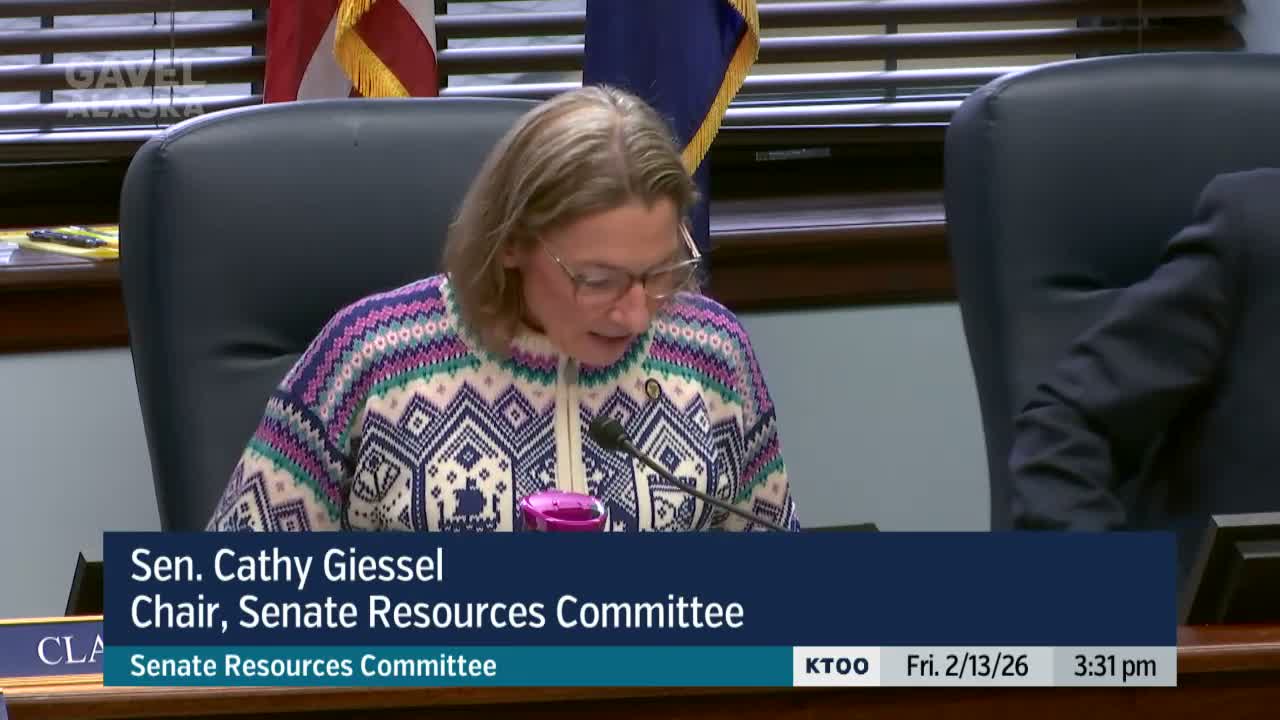
The committee took no formal vote. After testimony and questions, Chair Giesel said the committee would set the bill aside and bring it back for further consideration at a later date. The committee adjourned at 4:33 p.m.; its next scheduled meeting is Feb. 16, 2026, with items including SB180 and SB227.
What’s next: If SB158 proceeds, CFEC would publish a proposed regulation and open an application period to reassign permits in the new administrative area; any organized buyback efforts would still require a funding source and participation from permit holders.