Alaska leaders pitch $272 million in first‑year rural health funds as major chance — and warning
Loading...
Summary
Tribal, hospital and primary‑care representatives told a joint legislative health committee Alaska received $272 million in year‑one RHTP funding and urged projects that maximize access while stressing sustainability, CMS deadlines and unanswered eligibility questions.
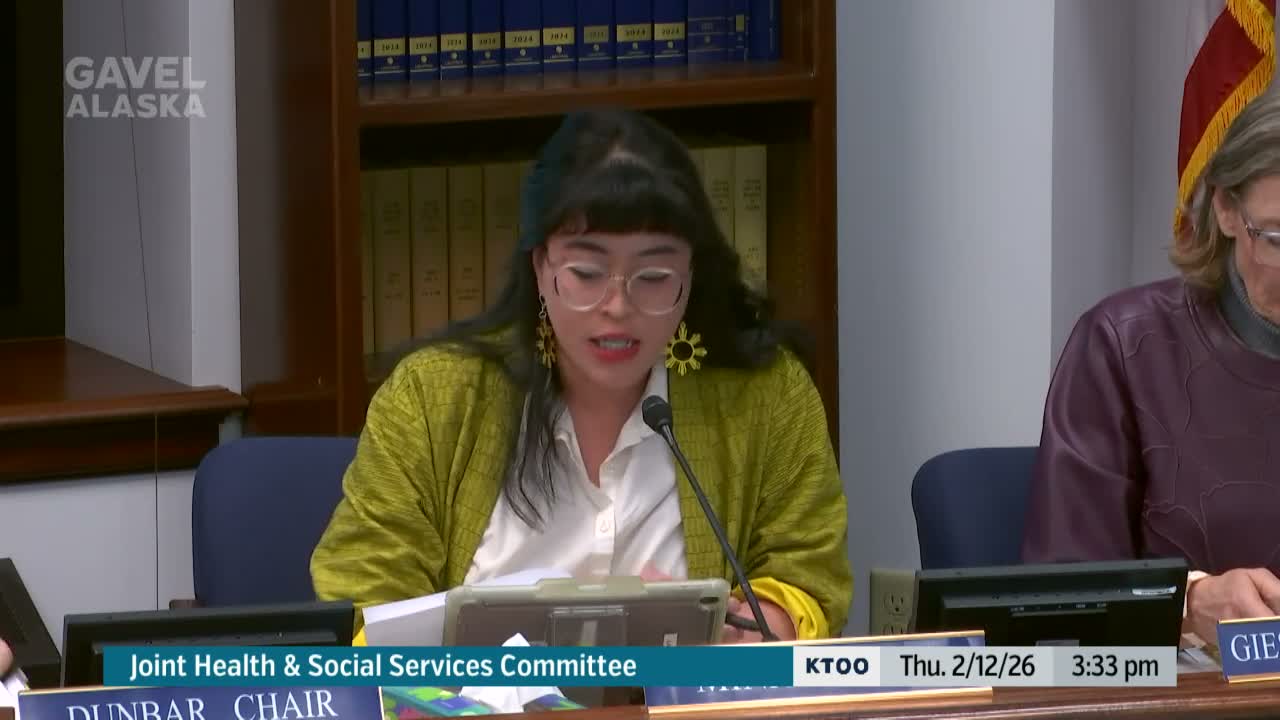
Tribal, hospital and primary‑care leaders told a joint hearing of the Alaska House and Senate Health and Social Services committees on Feb. 12 that the federal Rural Health Transformation Program (RHTP) gives the state a once‑in‑a‑generation funding opportunity — but one that raises questions about long‑term sustainability and program rules.
Monique Martin, vice president for intergovernmental affairs at the Alaska Native Tribal Health Consortium, said the RHTP award stems from a federal budget reconciliation measure referenced in the presentation as HR 1 and allocates $50 billion nationally over five years. "Alaska was awarded $272,000,000 in year 1," Martin said, noting that the state’s per‑resident share is much higher than many other states and that the award has drawn media attention. She emphasized the advisory council’s focus on building programs that do not leave future legislators "holding the bag" for unmet obligations tied to CMS deliverables.
Jared Kosen, president and CEO of the Alaska Hospital and Healthcare Association, urged realistic expectations on what can be achieved in the program’s time windows. Kosen described RHTP as a large opportunity but one "full of challenges," pointing to administrative capacity needs in small rural providers and to limits on permissible uses, such as restrictions on new construction. Nancy Merriman, CEO of the Alaska Primary Care Association, reminded lawmakers that the state and stakeholder groups have been pursuing planning and "readiness" pathways to help smaller federally qualified health centers and community clinics prepare competitive applications.
Why it matters: presenters and legislators agreed the money could expand primary and preventive care, support workforce and equipment, and enable community‑based services (school‑based clinics, geriatric care, wound care, childcare supports). But they flagged unresolved technical questions — including what kinds of renovations will be allowed, how indirect costs will be treated, and how awards will be scored — that will shape how effectively the money reaches the most remote communities.
Speakers emphasized that eligibility is broad: the presenters said social‑service agencies, schools, community centers and other nontraditional organizations can apply if projects map to the state’s six RHTP initiatives. "Even if you don't see yourself listed," Martin said, "you are still eligible."
The session closed with bipartisan interest in legislative oversight. Several lawmakers urged transparency in scoring and award decisions and asked for clear outcome metrics for monitoring performance. The Department of Health is using the Alaska Community Foundation as a subgrant administrator to manage letters of interest and help applicants, according to presenters.
The committees did not vote on any measure during the hearing. The next committee meeting was announced for Feb. 17.