Volunteers of America Alaska urges stronger Medicaid rates, credits ASAM 3.7 upgrade for keeping ARCH youth treatment open
Loading...
Summary
Volunteers of America Alaska told legislators its residential program ARCH and statewide continuum of youth services rely on better Medicaid reimbursement; VOA leaders cited improved outcomes after ARCH advanced to ASAM 3.7 and warned proposed "rebasing" could undercut adolescent-specific care.
ANCHORAGE — Volunteers of America Alaska told state lawmakers on Thursday that its residential and community-based youth behavioral-health programs have expanded sharply to meet soaring need, but that proposed changes to Medicaid rate-setting risk undermining adolescent care.
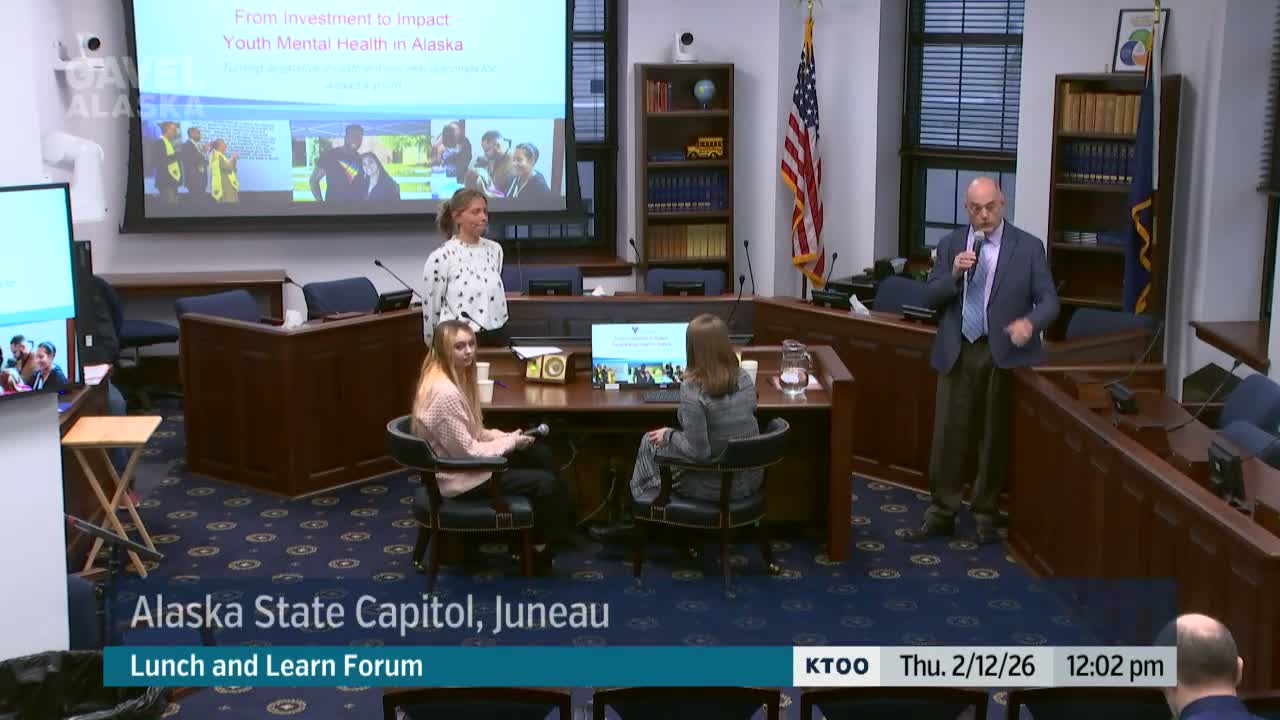
"We are a collective group of professionals who provide behavioral health services to youth, young people, and their families," Julia Louis, president and CEO of Volunteers of America Alaska, said at a Legislature lunch-and-learn sponsored by Rep. Andy Josephson (House District 13). Louis described VOA's continuum of care — school-based mental-health services, outpatient and intensive outpatient, partial hospitalization (day treatment) and residential treatment — and said the organization has grown about 300 percent over five years.
Why it matters: Louis said gaps in community-based services across much of the state force young people into hospitals and higher levels of care and leave them without local placements when they need follow-up services. She cited Youth Risk Behavior Survey data presented during the talk indicating about 19 percent of Alaska students reported attempting suicide in the past year, and she said follow-up care after psychiatric hospitalization is frequently missing: "74 percent did not receive a follow-up mental-health visit within 7 days and 56 percent did not receive a follow-up visit within 30 days," Louis said.
ARCH, the VOA residential program for 13- to 18-year-olds, "is the heart and soul of VOA," Louis said. According to VOA presenters, ARCH is a three- to six-month program that can serve up to 18 youth with a staff of roughly 35, and it provides integrated psychiatric and substance-use services. A VOA speaker said ARCH recently advanced from ASAM 3.5 to ASAM 3.7, enabling care for youth with more acute needs, including withdrawal management, because of added on-site nursing and daily psychiatric care.
A former resident who spoke at the event, Brianna, credited ARCH with helping her recover after years of substance use and family instability. "It felt like my first home ever," she said, describing group therapy, individual counseling and a curriculum that helped her complete the program.
Louis stressed the financial challenge of running adolescent residential services. She warned that a contractor report used in the current state Medicaid rebasing process, prepared by Guidehouse, appears to align adolescent ASAM reimbursement with adult rates. "Whenever you see a rate that is exactly the same for an adolescent as it is for an adult, that is a red flag," Louis said, adding that adolescent programs require more staff time, education provisions and different staffing ratios.
Louis said VOA is monitoring the Medicaid rebasing closely and has raised its concerns with Deputy Commissioner Ricci and the Guidehouse team. She urged that rebasing recognize adolescent care is more costly and that reimbursement be structured to incentivize providers to build out pediatric services statewide, including in rural regions.
On partnerships and expansion, Louis said VOA works closely with other youth-serving organizations, including Covenant House and My House, and plans expansion into the Mat-Su Valley in partnership with local providers. She also described VOA's family-services expansion, which provides caregivers with parallel services so family therapy and parent support are available while youth receive treatment.
The session concluded with Josephson thanking the VOA presenters and Brianna for sharing her story and noting further conversations about funding would continue.
No formal votes or legislative actions were taken during the lunch-and-learn.