Alaska private‑nonprofit hatcheries cited as major economic contributor; operators urge regulatory fixes
Loading...
Summary
Hatchery operators told the House Special Committee on Fisheries that Alaska’s private nonprofit (PNP) hatcheries produce hundreds of thousands of fish and support thousands of jobs, but they warned a 2024 Department of Revenue regulation change is creating administrative burdens that threaten a revenue tool for some operators.
Anchorage (House Special Committee on Fisheries) — Private nonprofit hatchery operators told the House Special Committee on Fisheries on Feb. 12 that Alaska’s PNP hatchery system makes a substantial economic contribution while asking the Legislature and state agencies to resolve regulatory misalignment that complicates financing.
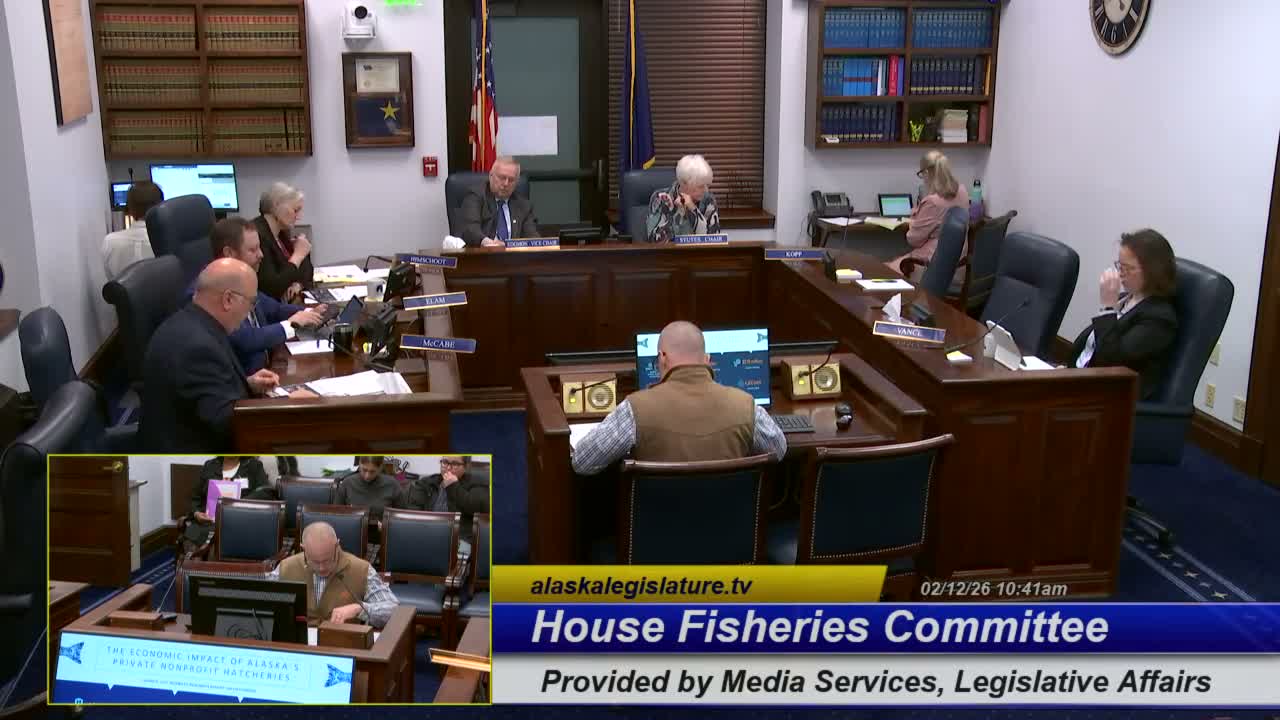
Scott Wagner, general manager of the Northern Southeast Regional Aquaculture Association (NSRAA), said a presentation slide citing an economic update shows hatchery-produced salmon account for an annual average of about 162,000 fish directed to sport, personal‑use and subsistence fisheries and that the hatchery sector supports roughly $576 million in total economic output, $219 million in labor income, about $3 million in fisheries business tax receipts, income for more than 14,000 people and about 4,200 jobs. "These are impressive figures for commercial fishermen funded non‑profits," Wagner told the committee.
Wagner and Kodiak Regional Aquaculture Association executive director Tina Fairbanks described how PNP hatcheries operate across Alaska — from Kodiak and Cook Inlet to Prince William Sound and Southeast — and stressed that their mission is to "increase salmon abundance and enhance fisheries while protecting wild salmon stocks." Fairbanks said associations are governed by regional boards that include sport, subsistence and commercial user groups and that the programs are intended to supplement, not supplant, natural production.
The associations are financed primarily by commercial fishermen through two mechanisms: cost recovery (harvesting and selling a portion of returning hatchery salmon) and a self‑assessed salmon enhancement tax in regions that have adopted it. Wagner said the enhancement tax funds roughly 10% of his association’s budget while cost recovery supplies the remainder.
Operators asked for legislative and administrative support to address implementation challenges with a DOR fishery assessment regulation that Wagner said was modified in 2024. "Changes in DOR regulations in 2024 modified some conditions of the regulations, and some previous regulation language needs clarification," Wagner said. He proposed three fixes: move the reporting deadline from Oct. 1 to Nov. 1 to allow finalized audit data; clarify how the current year is defined for organizations that operate on a fiscal year; and allow limited flexibility to apply an assessment rate below the DOR calculation where appropriate.
Wagner said DOR and association staff are communicating and that an AO‑360 waiver request is under Office of Management and Budget review that could address 2026 season issues, but longer‑term regulatory alignment is still needed.
Why it matters: Hatchery revenues, infrastructure and coordination with state agencies affect fishermen, processors and regional economies that rely on salmon harvests. Wagner warned that many state‑owned hatchery facilities are aging — "most of these facilities are now over 40 years old" — and that sustaining permitted production levels and ADF&G funding is critical for long‑term stability.
What’s next: Committee members requested additional information and follow‑up from state agencies. Chair Stutes said the committee expects a presentation from Bill Templin (Alaska Hatchery Research Project) in a future meeting to address genetics and research gaps.
Source: Presentation and Q&A before the House Special Committee on Fisheries, Feb. 12, 2026. Quotes attributed to Scott Wagner and Tina Fairbanks come from the committee transcript and presentation slides.