DNR official to Senate committee: agricultural leases require appraisals and covenants but enforcement is limited
Loading...
Summary
Rachel Longacre of DNR’s Division of Mining, Land and Water told the Senate that agricultural leases and land sales require surveys and appraisals, that only a handful of agricultural leases exist statewide, and that enforcement of agricultural covenants is possible but rarely pursued without a strong case.
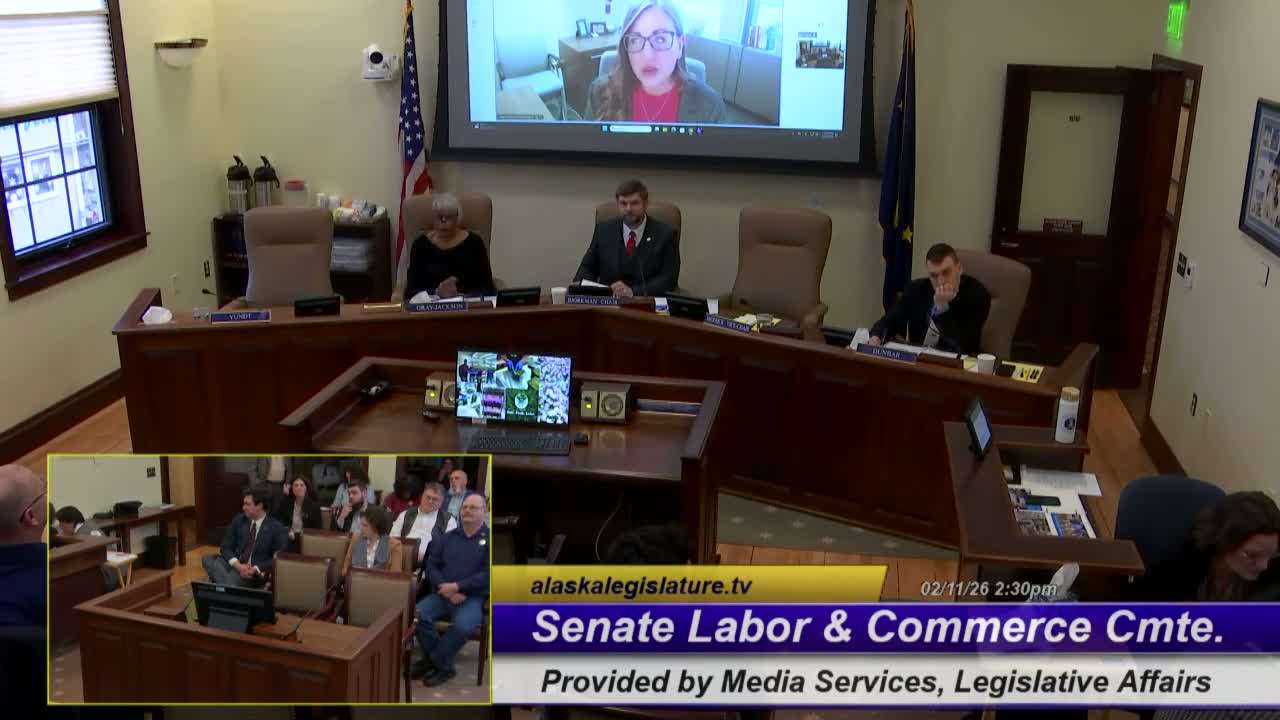
Juneau — The Division of Mining, Land and Water told the Senate Labor and Commerce Committee on Feb. 11 that current state law requires surveys and appraisals for long‑term agricultural leases and that while covenants to preserve agricultural use are enforceable, practical enforcement options are limited.
“For agricultural leases, surveys and appraisals are required,” said Rachel Longacre, who represented DNR at the hearing. Longacre said appraisals and covenants are intended to protect the public interest and ensure fair market value when land is leased or sold.
Longacre told senators that adjudication for an agricultural lease from application to early entry authorization typically takes nine to 12 months, that general state land adjudication averages roughly 66 adjudication days, and that agricultural leases require longer review because of additional technical steps such as farm conservation plans and suitability determinations.
On enforcement, Longacre said the department has statutory remedies: for leases the department can work with tenants to remedy problems or terminate leases; for land sold with agricultural covenants, title can in extreme cases revert to the state and the Department of Law can be asked to pursue court action to recover title, though such litigation is costly and is brought only when facts justify it.
Longacre also described program‑level changes DNR believes would improve access for agriculture: clarifying fee schedules to avoid costly appraisals, creating a lease‑to‑sale pathway that evaluates agricultural merit (not just highest bid), strengthening covenant management and reducing survey/appraisal requirements specifically for agricultural leases to cut delays and costs.
Committee members pressed for details about the Nenana/Took Chacket project; Longacre said DNR has made infrastructure investments there (roads, utilities) and agreed to follow up with the committee with exact numbers on sales and active farms.
The department said it manages roughly 105,000,000 acres of general state uplands and currently administers a small number of agricultural leases (about 4–6) under existing classifications.
The committee will consider related bills at future meetings but took no votes during the session.