Get Full Government Meeting Transcripts, Videos, & Alerts Forever!
Get email alerts on the Utilities topic
No spam. Unsubscribe anytime.
Council adopts bulk water and separate fire-protection rate schedule
Summary
After a presentation from utilities staff, the council approved a midyear amendment setting three classes of bulk water rates and a one-time annual fire-protection charge for customers receiving fire protection but not domestic water; staff said the changes are designed to reflect volume discounts while protecting the system.
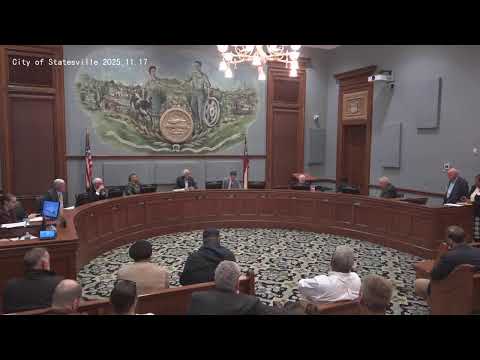
Statesville — The Statesville City Council approved a midyear amendment to the city’s fee schedule establishing bulk water classes and a separate annual fire-protection charge for accounts that receive fire protection from city infrastructure but not domestic water service.
Dr. Vaughn, the city utilities presenter, said the policy creates three bulk-rate classes for high-volume municipal and industrial users and that the city will negotiate annual agreements with large customers, audited periodically. He summarized the proposed discounts against the inside rate: a large-user tier at roughly 85% of the inside rate for certain volume thresholds, a mid-tier at about 78%, and a higher-volume tier at roughly 68% (as presented). He also described a one-time annual fire-protection charge that would apply where the city supplies fire protection to a property without domestic water service; an example given was a $32 annual charge for a residence served for fire protection only.
Council members asked whether discounted bulk rates would still cover capital costs. Dr. Vaughn responded that the basic operating rate covers sunk costs (staff, facilities and capital already invested) and that higher volume users can pay a lower per-unit price while preserving margin over time. After brief discussion the council moved, seconded and approved the proposed rates by voice vote.
What happens next: Staff will begin negotiations with interested bulk customers and execute annual agreements; auditing procedures will be applied to ensure compliance with the terms described in the presentation.