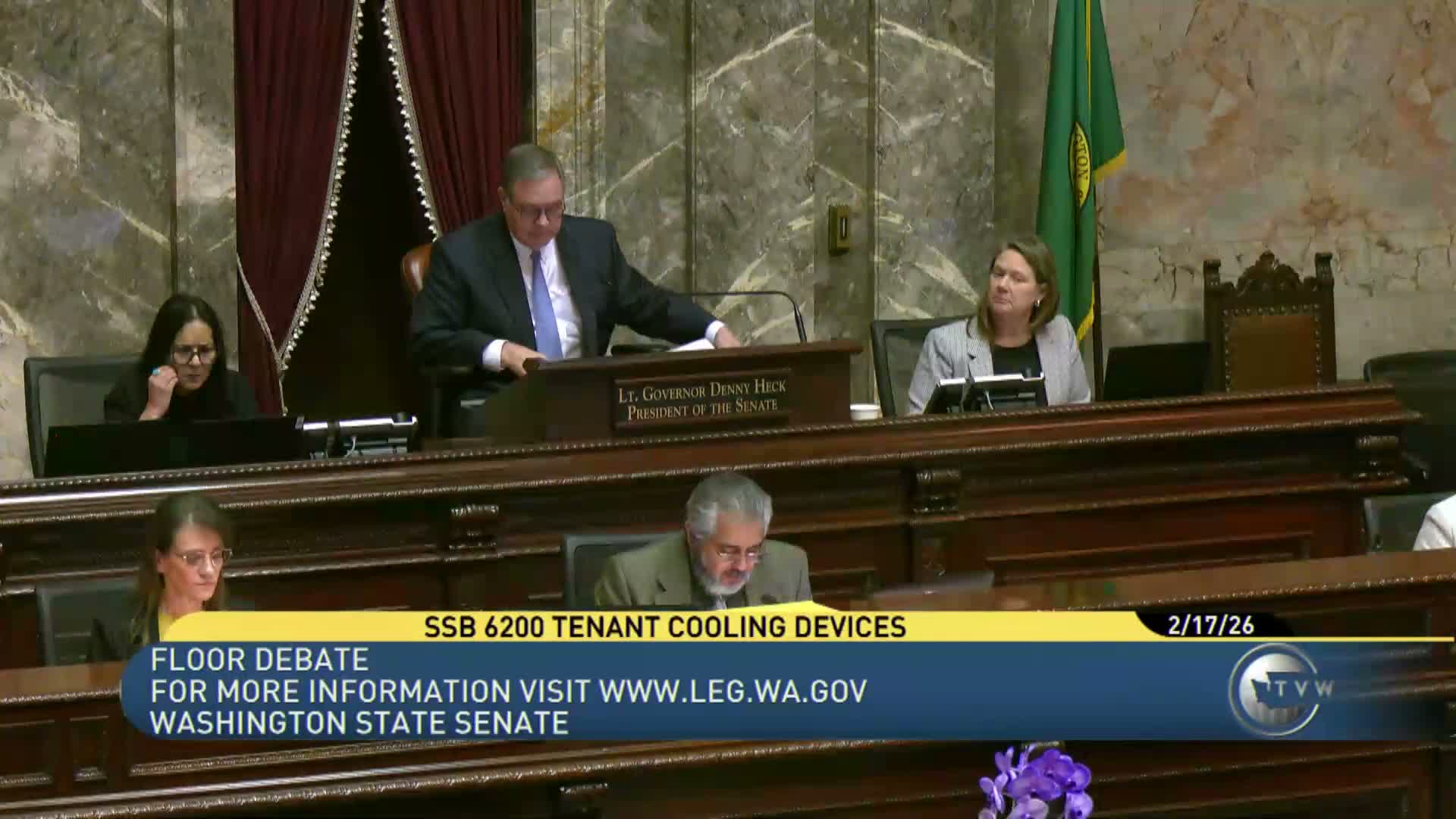
Senate passes renter portable cooling bill after floor amendments addressing safety and liability
Loading...
Summary
Lawmakers passed SB 6200 to allow renters to install specified portable cooling devices with guardrails for safety; floor amendments clarified notification, liability and unit types after debate over electrical safety, aesthetics and landlord costs.
The Washington State Senate on Feb. 16 passed Substitute Senate Bill 6200, which allows renters and mobile‑home occupants to install specified portable cooling devices in their residences under defined guardrails.
Sponsor Senator Slatter framed the bill as a public‑health measure: "Extreme heat is not just a nuisance. It's a mass casualty health emergency," she said, citing the 2021 heat dome and the disproportionate indoor toll on vulnerable residents. Slatter said the bill uses clear guardrails — devices must comply with building codes, safety standards and manufacturer guidelines; landlords retain protections and may deny devices for insurance or code violations.
Opponents raised implementation and safety concerns. Senator Wagner said the measure left unanswered questions about who installs units, what constitutes unreasonable damage and whether landlords could recoup increased utility costs. Senator Schoessler warned of electrical and fire risks tied to higher‑capacity units. Senator Christian raised aesthetic and seasonal removal concerns.
Floor amendments were adopted to address notification, liability and unit classes (including 'saddle' window units and other portable device types), and to carve out exemptions where units would violate building or electrical codes. After debate and amendment, the secretary reported final passage with 35 ayes and 14 nays and the bill was declared passed.
Why it matters: Lawmakers described the bill as a targeted, low‑cost way to reduce heat‑related harm for renters who lack built‑in air conditioning. The adopted amendments reflect negotiated protections for landlords and safety carve‑outs.
What’s next: Implementation will rely on the adopted definitions and local code enforcement; the transcript indicates landlords may still deny devices where there are electrical code or insurance barriers.