Get AI Briefings, Transcripts & Alerts on Local & National Government Meetings — Forever.
Senate approves language to create health‑care board that would activate if federal action allows state plan
Loading...
Summary
The Senate adopted an amendment to SB 5947 to add Universal Health Care Commission input and passed the bill on final reading; sponsors described the measure as a design step that takes effect only if federal conditions or waivers trigger state implementation.
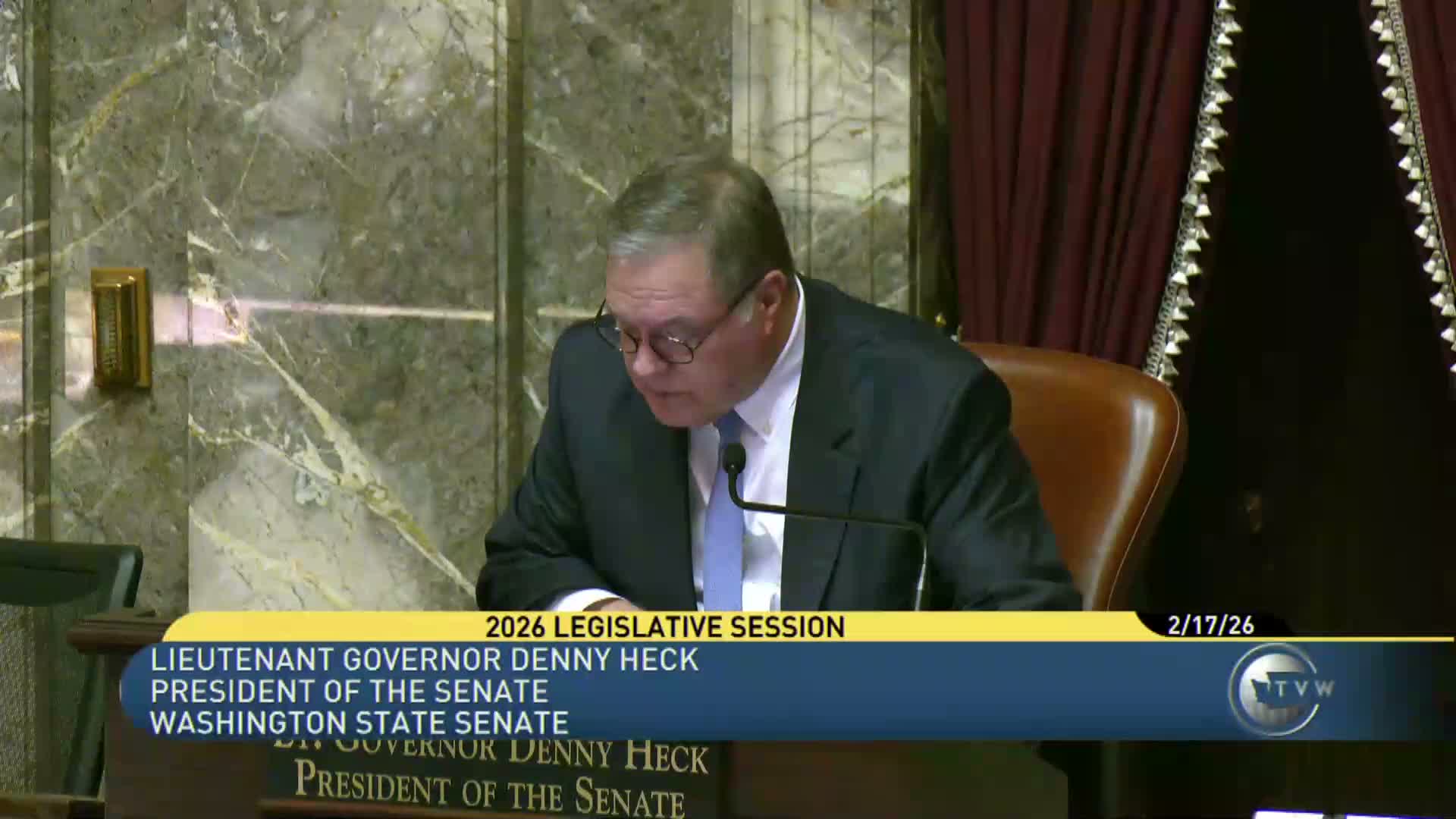
The Washington State Senate on Feb. 16 passed Senate Bill 5947, a measure that would create a state health‑care board to design a universal‑coverage program if federal action or waivers make a state plan practicable.
Sponsor Senator Manka Hasegawa told colleagues the bill is "the next step because if the federal government does follow through ... this bill then triggers to create a health care board," and that amendment 558 was intended to "make sure that the expertise involved with the Universal Health Care Commission is incorporated into the underlying bill." Hasegawa described the change as responsive to hearing testimony and stakeholder work.
Opponents focused on cost and feasibility. Senator Mazal said, "We've looked at it. We'd have to double our state budget to accomplish that," and announced a no vote on final passage. Other senators framed the measure as preparatory rather than immediately budgetary, noting it would not create an operational program absent the federal trigger.
The Senate adopted amendment 558 and advanced the bill to third reading and final passage. The secretary recorded 30 ayes and 19 nays; the bill was declared passed on final reading.
Why it matters: The bill does not immediately create a statewide universal coverage program; it establishes a governance and design process that would become operative if the federal government provides the statutory pathway or waivers sponsors described. That conditional structure was central to floor debate.
What’s next: Because the bill is contingent on external federal action or waiver authority, implementation steps (including board appointments and any program design) would follow only after the trigger conditions stated in the bill occur.