
House approves bill expanding local government flexibility after debate over councilmanic tax authority
Get AI-powered insights, summaries, and transcripts
Subscribe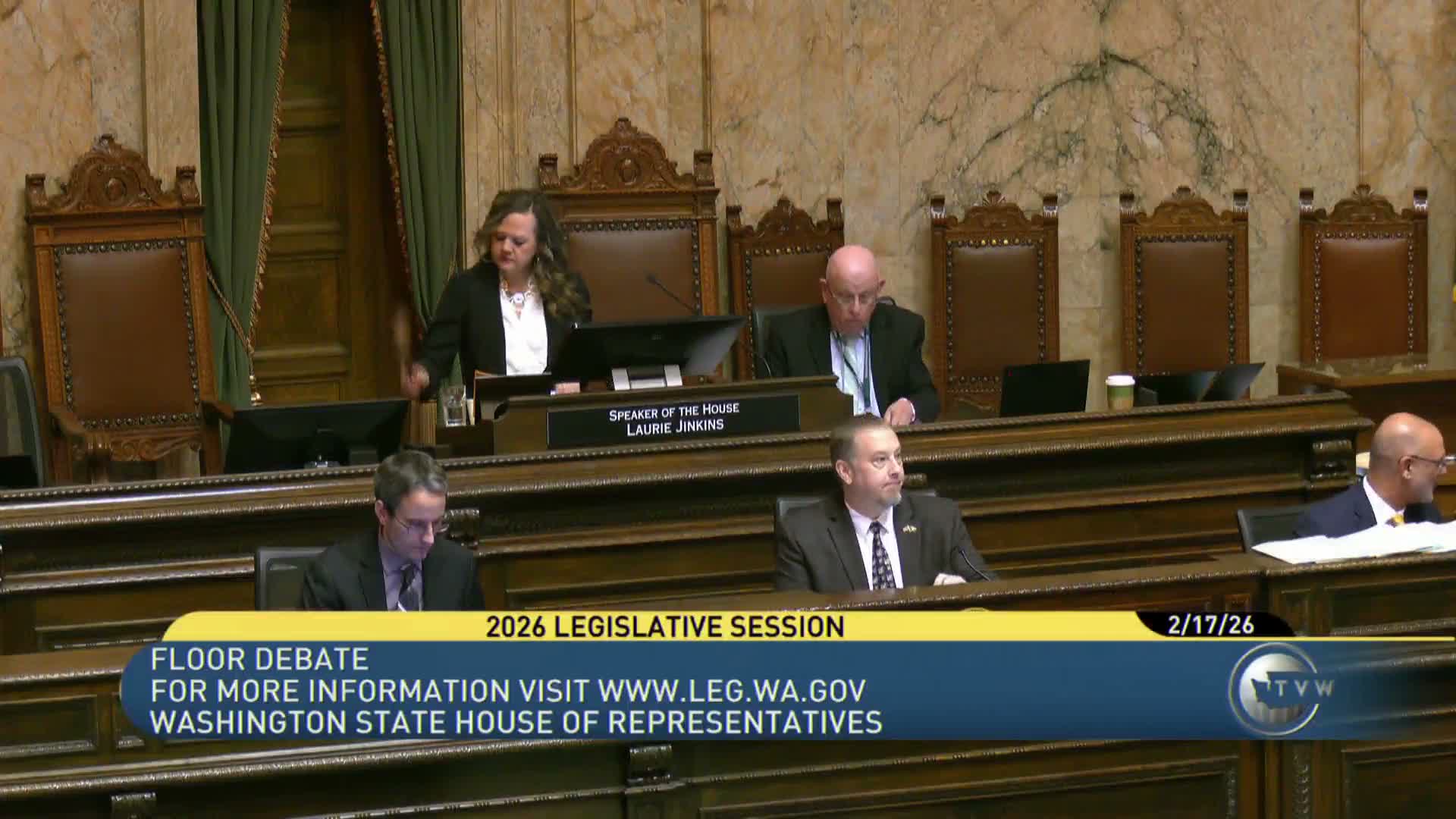
Summary
The Washington House passed engrossed substitute House Bill 24-42 after extended floor debate over whether counties and cities should be able to raise certain local taxes without voter approval. Multiple amendments were considered; the bill passed 53 yeas, 44 nays, 1 excused and takes effect July 1, 2026.
The Washington State House on the floor advanced and passed engrossed substitute House Bill 24-42 after extended debate over local taxing authority and other provisions. The House declared the bill passed on a roll-call tally of 53 yeas, 44 nays, and one excused.
Supporters said the bill provides necessary flexibility for counties and cities to address local needs. Representative Wiley, closing debate for a segment of floor remarks, urged lawmakers to give local officials the tools they need, saying, “Our local government officials are the eyes that see the need.”
Opponents focused on what they described as a pattern of growing state spending and the need to give voters a direct say when taxes increase. Representative Abell moved amendment 1998, saying, “The effect of this amendment is to remove the councilmanic authority for the proposed tax increases and require a vote of the people.” That amendment was considered on a voice vote and was not adopted.
Other amendments produced mixed results. Amendment 2039, described by its sponsor as adding “additional flexibility” while making technical corrections around public-health funding, was adopted. Amendment 1840, which would have removed a provision allowing counties to add a percentage to the real estate excise tax, was also adopted. Several other proposed changes failed to gain approval.
Members who opposed stripping councilmanic authority argued that local officials and counties are better positioned to decide service needs and how to fund them. Representative Zahn urged colleagues to vote no on an amendment that would limit local flexibility, saying the ability to fund public-health clinics and local services is “critical” and should rest with counties and cities.
The House advanced the bill to third reading and final passage after the sequence of amendment votes. The clerk announced that HB 24-42 takes effect July 1, 2026.
The speaker declared that engrossed substitute House Bill 24-42 had received a constitutional majority and was passed. The next procedural step is enrollment and transmission to the Senate as required under legislative rules.