Assembly hears plan for regional loan of roughly $590 million to bridge Bay Area transit cash‑flow gaps
Loading...
Summary
Committee members questioned a Finance‑negotiated plan (ABSB 117) to let CalSTA loan up to roughly $590 million to MTC for loans to four Bay Area transit operators, drawing on awarded-but-unallocated TIRCP funds; the proposal includes a 12‑year term, STA security and triggers to protect projects, but members pressed on repayment risk and protections for major legacy projects.
The Assembly Budget Committee on Feb. 18 considered ABSB 117, a trailer bill that would authorize CalSTA to loan up to the stated regional amount to the Metropolitan Transportation Commission (MTC), which would in turn issue loans to four Bay Area transit operators experiencing near‑term cash‑flow needs.
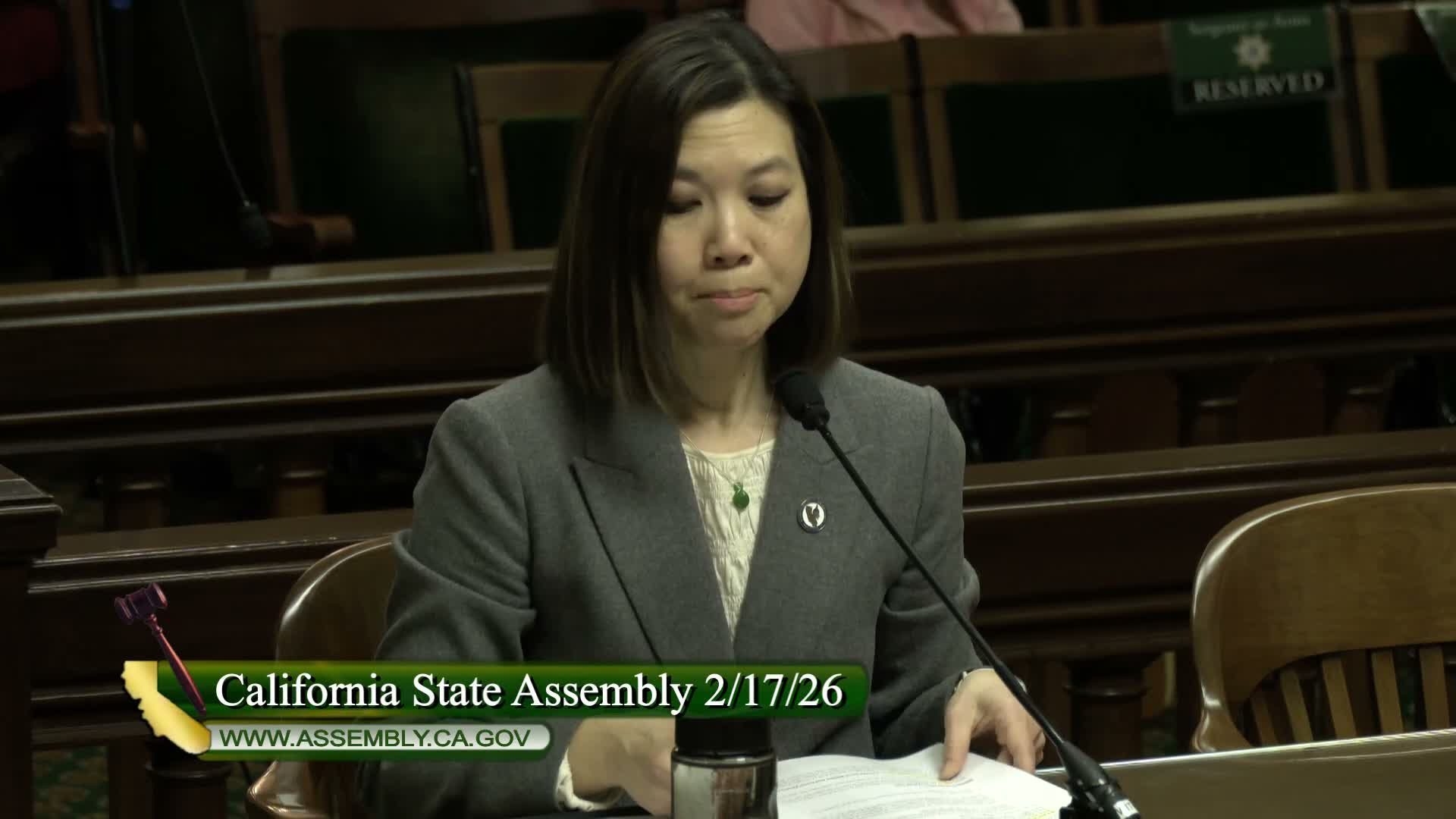
Erica Lee of the Department of Finance said "this bill provides a loan of up to 590,000,000" to support the San Francisco Bay Area Rapid Transit District (BART), San Francisco Municipal Transportation Agency (Muni), the Peninsula Corridor Joint Powers Board (Caltrain), and the Alameda Contra Costa Transit District (AC Transit). Lee described the proposal as a regional, cost‑neutral approach that uses funds already awarded to Bay Area projects through the Transit and Intercity Rail Capital Program (TIRCP).
How it would work: Finance staff explained the mechanism is not a permanent reallocation of project awards but a short‑term loan against a pool of "awarded but not allocated" TIRCP funds that exist because projects often receive awards years before seeking an allocation. James Moore of the Department of Finance said there is "over $1,000,000,000 of funds that have been awarded to various capital projects in the Bay Area but have not yet come forward for an allocation," which creates room to structure a loan. The loan term would be 12 years with the first two years interest‑only and an interest rate equivalent to the state's Surplus Money Investment Fund earnings; operating repayment would be secured by State Transit Assistance (STA) revenues.
Member concerns and protections: Several members framed the measure as addressing cash‑flow needs but asked whether it effectively amounts to a bailout and whether it exposes the state or other regions to risk. Finance repeatedly described the mechanism as a loan designed to be cost neutral to the state and said securitization through STA and the ability to withhold STA allocations provide enforcement options if operators fail to repay. Finance also described allocation‑triggers: if certain funding pots dip below $350,000,000, the California Transportation Commission (CTC) and MTC would be notified and could create prioritization plans to mitigate impacts to projects.
Regional and project risks: Assemblymember Ahrens and a San Jose representative warned that the BART to Silicon Valley Phase 2 — a multibillion‑dollar legacy regional project — could be harmed if protections are insufficient, and asked for "cleanup language" to strengthen project safeguards. Finance and MTC/CTC monitoring were presented as mitigation, and one member cited an NTC estimate that roughly $1.5 billion is available in the awarded‑but‑unencumbered pot for the region.
Stakeholder testimony: BART, Caltrain, AC Transit and local governments provided public comment in support or appreciation for the negotiated language. Matt Robinson of Caltrain highlighted pre‑pandemic farebox recovery of 73% and a strong year‑over‑year ridership recovery, saying local agencies still need bridge funding until local measures or ridership gains stabilize operations.
Next steps: No committee vote was taken at the informational hearing. Members asked administration and staff to follow up with details about allocation priorities, project protections and the potential implications if local measures fail to deliver projected revenues; the committee expects floor consideration in the coming days.