Assembly committee backs narrow APA exemption to speed 2025 Prop 4 projects, moves $20 million transfer
Loading...
Summary
The Assembly Budget Committee heard ABSB 107, which would exempt development of program guidelines for 2025 Proposition 4 climate bond appropriations from the Administrative Procedure Act and transfer $20 million from Visit California to Go-Biz; members pressed for vendor safeguards and protections for time‑sensitive rural projects.
The Assembly Budget Committee on Feb. 18 heard ABSB 107, a trailer bill that would make technical amendments to recent budget acts, exempt certain 2025 Proposition 4 climate bond allocations from the Administrative Procedure Act (APA) for purposes of developing program guidelines and selection criteria, and transfer $20,000,000 from Visit California to the Governor's Office of Business and Economic Development (Go-Biz).
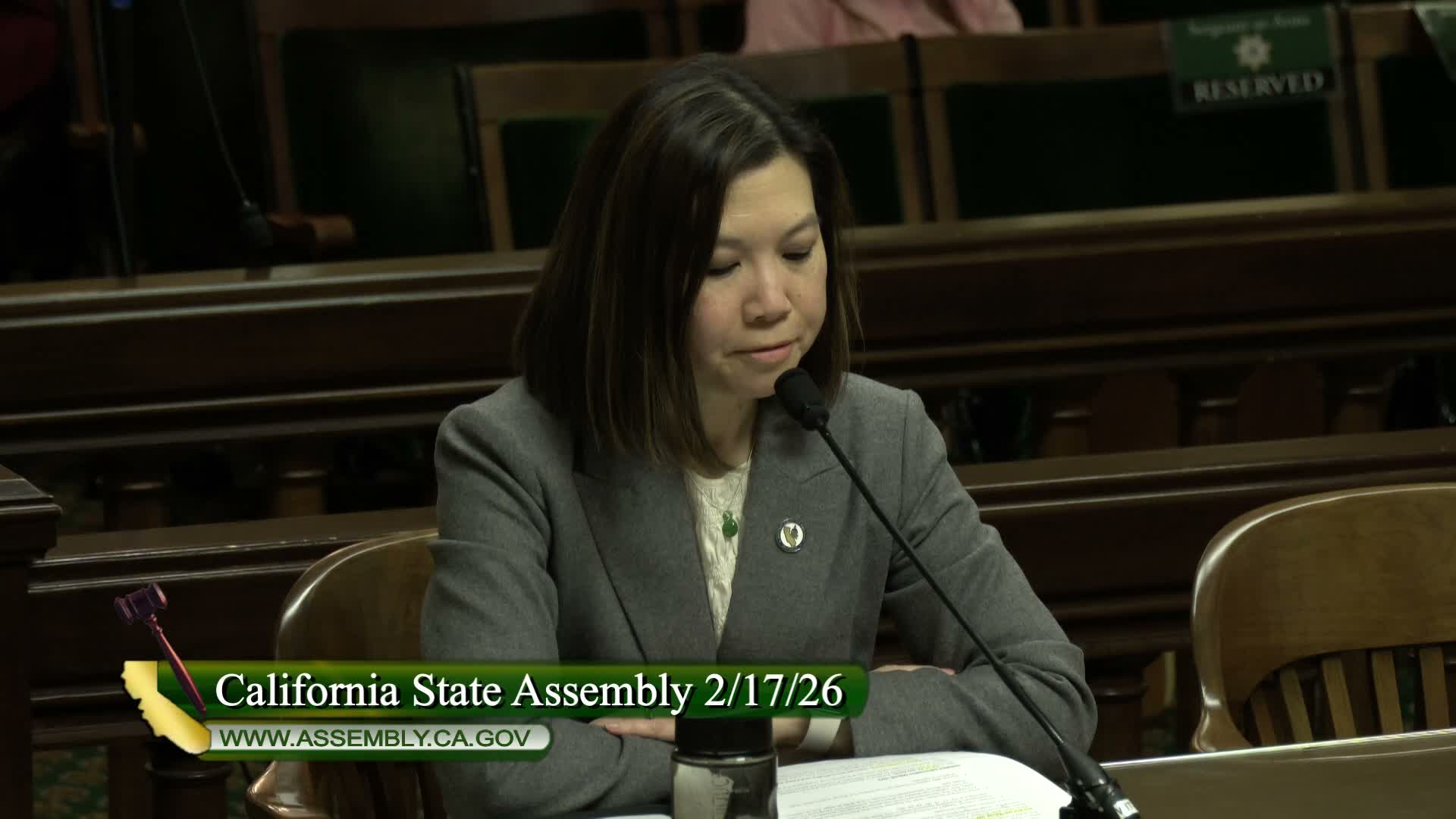
Erica Lee of the Department of Finance told the committee that ABSB 107 "includes a series of technical corrections" and "adds control section 15.01 to exempt from the Administrative Procedure Act the development and adoption of program guidelines and selection criteria necessary to effectuate or implement programs that are funded by the climate bond appropriations that were made in the 2025 Budget Act." Lee said the measure is narrowly focused on projects approved as part of the 2025 Budget Act.
Why it matters: committee members and administration staff said the exemption aims to avoid delays in getting voter-approved climate bond funds out for wildfire prevention and other climate programs this year. Lizzie Urie of the Department of Finance told the committee that recent natural-resources bonds (Proposition 68, Proposition 84, Proposition 1) have included similar APA exemptions and that emergency rulemaking under SB 105 has succeeded for some departments but delayed others; the stated purpose of ABSB 107 is to allow timely program implementation while preserving opportunities for public input during program development.
Members pressed for safeguards. Vice Chair Tengipa and other members asked whether there are preapproved vendor lists and what oversight would exist if competitive-bidding exemptions are used in rural or remote areas. Urie said the parks competitive-bidding exemption in the bill is intended for "competitive bidding deserts," where a department might receive one or no bids, and that the exemption is meant to avoid time-sensitive delays—not to eliminate oversight. The committee repeatedly sought clarity on oversight and ways for vendors to demonstrate capacity and accountability.
Public comment echoed administration priorities and urged caution. Julia Hall of the Association of California Water Agencies, Beth Olaso representing Water Reuse California and allied groups, and speakers from environmental and agricultural groups voiced support for the APA exemption and for AB 35, the broader bill some supporters are pursuing. Meghan Cleveland of The Nature Conservancy said it was "critical to get some of those important Prop 4 investments out there this year."
The hearing produced no vote; Chair Gabriel and members said the bills are expected to be heard on the Assembly floor later in the week. The committee did not adopt statutory language beyond what was on the agenda and asked staff and administration to follow up with detailed answers about competitive‑bidding procedures, vendor oversight, and how parks exemptions would be applied in rural areas.