
Arizona House Democratic caucus reviews dozens of bills; ESA funding and AI education draw attention
Get AI-powered insights, summaries, and transcripts
Subscribe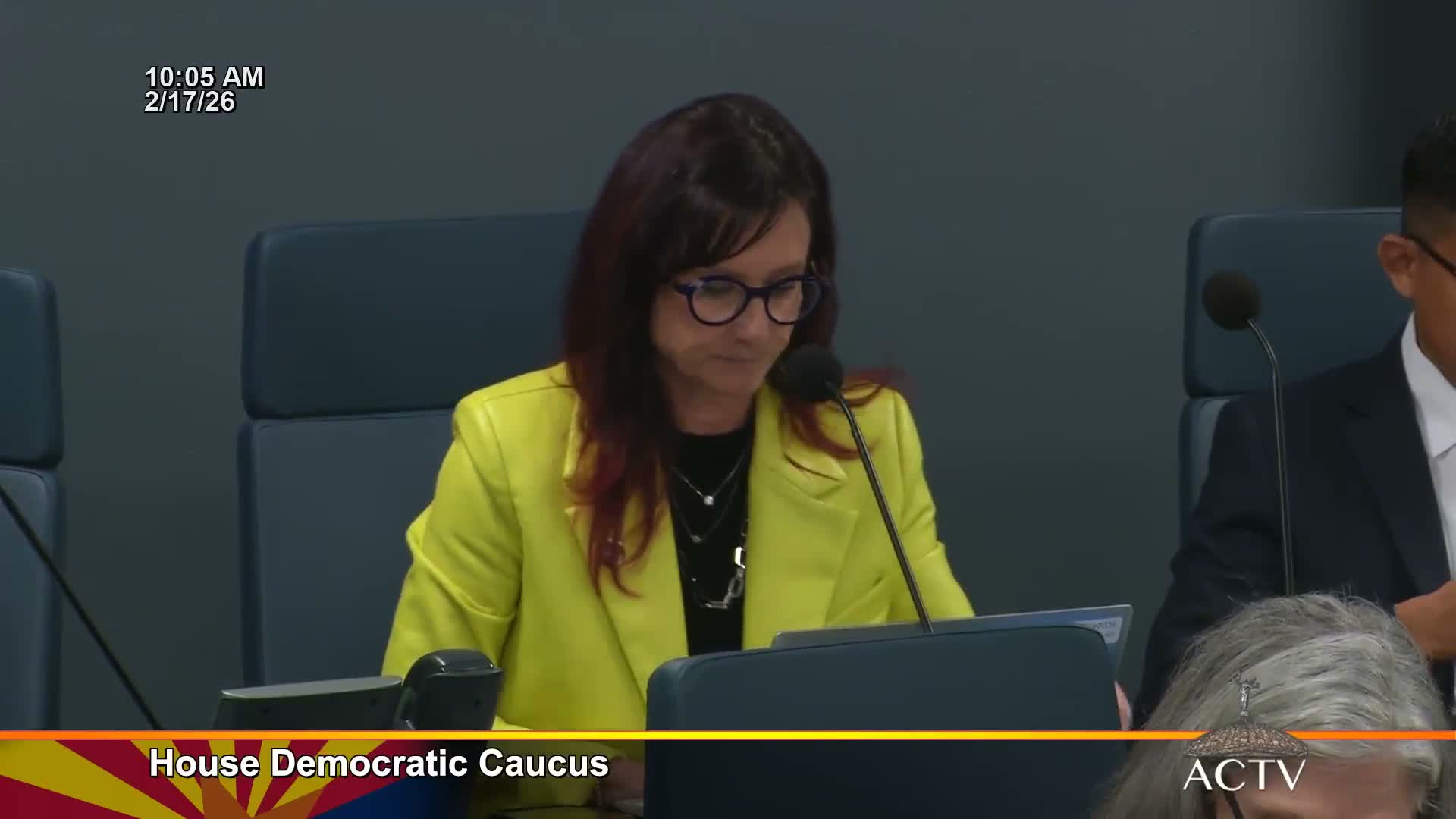
Summary
Members reviewed a large consent calendar including appropriations for school-choice ESA administration, multiple artificial‑intelligence education bills and several controversial measures pulled from consent for further discussion. A caucus member asserted a 20% fraud rate in a sampled set of ESA purchases.
Unidentified Speaker S1 told the caucus that, "The fraud rate, with a sample of 383,000 polls of spending was the fraud rate was 20%," referring to purchases in the ESA program sample. That assertion came as presenters introduced two appropriations to the Department of Education to administer Arizona’s Empowerment Scholarship Account (ESA) program: HB 2449, which the presenter described as an appropriation of $2,600,000 and 12 FTEs to ADE in fiscal year 2027, and HB 2500, a supplemental appropriation of $1,000,000 and 12 FTEs for fiscal year 2026.
The caucus also considered several bills on artificial intelligence in education. Presenters described HB 2311 (disclosures for conversational AI services affecting minors), HB 2409 (establishing an Arizona Artificial Intelligence Program within ADE) and HB 2410 (establishing that communications with AI may be privileged where equivalent human‑professional privilege would apply). Members repeatedly raised implementation concerns: they stressed curriculum vetting by the State Board of Education and cautioned against unfunded mandates for teacher training.
Several measures were pulled from consent for further floor strategy or substantive review. Ranking member Villegas asked HCR 2044 — a measure that would send to voters a ban on state uses of funds or policies addressing race or ethnicity (including DEI) — be pulled from consent. Members also pulled HB 2093, a proposal to repeal a statute requiring K–12 health education to include mental‑health instruction, after caucus members noted emotionally charged testimony from grieving parents in committee. Other controversial items noted for further work included bills with potential constitutional issues (for example, a proposed moratorium on local tax, fee and rate increases that a caucus leader said may conflict with the Arizona Constitution).
What happened next: presenters generally said bills had passed committee or were on consent and made themselves available for questions; caucus members used the session to flag items for removal from consent, to seek floor strategy, and to highlight implementation, funding or constitutional concerns. The caucus ended with a tribute to Reverend Jesse Jackson and adjourned.
Why it matters: the caucus is vetting a broad legislative package in advance of floor action, and members used this meeting to highlight program integrity (the ESA fraud claim), funding tradeoffs (how ESA administrative funding is allocated) and potential consequences of new education and public‑policy mandates. Several high‑profile items were set aside for further discussion, signaling likely debates on the floor or in future hearings.
Next steps: bills noted as pulled will be addressed in floor strategy sessions or on the floor; presenters repeatedly invited members to ask follow‑up questions and caucus leadership indicated further discussion would occur where votes were split or constitutional questions were flagged.