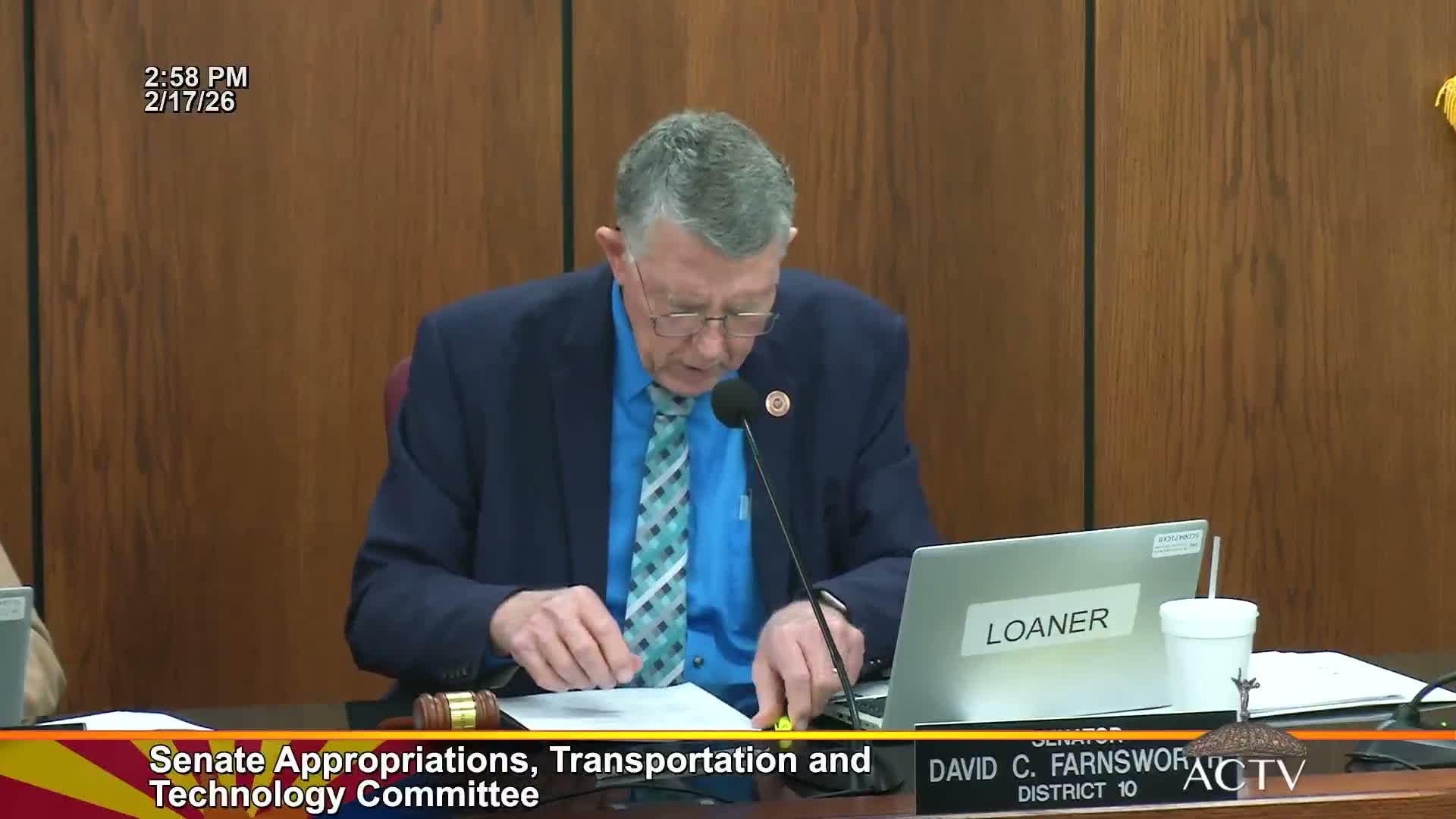
Committee roundup: Appropriations and policy bills advanced on Feb. 12 — transportation, public safety, education and more
Loading...
Summary
The Senate Appropriations committee advanced a package of bills Feb. 12, including transportation projects (Olga Road, Rodeo Road), border‑related reimbursements and fencing, AI border security, cybersecurity investments, school cellphone policy changes, a light‑rail study, graduate medical education funds, invasive‑species mitigation, and a slate of smaller local grants and programs.
The Senate Committee on Appropriations, Transportation and Technology advanced multiple bills on Feb. 12. Below are concise outcomes and key details drawn from the hearing record.
Key votes and notes
- SB 11‑57 (reimbursement for supplemental border fencing): $20,000,000 to DPS for reimbursing supplemental fencing/bollard walls; sponsor said this is back‑dated reimbursement; committee moved and gave a due‑pass recommendation (5 ayes, 3 noes, 2 not voting).
- SB 12‑45 (Williams Rodeo Road pavement): $2,457,100 to ADOT for Rodeo Road pavement replacement; sponsor trimmed the request after local review; committee gave do‑pass (6 ayes, 3 noes, 1 not voting).
- SB 17‑07 (AI for border security): $5,000,000 to DPS for AI border technologies; sponsor framed AI as complementary to physical barriers; committee advanced the bill (6 ayes, 4 noes).
- SB 12‑73 (Olga Frontage Road rehabilitation): $14,000,000 to ADOT for Olga Road frontage rehabilitation (between Bowie and San Simeon); sponsor said it is critical for school bus and secondary access; committee advanced (6 ayes, 4 noes).
- SB 18‑11 (school cell‑phone use 'in the case of an emergency'): Sponsor and Stand for Children testified the change gives districts flexibility; committee advanced with reservations (8 ayes, 1 no, 1 not voting).
- SB 11‑69 (graduate medical education): $10,000,000 and $18,700,000 Medicare expenditure authority for GME to address physician shortages; committee advanced (9 ayes, 0 no, 1 not voting).
- SB 16‑77 (salt cedar mitigation): Appropriation to Department of Forestry & Fire Management for salt‑cedar eradication along the Gila River (amendment filled in $3,000,000 then discussed as adjusted); local governments and irrigation districts supported the effort; committee advanced (10 ayes, 0 no).
- SB 13‑30 (jury trials in narrow parenting‑time cases): Committee advanced the bill but heard concerns about unfunded county costs (6 ayes, 4 no).
- SB 13‑91 (law enforcement stress management pilot): $950,000 appropriation to AZ POST for a stress resilience pilot; committee advanced (9 ayes, 0 no, 1 not voting).
- SB 14‑98 (Paradise Valley police training center): $2,500,000 appropriation, local match noted; committee advanced (7 ayes, 3 noes).
- SB 15‑31 (distracted‑driving specialty plate): Committee advanced creation of a specialty plate and fund to support distracted‑driving education and victim services (9 ayes, 0 no, 1 not voting).
- SB 15‑98 (community garden grants, ADE): $500,000 for school community gardens; committee advanced (9 ayes, 0 no, 1 not voting).
- SB 18‑18 (wayfinding signs): Allowed preapproved placement of wayfinding signs and added $300,000 in grants for rural wayfinding; committee advanced the amended bill (7 ayes, 2 no, 1 not voting).
What this means: The committee moved a broad package of appropriations and policy bills to the Senate floor. Several transportation and border bills drew fiscal concerns and calls for local cost‑sharing; the light‑rail study prompted sustained business testimony and a floor‑level commitment from the sponsor to consult stakeholders.
Next steps: Bills advanced from committee will appear on the Senate floor calendar for additional debate, amendment and final votes. Sponsors indicated they will pursue follow‑up conversations on cost‑sharing, departmental requests, and study scope where appropriate.