
Committee approves CTED transparency and IGA dispute process after months of East Valley disagreements
Get AI-powered insights, summaries, and transcripts
Subscribe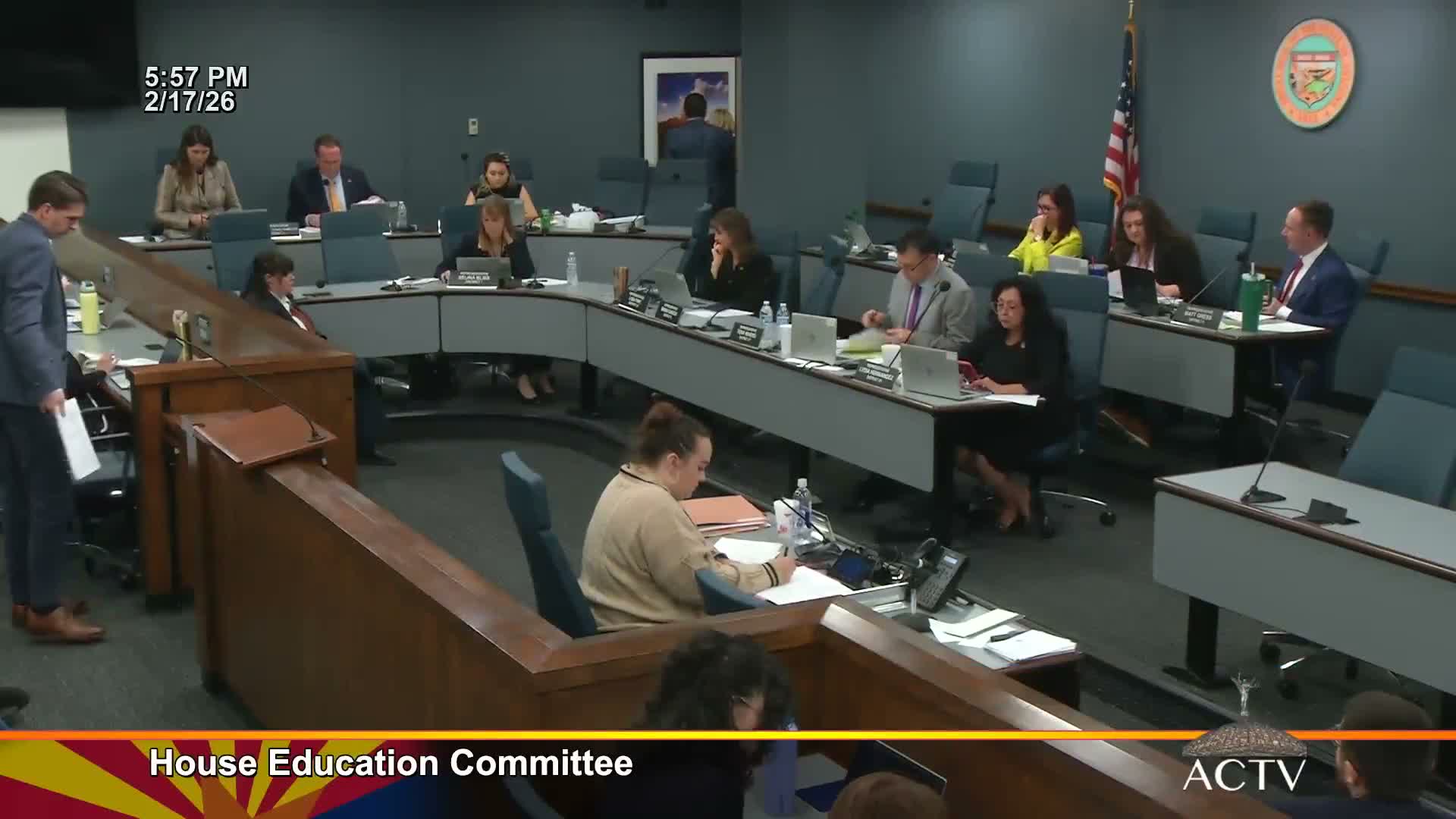
Summary
Lawmakers adopted a substantial amendment to HB 4,034 requiring CTEDs to publish quarterly expenditure reports, clarifying intergovernmental agreement (IGA) responsibilities, and creating an appeal process when IGAs lapse. The measure was advanced after extended testimony from districts, CTEDs and EVIT stakeholders.
House Bill 4,034, a measure focused on career‑technical education district (CTED) transparency, intergovernmental agreements (IGAs) and dispute resolution, advanced from the Arizona House Education Committee after members adopted a comprehensive amendment that responds to long‑running disagreements between several East Valley school districts and their CTED.
Representative Chase explained that amendments require CTEDs to submit quarterly expenditure reports to participating districts, clarify which entity oversees instructor certification versus on‑campus instructor evaluation, require IGAs to define apportionment formulas for ADM and set time clocks for negotiating or appealing expired IGAs. The amendment also directs the State Board of Education to serve as the appeal body when IGAs cannot be finalized before the school year begins.
Stakeholders presented contrasting views. Lana Berry, CFO of Chandler Unified, urged that "funding needs to follow the student," saying the districts generate ADM and want clearer accounting of CTED retained shares and expenditures. Representatives of CTEDs and their consortium argued the CTED statutory role includes oversight responsibility for instructional quality and compliance, and that many IGAs already include dispute resolution clauses; they supported improved transparency but warned against preempting local agreements.
The committee committed to convene additional stakeholder meetings to refine remaining ambiguities about apportionment, auditing and dispute administration before floor consideration. After robust discussion, the committee returned HB 4,034 as amended with a due‑pass recommendation (9 ayes, 2 noes, 1 absent).