Get Full Government Meeting Transcripts, Videos, & Alerts Forever!
Get email alerts on the Water Quality topic
No spam. Unsubscribe anytime.
Rosemount staff: testing finds elevated gross alpha at Well 8; city posts notice, says not an emergency
Summary
Rosemount public works director said routine testing found gross alpha radiation above Department of Health standards at Well 8. The city mailed required notices, launched a web page (www.rosemountmn.gov/waterquality) and will post quarterly updates while staff studies mitigation options.
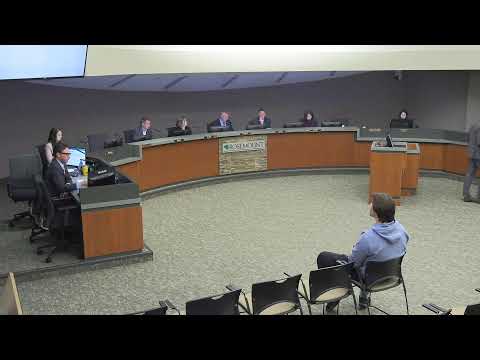
Rosemount — The city’s public works director told the City Council on Feb. 17 that routine quarterly testing found gross alpha radiation levels above Department of Health standards at Well Number 8 and that the city has issued the required notice to water customers.
Nick Edgar, Rosemount’s public works director, said the Department of Health collects samples “at the well source” and that the elevated result is tied to naturally occurring elements in local geology. “It’s not considered an emergency by the Department of Health,” Edgar said during the council meeting.
Edgar said the city had 30 days to produce and mail the customer notice and that staff worked with the Department of Health to refine the language. He advised residents the measurement that triggered the notice is taken at the well and that water at household taps is typically a blend of multiple wells, which can result in lower concentrations at the tap than at a single well source.
Edgar told the council the city has created a web page with the notice and MDH-sourced frequently asked questions at www.rosemountmn.gov/waterquality and will post quarterly status updates while staff evaluates options. “We’re already in the midst of starting to work on that,” he said.
When residents asked about immediate actions for households with infants or other vulnerable people, Edgar said the city staff are not medical providers and recommended that residents present the city’s notice to their health-care provider for individualized guidance.
Edgar said the city has nine wells in its system, rotates which wells are active depending on season and demand, and maintains monthly pumping reports and DNR permits for groundwater withdrawal. He noted that a single-quarter spike would not automatically trigger corrective requirements — the Department of Health uses an annual average of quarterly tests to determine whether sustained action is required.
The city will compile trend data and other materials for the web page and promised to call attention to updates through the quarterly newsletter and other communications. The council did not take an action item at the meeting; Edgar said staff would bring recommendations to the utility commission and council before taking a direction.
What’s next: the city’s water-quality page and quarterly updates, potential utility-commission review and future council consideration of mitigation or remediation options.