Get Full Government Meeting Transcripts, Videos, & Alerts Forever!
Get email alerts on the Finance Forecast topic
No spam. Unsubscribe anytime.
Garfield Heights board adopts four-year fiscal forecast projecting $1.6M surplus for 2026
Summary
After a detailed presentation by the district treasurer, the Garfield Heights Board of Education approved resolution 2026-07 adopting a four-year financial forecast that projects a $1.6 million surplus for fiscal 2026 and highlights long-term capital and enrollment pressures.
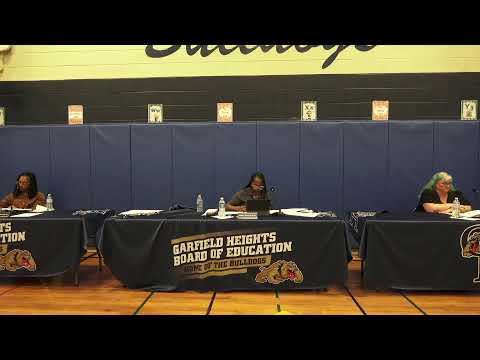
The Garfield Heights Board of Education on Feb. 17 approved resolution 2026-07 adopting the district’s four-year financial forecast after a presentation from the district treasurer.
The treasurer said the district is projected “as of today to end the year with $7,600,000 in the bank,” up from a July 1, 2025 beginning balance of $5,900,000, producing a projected $1,600,000 surplus for fiscal 2026. He attributed the improvement to higher tax revenue timing and expenditure reductions the district has implemented.
The forecast presentation outlined major revenue and cost drivers: approximately $19 million in current property and public utility taxes, state funding comprising roughly 57% of the general fund, and personnel costs that the treasurer calculated at about 73% of district expenditures. The presentation noted longer-term risks including aging buildings and capital needs — “we have $3,000,000 in roof costs to figure out,” the treasurer said — and a projected negative position by fiscal year 2029 under current assumptions.
Board members moved and seconded the recommendation to adopt the forecast; roll-call votes recorded unanimous approval. The board also approved the monthly financial report for January 2026. During discussion the treasurer warned that county timing of real-property tax advances reduced January revenues but said full collections are expected in March.
The forecast packet included sensitivity analyses and a summary of state funding mechanics: the treasurer emphasized how property-value changes affect the state’s per-pupil share and described the practical effects of recent property-tax law changes on levy strategy. He said the district’s actions to pare expenditures, while preserving academic programs, produced the improved near-term balances but leave fiscal choices ahead.
The board’s action authorizes administration to use the adopted forecast as the district’s official financial projection and to continue planning for capital needs, staffing costs, and levy timing. No specific new levy or capital measure was voted on at the meeting.
The board’s next regular meeting is scheduled for March 16 at 6:00 p.m.