Get Full Government Meeting Transcripts, Videos, & Alerts Forever!
Get email alerts on the Zoning Rezoning topic
No spam. Unsubscribe anytime.
Neighbors oppose motorcycle-training rezoning; council ultimately rejects change after reconsideration
Summary
A proposal to add a motorcycle training 'trade school' at 1731 1st Ave. N./1701 32nd Ave. N. drew sustained neighborhood opposition over noise and proximity to seniors and churches. Staff said the school would operate Tue–Sat, 9 a.m.–5 p.m.; the council initially approved the rezoning and then, after reconsideration, voted to reject it.
Councilors heard extended public opposition and staff testimony before ultimately rejecting a rezoning request to allow a motorcycle training facility, ProRider, on two parcels in North Birmingham.
Kim Spruill, the city's zoning administrator, told the council ZAC2025-16 would add a ‘‘trade school’’ use to existing QC2 conditional uses at roughly 2.75 acres and that the applicant intends to operate Tuesday through Saturday, 9 a.m. to 5 p.m., with four instructors on site. Spruill said a Type C landscaping buffer would be required because the property abuts single-family residential and that the applicant must seek a special-exception approval from the Board of Adjustment to operate as a trade school.
Neighborhood speakers pressed the council to reject the change. Anna Brown, chair of the North Birmingham framework committee, said residents—particularly seniors and congregations near the site—were not adequately represented in the earlier neighborhood vote and warned the use could create noise and disruption. ‘‘This man stood right here in a meeting and said, ‘motorcycles don’t make noise if they ain’t going fast,’ which is a lie,’’ Brown said. Reverend Anthony Douglas, a neighborhood leader, said many neighbors had not known about the prior meeting and urged the council to ‘‘think about your grandmother’’ when voting. Catherine Lewis, another neighborhood president, expressed similar worries about trains, existing industrial impacts and the cumulative effect of new noisy uses.
Council members questioned hours, noise mitigation and whether food trucks would be allowed during special events. Spruill said the ordinance does not set specific hours for the listed uses and that food trucks would require a separate business license; she reiterated the available landscape-buffer options and said the city code’s general noise provisions would apply.
The planning and zoning committee had recommended approval with a clarification that the only added use would be a trade school and noted the applicant described the intended activity as low-speed skills training similar to what mounted-patrol officers receive.
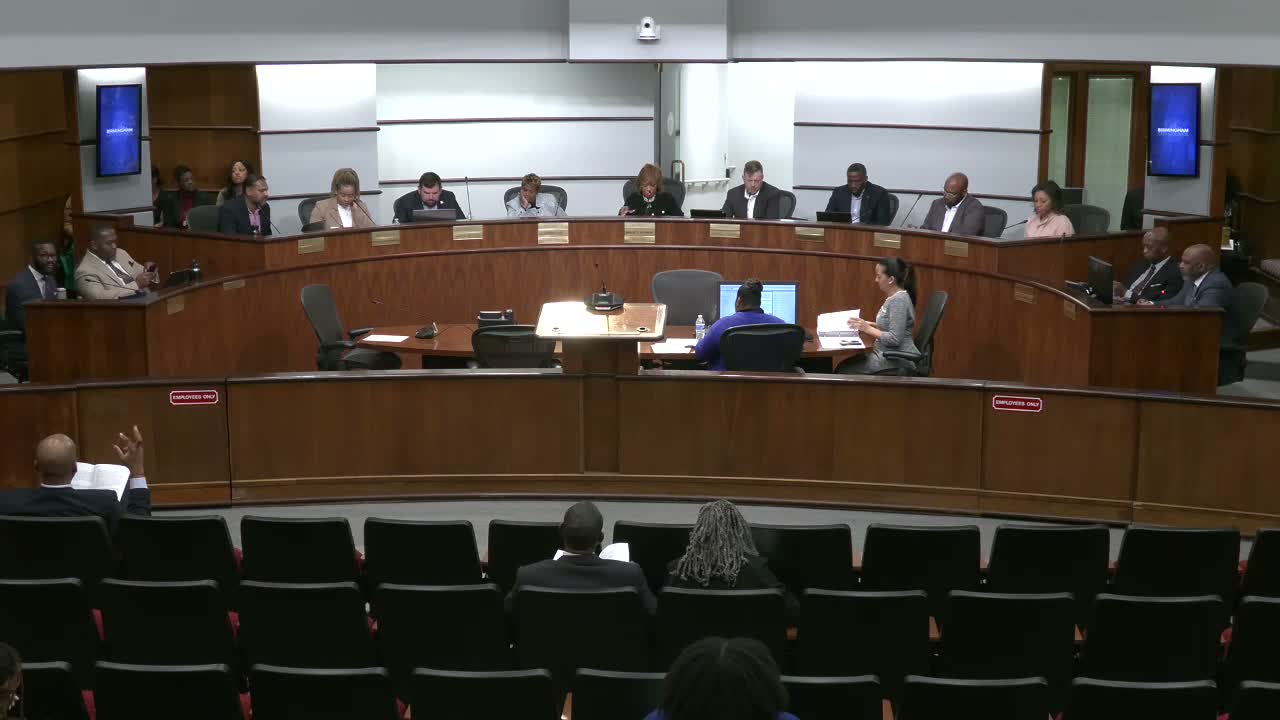
The council voted on ZAC2025-16 and, after an initial roll call in which at least one member recorded a ‘‘yes’’ and another a ‘‘no,’’ the item was announced as having passed. Later, after a motion to reconsider the item, the council re-opened debate and took a second vote; the presiding officer announced that the reconsideration vote failed and that ‘‘that item does not pass,’’ reversing the earlier approval.
The outcome leaves the property’s zoning unchanged for now; any future applicant seeking similar uses would need to follow the same public-notice and approval processes.