
Birmingham council denies two downtown liquor-license applications after safety, zoning and neighborhood objections
Get AI-powered insights, summaries, and transcripts
Subscribe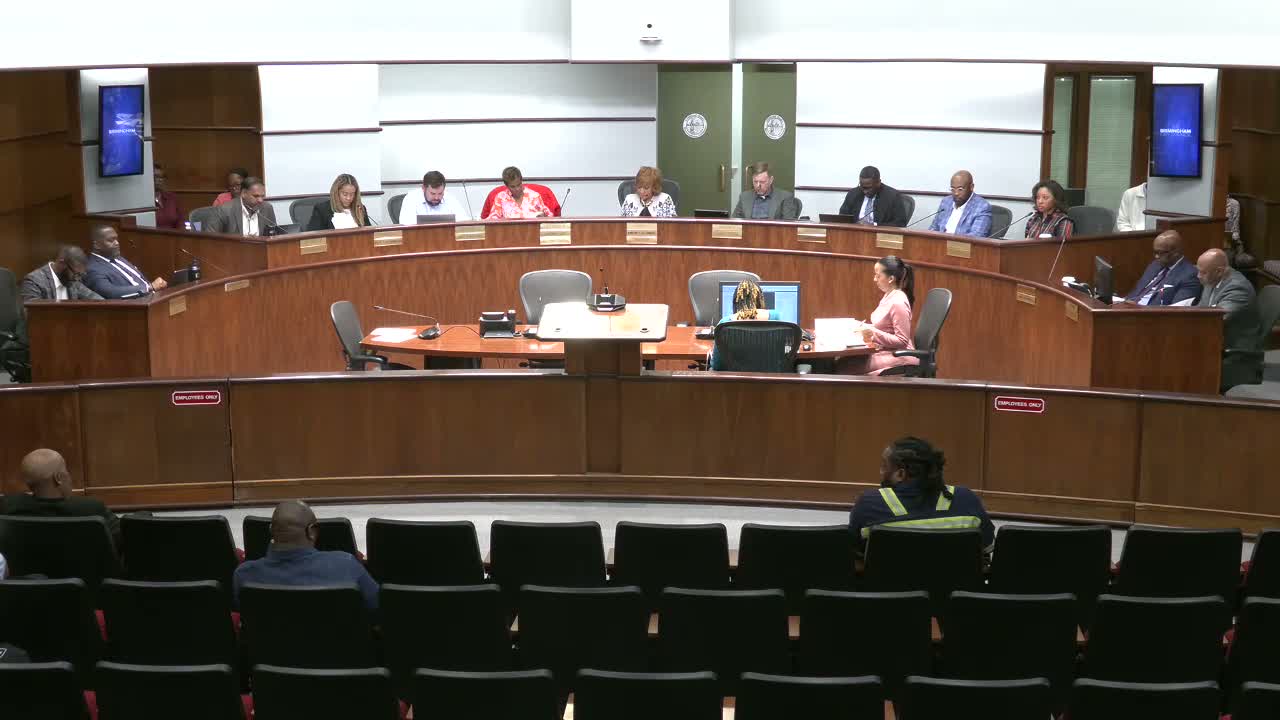
Summary
The City Council on Feb. 17 rejected applications for Class I lounge/retail liquor licenses for Happy Hour Hangout 2 LLC and the Black Hole Hookah Bar, citing prior compliance issues, proximity to residences and unresolved ventilation or health concerns.
The Birmingham City Council on Tuesday voted to deny two separate applications for Class I lounge/retail liquor licenses after sustained questioning about past enforcement, neighborhood character and public‑safety plans.
Roderick Lee and Darryl Daniels sought approval for Happy Hour Hangout 2 at 2417 Avenue C, describing the business as a small, age‑restricted lounge intended for patrons “30 and older.” Attorney Robinson told the council the applicants had completed background checks and received fire approval, but needed a health‑department clearance for a sink. Police and business‑compliance representatives reminded council members of a prior operation at the location in which alcohol was seized; that history prompted council questions about whether previous violations had been cured.
Rodney James applied for a liquor license and hookah lounge permit for Black Hole Hookah Bar at 137 6th Avenue Southwest, saying he planned a largely 28‑and‑older clientele and described plans for off‑duty officers, metal detectors and camera access via the Birmingham Connect program. Council members pressed James on ventilation for hookahs and the appropriateness of the site given nearby residences and a previously reported shooting in the plaza.
Councilors cited several grounds that factor into licensing decisions under state law, including nuisance potential, threats to public health and safety, zoning compatibility and proximity to schools or child‑care facilities. After discussion and public‑safety comments, the council voted to deny both applications. The president announced each item “fails.”
After the Black Hole denial, Rodney James requested written factual findings, a citation of the ordinance or code sections supporting the decision, and information about appeal procedures; the president directed him to submit that request in writing to administration, noting the council is not itself an appeal board.
The council did not adopt a written record during the meeting specifying the legal bases for each denial beyond referencing state licensing criteria; applicants were directed to follow up with administration for procedural details.