Get Full Government Meeting Transcripts, Videos, & Alerts Forever!
Get email alerts on the Contracts topic
No spam. Unsubscribe anytime.
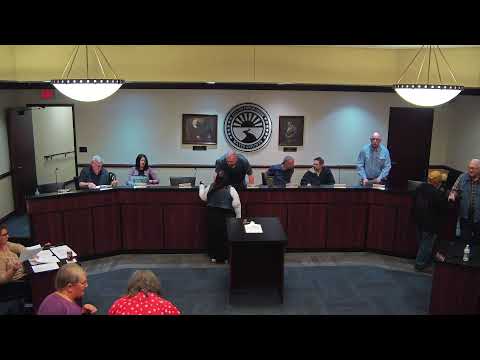
After lengthy hearing on contract history and service, Pryor council takes no action on Prior Waste's 3% increase request
Summary
Prior Waste and Recycling requested a 3% contract increase; company representatives and former officials described decades-long contract arrangements and transfer-station investments, while councilors demanded full contract history and public input before deciding. Council voted to take no action and directed staff to collate documents and pursue public outreach.
The Pryor City Council heard a two-hour-plus presentation and Q&A on a requested 3 percent rate increase from Prior Waste and Recycling before voting to take no action and request further documentation and public input.
Company representatives, including Bill Dinsmore and Jimmy (Prior Waste), described rising disposal and fuel costs, the history of the city's transfer station and the company's role in maintaining service. Speakers said the transfer-station financing and long-term, auto-renewing contract enabled the operator to invest in trucks and infrastructure and that twice-weekly pickup and inclusion of polycarts contributed to lower consumer rates compared with neighboring towns.
Former elected officials and the company provided a historical narrative stretching back to the late 1980s and 1990s, explaining why longer contract terms and escalation clauses were used to secure financing for the transfer station. A former mayor told the council he had been offered a bribe during an early procurement process and said the long-term contract structure was intended to protect both the company's financing and the city's service reliability.
Council members raised several concerns: packet materials and historical contract amendments were not included in the meeting packet; some residents reported inconsistent service after annexations; and members asked for an audit trail of amendments and city payments. Several councilors proposed studying a one-week pickup with larger polycarts as a service-model alternative to lower costs and road wear. Members also discussed options for public engagement, including a mailed survey inserted with utility bills rather than an open social-media poll to avoid nonresident responses.
After discussion, council voted to take no action on the 3 percent automatic increase and to form a working group that will collect the original contract, amendments and related documents, direct the city attorney to review the contract language (including auto-renewal and escalation clauses), and return with proposals that include citizen outreach on service frequency and container options.