Arizona committee advances compromise giving cities more tools to curb problem short‑term rentals
Loading...
Summary
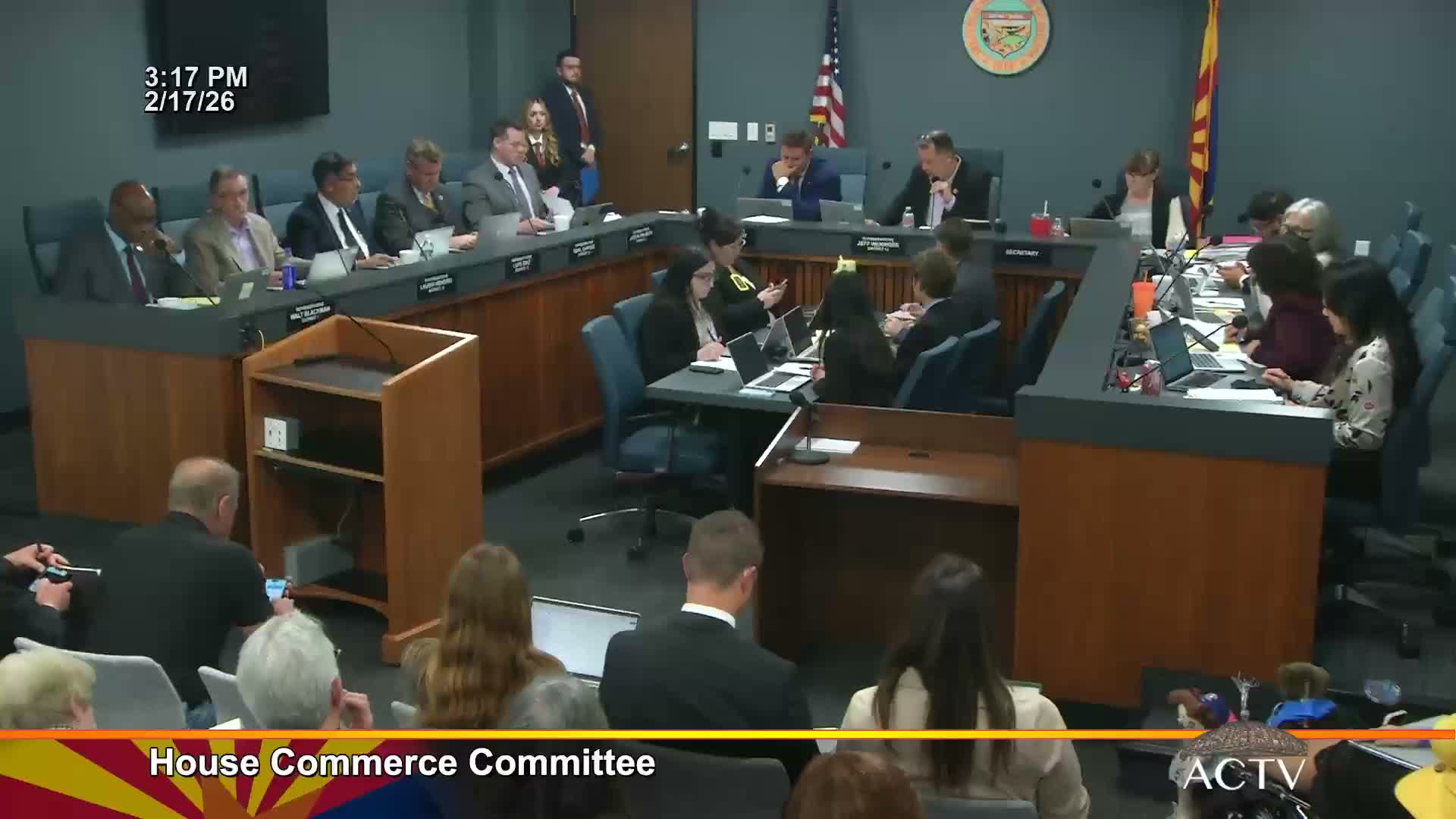
The House Commerce Committee adopted a strike‑everything amendment to HB 2429 after lengthy testimony from cities, tourism interests, short‑term rental owners and neighborhood groups; the measure extends the window for repeat‑violation enforcement, sets occupancy standards and allows suspension of permits for serious building‑code threats. The committee returned the bill with a do‑pass recommendation.
The Arizona House Commerce Committee on Wednesday approved major changes to a bill aimed at letting cities better regulate short‑term rentals.
Representative Selena Bliss, sponsor of the strike‑everything amendment to HB 2429, told the committee the revised measure strikes a new balance that preserves private property rights while giving communities practical enforcement tools. The bill allows cities and towns to set occupancy standards (generally framed as up to two adults per sleeping area plus two extra persons, not counting minors), extends the period for tracking repeat violations from 12 months to 24 months, and authorizes immediate suspension of a local license when a verified building‑code violation creates a serious risk to public health or safety.
Tom Savage of the League of Arizona Cities and Towns said the changes represent “meaningful progress,” pointing to chronic problems with repeat offenders and the administrative burden cities face enforcing short‑term rental rules. Testimony from the Arizona Association of Realtors, Airbnb and other industry representatives described the revised approach as a workable compromise that focuses enforcement on “bad actors” rather than all hosts.
Neighborhood and rural officials urged stronger protections. Susan Edwards of the Arizona Neighborhood Alliance and Kathy Sensman of Sedona said density and illegal listings remain acute problems for many communities, arguing the amendment removes some enforcement levers—such as ad transparency—that help local governments track and enforce occupancy rules. Edwards told the committee she believes more than 90% of short‑term rentals statewide operate illegally and called the issue “the elephant in the room” for housing availability in parts of Arizona.
Several short‑term rental owners also testified. Christopher DeVries, who represents owners in a responsible tourism group, said he supported the extension for repeat violations and occupancy framework but urged clearer language on the ‘‘building code’’ trigger so cities do not use minor technical violations to shut down properties.
After deliberation, the committee adopted the strike‑everything amendment and returned HB 2429 with a do‑pass recommendation. Representative Bliss said she will work with smaller and rural municipalities to address enforcement capacity and to refine language on building‑code thresholds.
What happens next: The bill moves to the House floor. If enacted, it will give Arizona cities clearer authority to target repeat violators, with an explicit focus on demonstrable public‑safety threats rather than every advertising or minor code infraction.