
House Judiciary Committee hears testimony on S.0208 as law enforcement warns of health and operational risks; AG's office flags likely litigation
Get AI-powered insights, summaries, and transcripts
Subscribe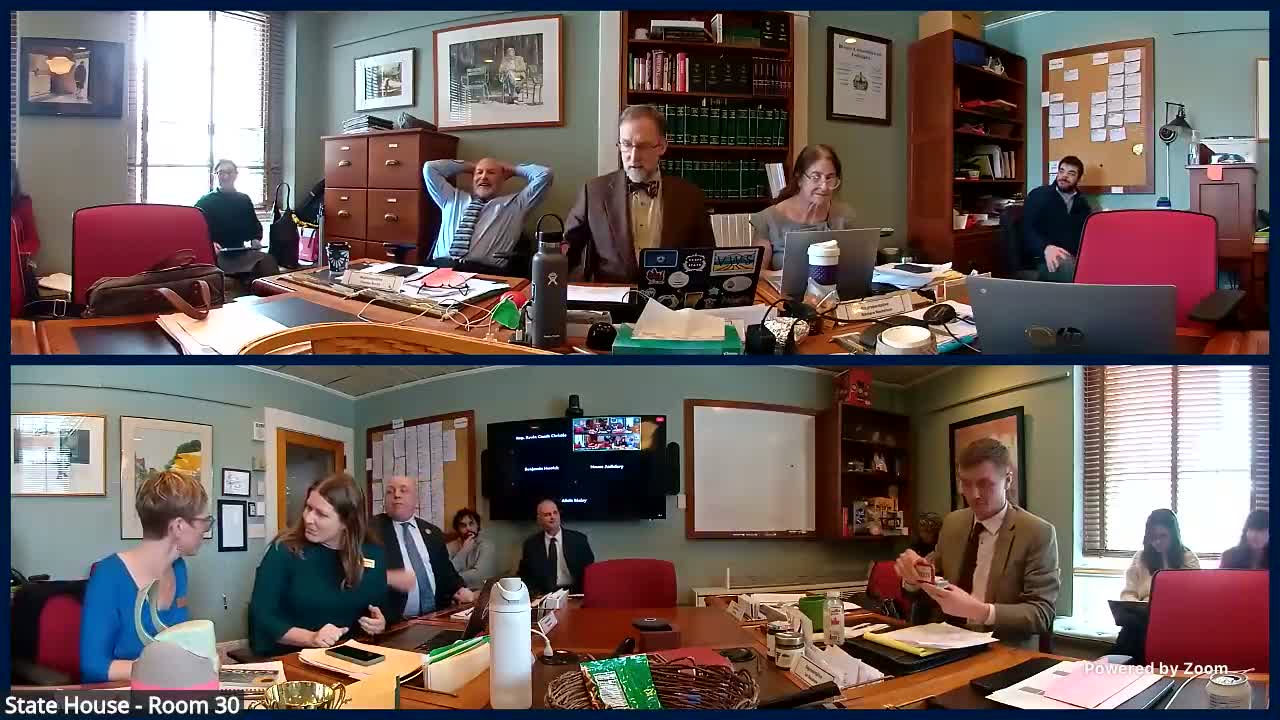
Summary
Witnesses including law-enforcement representatives told the House Judiciary Committee that S.0208's penalties and narrow exceptions could discourage protective mask use, raise frostbite and contamination risks, and harm morale; the attorney general's office said similar laws are likely to face near-certain federal litigation and urged careful drafting or policy alternatives.
The House Judiciary Committee on Wednesday continued hearings on S.0208, a proposed statute restricting face coverings for law enforcement and requiring visible identification, hearing testimony from law-enforcement representatives and the attorney general's office about safety, operational and constitutional concerns.
Jimmy Baldia, a Rutland County deputy sheriff who serves as national trustee for the Fraternal Order of Police's Vermont lodge, told the committee he came to advocate "for the physical and mental health of our officers and also for the safety of their families" and warned the bill's penalties could backfire. "It's reasonable to believe that an average everyday officer, in fear of this thousand dollar penalty, in fear of possibly losing their certification, their livelihood, their source of income, they may decide to not wear a mask when they're allowed to," Baldia said, arguing that officers who forgo protective equipment could bring infections or contaminants home.
Baldia recounted on-duty incidents that later put him at risk off-duty and described field conditions where officers use improvised protective measures. He urged lawmakers to favor a policy route such as the Fair and Impartial Policing (FIP) frameworks and statewide training programs over a punitive statutory approach, saying the Fraternal Order of Police prefers that mechanism for regulating conduct and protecting public safety.
Sergeant Ben Herrick, a patrol supervisor with the Rowton County Sheriff's Department, focused on the bill's weather exceptions and operational impacts. Herrick cited research noting that frostbite can begin at 32 degrees Fahrenheit and warned that the bill's proposed threshold of 10 degrees below zero would leave many cold-work days uncovered. "I don't think it should be bracketed within certain months," Herrick said, describing prolonged outdoor duties such as traffic control at Killington that can expose officers to cold and moisture and arguing that narrowly written investigative exceptions could leave undercover and transport duties vulnerable.
Legal considerations were raised by Julio Thompson, assistant attorney general and co-director of the civil rights unit, who told the committee that related litigation is already unfolding in other states and that any Vermont statute will likely be challenged. Thompson summarized recent developments in California, where a district court blocked parts of a similar law and the federal government has sought appellate relief, and said the appeals process is likely to produce additional guidance soon. "I think the chances of litigation are nearly a 100%," Thompson said, adding that the prospects for judicial success are uncertain and depend on circuit law and the statute's design.
Thompson highlighted federalism and accommodation issues. He explained the distinction between an identification law that applies broadly and a masking rule that treated federal agents differently, observing that courts may scrutinize statutes that appear to burden federal authorities or conflict with federal workplace accommodations such as those required under the Americans with Disabilities Act. He recommended the committee review models from other states that combine statutory parameters with agency-level policies and suggested the Criminal Justice Council or statewide policy frameworks could address many operational details better than a statute with narrowly enumerated exceptions.
Committee members asked about enforcement mechanics and discretion. Thompson said the draft bill appears to make the violation civil and that prosecutorial discretion and local enforcement delegation (for example to county or state attorneys) will shape how frequently civil citations are issued. He also noted that appellate briefing and amicus memoranda could arrive in short order and change the legal landscape.
The committee took no final vote. Chair and members announced they would pause further consideration of S.0208 until mid-March, after crossover, and said they would collect additional materials and model language, including comparative bills and constitutional analyses. The committee docketed the requests for copies of out-of-state bills and academic briefs Thompson referenced.
What happens next: The committee said it will reconvene S.0208 hearings in mid-March and in the meantime will accept the attorney general's office materials, comparative bill language, and further testimony. No formal penalties or enforcement changes are in effect as a result of this hearing.