Get Full Government Meeting Transcripts, Videos, & Alerts Forever!
Get email alerts on the Criminal Background Checks topic
No spam. Unsubscribe anytime.
Committee approves substitute to HB 1097 to give DBHDD national background‑check authority and wrap‑back reporting
Summary
The House Health Committee passed a substitute to House Bill 1097 (LC620404S), expanding the Department of Behavioral Health and Developmental Disabilities' authority to run national criminal background checks and adding wrap‑back continuous monitoring so providers receive immediate updates when a fingerprint match occurs.
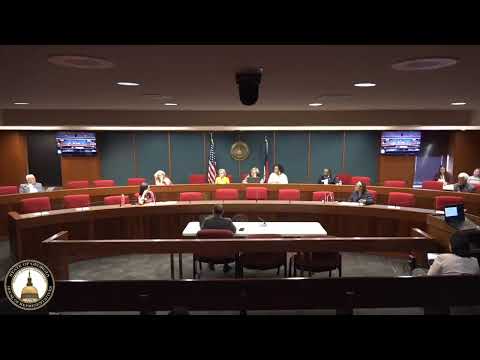
A House Health Committee passed a substitute to House Bill 1097 on a voice vote after hearing sponsor and agency testimony that the measure centralizes criminal-record checks for facilities that serve vulnerable populations.
The substitute (LC620404S) would place licensure and background-check authority for certain behavioral‑health and developmental‑disability providers under the Department of Behavioral Health and Developmental Disabilities (DBHDD). The sponsor told the committee the change is intended to remove duplicative processes so providers do not have to work with multiple state agencies for licensing and background checks.
Patrick Bilecki, DBHDD legislative director, told the committee the measure clarifies DBHDD’s authority under OCGA provisions and expands a definition of ‘‘contractor’’ so the department can capture nonemployees who provide direct care. Bilecki said local entities already use similar statutory language and the substitute would broaden it to executive state agencies.
The substitute also authorizes national fingerprint‑based checks and adds wrap‑back continuous monitoring so DBHDD can receive immediate updates if a person with a previously clear record is later arrested or fingerprinted for a new crime. Sponsor testimony noted the substitute captures arrests, charges and convictions that meet listed criteria and flagged that the system will provide a red/green style clearance for hiring decisions rather than detailed offense reports.
Committee members asked whether the system reports arrests as well as convictions; DBHDD staff said the substitute includes arrests and pending charges for listed offenses unless prosecution time limits have expired. The bill’s list of disqualifying offenses focuses on crimes likely to endanger vulnerable populations, such as violent offenses, abuse/neglect/exploitation, arson, theft, fraud and certain controlled‑substance offenses.
At the committee’s request, the sponsor emphasized that wrap‑back is intended to reduce repeated full checks for continuous employees while ensuring providers learn immediately of newly discovered offenses. A committee member moved the substitute and it was seconded; the chair called the question and announced, “the ayes have it.” The substitute passed out of committee by voice vote.
The committee then thanked the presenters and moved to the next agenda item.