Georgia committee hears bill to bar unauthorized AI recreations of voices and likenesses
Loading...
Summary
Lawmakers heard House Bill 566, which would give individuals the right to control digital replicas of their voice and image; sponsors said the bill adds definitions, liability rules and a safe-harbor for prompt takedowns and seeks alignment with pending federal legislation. No vote was taken.
House legislators on Wednesday heard House Bill 566, a proposal aimed at preventing generative artificial intelligence from creating and distributing unauthorized digital replicas of a person’s voice or visual likeness.
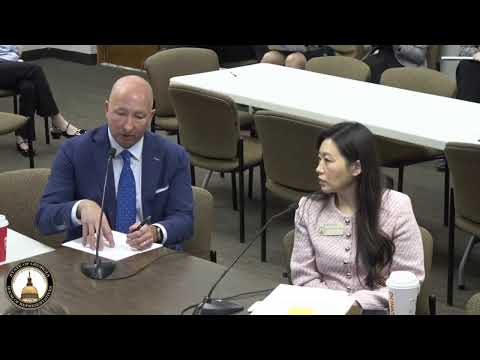
Representative Hall, the committee’s vice chair, presented the substitute version of HB 566 and told members the bill would create statutory definitions, a liability framework and penalties for online services or individuals that publish unauthorized replicas. "This bill will prevent AI creating a fake version of you by using your voice or your likeness without your permission," Hall said during the hearing.
Brian Hudson, who identified himself as a representative for the Recording Industry Association of America, the Recording Academy and Georgia Music Partners, told the committee the music and recording industries back the legislation. Hudson cited a recent AI-created song that used imitations of pop stars’ voices as an example of the type of harm the bill aims to address. "If AI is going to make a fake version of your voice and your likeness, you should be able to have the right to give permission to use that," Hudson said.
Why the state bill: sponsors and industry witnesses said federal action has been slow and that a state statute can set protections while federal lawmakers consider national legislation. Hall said the draft seeks consistency with the evolving federal model and includes a safe-harbor provision to avoid unduly penalizing platforms that remove content in good faith after receiving notice.
Key provisions described at the hearing
- Definitions and registration: The substitute creates terms such as "digital replica," "digital fingerprint" and "online service," and it contemplates a registration mechanism and notice procedures. Representative Hall said those definitions are central to how liability and enforcement will work.
- Liability and safe harbor: Sponsors said the bill will allow civil claims for unauthorized public displays of digital replicas while protecting platforms or individuals who promptly remove content after receiving notice. Hall described a safe-harbor that shields entities that take reasonable steps to remove disputed content in good faith.
- Enforcement and remedies: The committee was told that if an online service does not remove an identified replica, an aggrieved person could file a civil claim through a registered agent at the secretary of state; damages and money remedies were discussed as part of the bill’s later sections.
Questions from members and staff
Committee members asked how the law would operate against actors outside Georgia. Hall acknowledged the limits of state law, saying a state statute applies to acts occurring in the state, but Hudson suggested technical tracing (for example, IP addresses) can sometimes identify responsible parties. A member with production experience asked whether the bill would reach existing digital images or scans; Hall replied that, as drafted in the hearing, the bill would apply from the date of enactment and that prior consents would likely remain in effect.
A legislator asked whether platforms or individual users would be liable. Hall said the substitute expands the online-service definition and expressly includes individuals and entities, so liability could attach to either, depending on the facts. He reiterated that good-faith takedown after notice should eliminate liability.
Stakeholders and context
Witnesses and presenters identified industry stakeholders including record companies, artist groups and coalition partners working at the state and federal levels. Hudson said Tennessee has enacted a statute sometimes referred to as the "Elvis Act," and that some states have considered related measures; he said the coalition drafting Georgia’s bill aims for broader buy-in than that Tennessee example.
Next steps
No formal vote was taken during the transcripted portion of the hearing. Committee members and sponsors repeatedly said they expect to continue drafting and to return with amended language after "crossover," giving staff time to reconcile substitute text and safe-harbor language before any final committee action.
The committee adjourned without taking a vote on HB 566.