Get Full Government Meeting Transcripts, Videos, & Alerts Forever!
Get email alerts on the Short Term Rentals topic
No spam. Unsubscribe anytime.
Hocking County zoning panel recommends short-term rental rules after public debate
Summary
After public comment and questions about enforcement, water testing and grandfathering, the Hocking County Zoning Commission voted to forward a draft short-term rental ordinance to the county commissioners and asked the prosecutor to add authority and enforcement language before placement on a commissioners’ agenda.
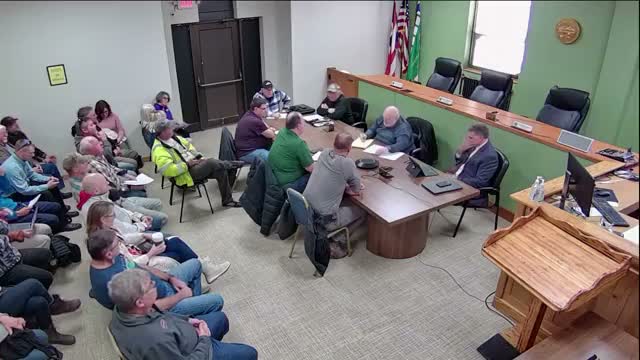
The Hocking County Zoning Commission voted Feb. 12, 2026, to recommend a draft short-term rental (STR) ordinance to the Board of County Commissioners and asked the county prosecutor to add an authority section and consider amendments to the enforcement provisions. The recommendation passed after a motion and second and will be reviewed by county legal counsel and the commissioners before any final action.
The commission’s chair (identified in the meeting transcript as Scott Schrader) said the group sought legal confirmation before drafting and that he and the commission’s consultant met with county prosecutor Jeff Caitre to confirm the commission’s lawful authority under state law. "Before we even began the process of writing anything at all, our consultant, who is a licensed attorney, and myself, Scott Schrader, sat down with the county prosecutor, Jeff Caitre, and we discussed what we were doing to see if it fell within the lawful authority that we had," S1 said.
The public portion of the meeting focused heavily on implementation details. Long-time cabin operators expressed concern about grandfathering and cost burdens. One resident said, "We've had cabin rentals for 29 years" and asked whether older operations would be exempt. In response, S1 pointed to a variance section in the draft and said the draft provides that an operator with a deficiency would be "automatically granted a year" to correct the issue and, if work is in progress, could receive an additional six months.
Attendees also raised questions about water testing and health-department involvement. The draft includes a health-department‑requested sampling requirement; S1 stated that a threshold requiring water sampling had been discussed for properties with multiple rooms but cautioned that some specifics would be verified with the health department and county staff. The meeting also distinguished between private and public water systems and noted different inspection thresholds for public systems.
Who will perform inspections and who pays remained open but the draft as presented anticipates inspection costs billed to lodging owners. S1 said conversations had begun with the Southeastern Ohio Building Department about inspections but no contract existed; he also reported an inspection quote of roughly $350, while noting the final structure and costs could change.
Speakers debated whether STRs increase emergency calls and fire/EMS runs. One commenter cited county rental-night figures and urged safety protocols; others said correlation does not prove causation. S7 said EMS had requested an additional staffed station in the parks to address volume, underscoring that public-safety planning is part of the broader review.
S1 emphasized the commission’s objective: "We will not sacrifice safety in any way, shape, or form," and said the commission’s recommendations focus on public-safety standards offered after years of public meetings and recorded comments.
Next steps: the commission forwarded the draft with requested legal edits. The county prosecutor’s office will review authority and enforcement language first; then the Board of County Commissioners will consider the draft and decide whether to adopt, amend, or take no action. If the commissioners move forward, they may hold further public hearings and finalize fee and enforcement details.