Get Full Government Meeting Transcripts, Videos, & Alerts Forever!
Get email alerts on the Capital Projects topic
No spam. Unsubscribe anytime.
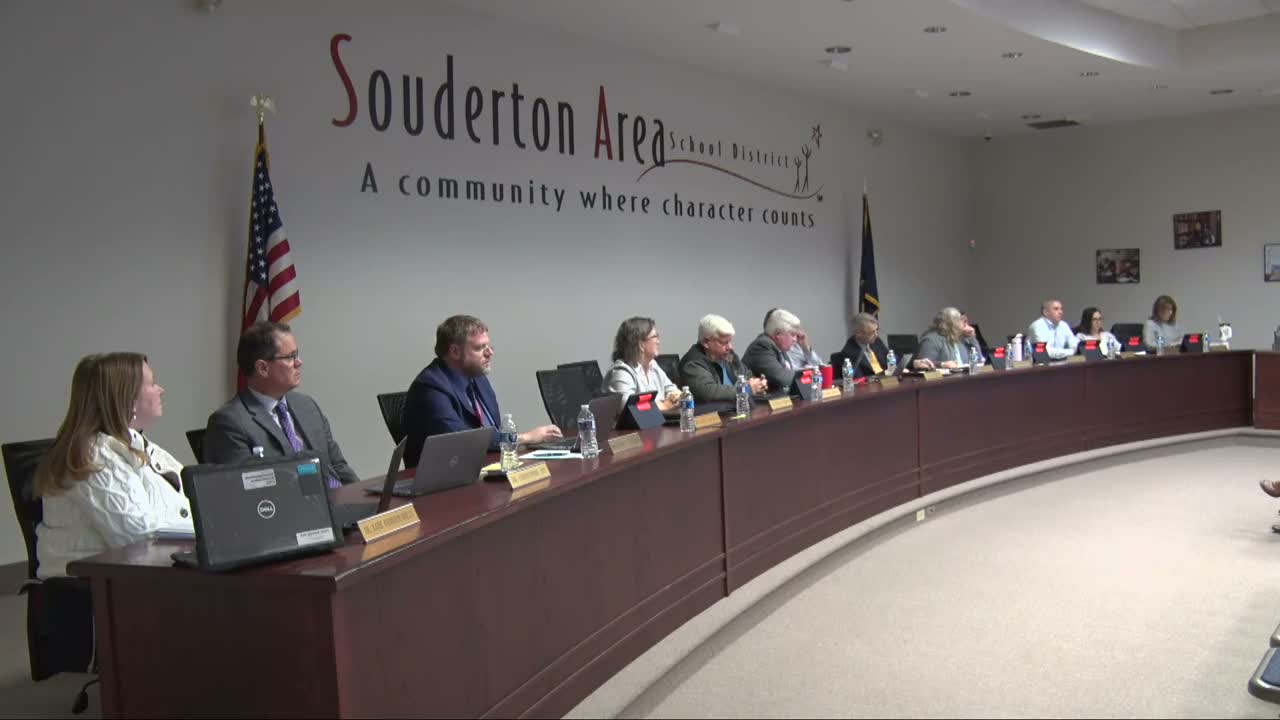
Souderton board approves bond‑funded track and tennis‑court projects after debate over costs and safety
Summary
The Souderson (Souderton) board approved a $740,000 Indian Valley track resurfacing and a $683,890 high‑school tennis reconstruction base bid with a $574,000 post‑tension concrete upgrade, after lengthy discussion about safety, lifecycle costs, and bond impacts.
Souderton Area School District trustees voted Jan. 22 to approve several bond‑funded athletic facility projects, including a $740,000 resurfacing of the Indian Valley Middle School track and reconstruction of the high‑school tennis courts. The board also approved a post‑tension concrete upgrade for the tennis courts as a bid alternative.
The administration told the board the Indian Valley project would add field turf and address safety concerns at the site; administration recommended the measure as part of bond‑funded capital work already authorized. Doctor Gallagher, the superintendent, said the goal is to equalize facilities so Valley students have comparable fields and to ease scheduling conflicts at the high school. After discussion about enrollment, bus safety and facility scheduling, the motion to approve the Indian Valley resurfacing passed on a roll‑call vote.
On the high‑school tennis courts, administration presented a base bid for a traditional McAdam asphalt surface (base bid $683,890) and a post‑tension concrete alternate (about $574,000 additional cost for the alternate as presented). Supporters said the courts are heavily used by students and the community, are past their life expectancy and that delaying reconstruction would increase long‑term costs. Administrators and the business manager explained the bond issuance already accounts for the projects and that the bond’s debt service—rather than the project’s full principal—drives next year’s operating budget impact.
Opponents urged caution, arguing the district could patch the existing surface for a smaller operating‑budget cost and that the district should weigh other pending capital needs. Some board members warned that additional amendments to bond projects could reduce available funds for other priorities. The superintendent and board members who supported the project said vendor discounts for bundling several projects and long‑term warranty math (fewer crack repairs under post‑tension concrete) make upfront investment prudent.
The board voted to approve the tennis‑court base bid and later carried the motion to accept the post‑tension concrete alternate, after administration and board members discussed warranty terms, expected lifespans, maintenance differences, and potential savings over 25–50 years. The administration said the post‑tension concrete comes with a third‑party warranty that limits district responsibility for crack repairs for decades and that combined bidding produced discounts for doing multiple projects together.
Next steps: administration will finalize contract documents and return with vendor agreements for implementation and scheduling. The superintendent reiterated that the bond debt service was factored into financial planning and that not doing the projects now could shift costs into the operating budget in the near term.