
Senate adopts Committee of Conference report on S.23 requiring synthetic‑media disclosures ahead of elections
Get AI-powered insights, summaries, and transcripts
Subscribe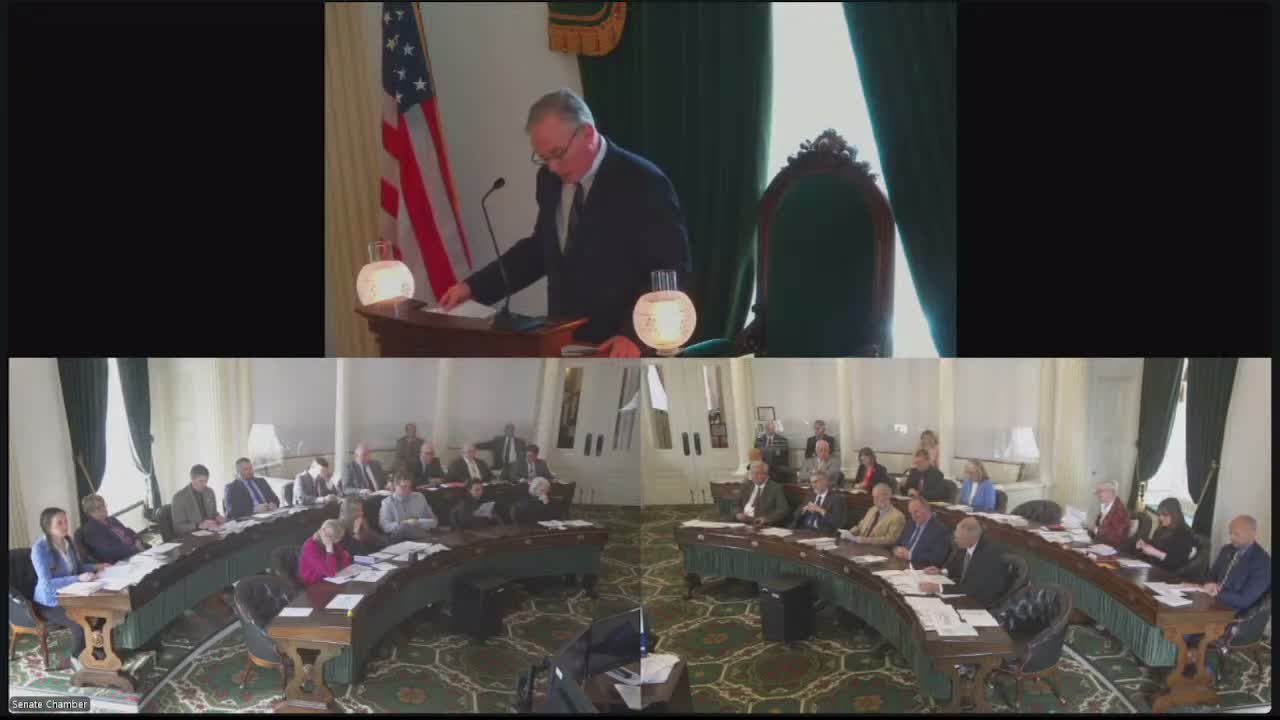
Summary
The Senate adopted the conference committee’s strike‑all report on S.23 to require disclosures for deceptive synthetic media published within 90 days of an election and to define synthetic media broadly to include depictions of any individual.
The Vermont Senate accepted and adopted the Committee of Conference report on S.23, legislation addressing the use of synthetic media in elections. The conference report resolves differences between the House and Senate by both defining deceptive synthetic media broadly and establishing disclosure requirements for deceptive materials published close to an election.
Senator from Rutland described the compromise: the definition adopted in the strike‑all report covers synthetic media "that appears to a reasonable person to be a realistic representation of either a political candidate... or an individual that attempts to unduly influence the outcome of an election." He read the disclosure the conference agreed upon for deceptive synthetic media published within 90 days of an election: "This media has been manipulated or generated by digital technology and depicts speech or conduct that did not occur." The report also sets readability and audibility expectations so disclosures are accessible to people with disabilities.
The presenter said the conference committee consisted of six members who all signed the report and urged the Senate to adopt it. Senator from Madison said the measure is important in time for the upcoming election season. Senator from Rowland asked whether the committee considered expanding the 90‑day disclosure window; the chair of government operations said the committee did not discuss changing the 90‑day period and instead focused on scope and accessibility.
The Senate voted to adopt the committee of conference report. Adoption sends the conference compromise as drafted to the next steps in the legislative process.