Get Full Government Meeting Transcripts, Videos, & Alerts Forever!
Get email alerts on the Programs Licensing topic
No spam. Unsubscribe anytime.
Commission adopts rule changes, advances apprenticeship and cautious rapid-DNA planning; licensing platform transition under way
Summary
The commission approved rule amendments on licensing and disciplinary sections, advanced a forensic analyst apprenticeship pilot and rapid-DNA task-force planning, and reported 1,371 active licensees while transitioning to a new Alice licensing platform.
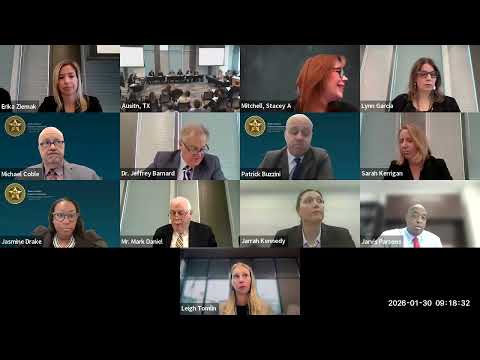
At its Jan. 30 meeting the Texas Forensic Science Commission approved several rule changes governing license titles, fees and disciplinary action sections, advanced an apprenticeship pilot for forensic-analyst training, and described multi-agency, cautious planning for statewide rapid-DNA use.
Staff told commissioners the agency is transitioning license management from TopPlus to a new Alice licensing platform; staff completed manual entry for January expirations and plans to launch March renewals and a phased public applicant link. Office renovation was also noted; staff said the commission's office is under construction and anticipated a late-summer move to renovated space.
On licensing metrics, staff reported 1,371 active licensees and steady renewals (about 60'80 per month following a birth-date transition). The Licensing Advisory Committee elected Celestina Rossi vice chair and recommended Shelley Rossi for appointment to the statewide rapid-DNA task force; the commission approved the appointment.
The commission adopted proposed rule amendments (subject to the governor's office non-substantive edits) including: renaming or clarifying the toxicologist license title, removing a temporary toxic-analyst fee, harmonizing disciplinary-action rules with the Code of Criminal Procedure and adopting rules to implement the apprenticeship pilot. Staff described legislative funding to support apprentice salaries and training and said universities (Sam Houston, UNT Health, San Francisco State) are under contract or engagement for curriculum development.
Commissioners discussed the statewide rapid-DNA task force's work to draft an FBI MOU, identify sample types suitable for rapid instruments (with caution against running mixtures), and prepare MOUs and training templates so accredited labs retain ultimate responsibility for CODIS uploads. Staff emphasized a deliberate, measured approach informed by pilots and past vendor-driven rollouts in other states.
The commission also previewed upcoming trainings (firearms and rapid-DNA presentations at the academy meeting), work by a DNA technical-leader group on testimony frameworks, and a proposed trauma/mental-health workshop for forensic personnel.