Get Full Government Meeting Transcripts, Videos, & Alerts Forever!
Get email alerts on the Wage Policy topic
No spam. Unsubscribe anytime.
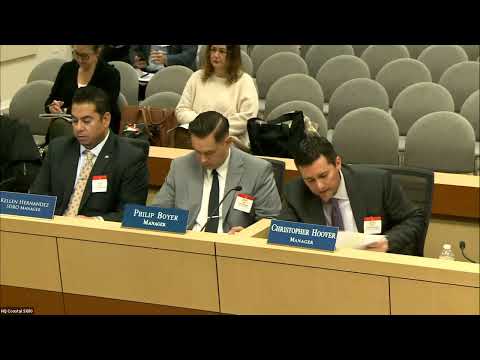
Panel tables Walter Anderson Plumbing proposal after split vote and major questions about wage progression
Summary
Walter Anderson Plumbing’s $402,500 training proposal was tabled after a lengthy debate. Panel members split over whether the submitted post‑retention wage ($25.98) adequately reflected construction wage standards; proponents argued lower starting wages enable training of unskilled women and veterans with strong wage progression, while opponents sought clearer wage‑progression tables and post‑training retention evidence.
The panel extensively debated a repeat‑contract proposal from Walter Anderson Plumbing requesting $402,500 to train approximately 250 retrainees at locations across San Diego County. Several panel members said the contract’s post‑retention wage of $25.98 for construction occupations was below the panel’s typical $30.90 threshold for construction job groups and asked staff and the applicant for wage‑progression detail.
Jill (applicant representative) argued the lower starting wage is intentional to recruit unskilled workers and women into the trades and that the employer’s apprenticeship and wage‑progression model yields higher wages later in the contract: "At 18 months... the hourly is $33.70 an hour," she said, describing wage progression tied to apprenticeship milestones. Panel members, including Gretchen Newsome, pressed for clearer tables showing how many trainees are new hires versus incumbents and how many are expected to meet the post‑retention benchmark at the 90‑day measure.
Following debate, a motion to approve was recorded as a 3–3 split on a first vote. The moving member later withdrew the approval motion; the panel then moved and voted unanimously to table the Walter Anderson item so staff and applicant could furnish clearer wage‑progression evidence and detailed trainee/wage tables ahead of reconsideration.