
Kansas Commerce Committee hears testimony for bill to cap late fees, require upfront fee disclosures for renters
Get AI-powered insights, summaries, and transcripts
Subscribe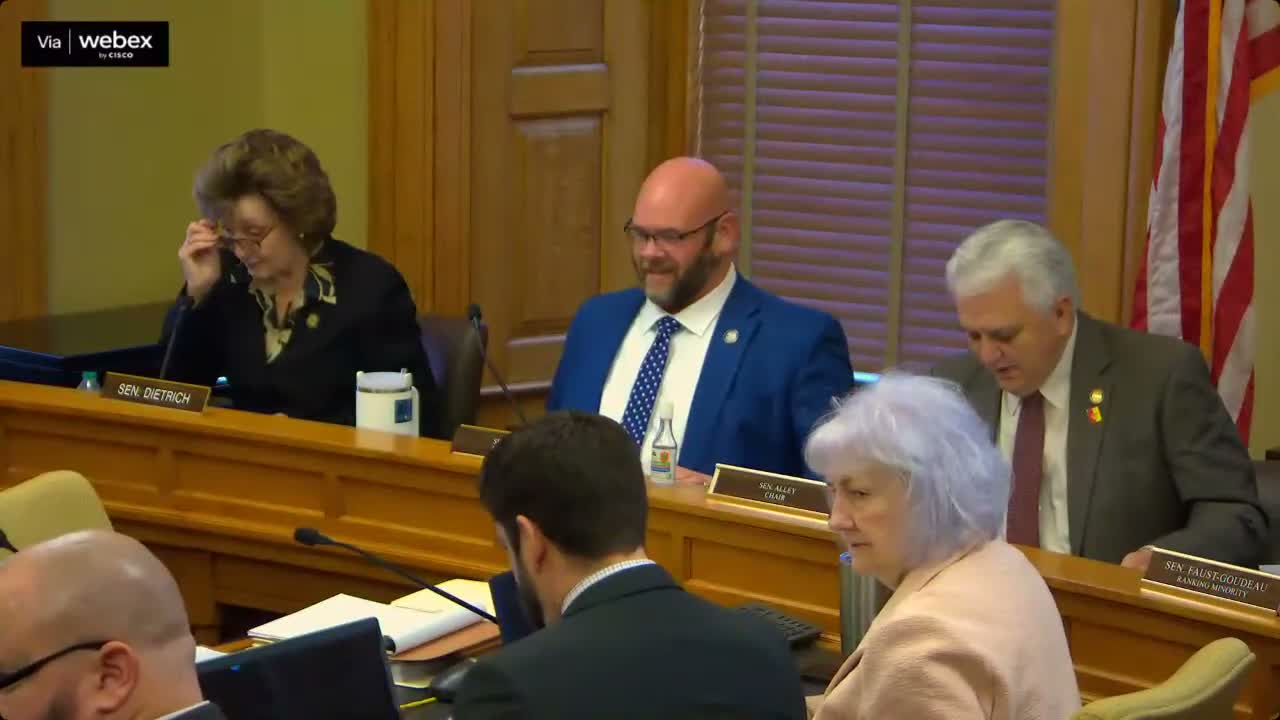
Summary
The Commerce Committee heard testimony on Senate Bill 369, which would cap landlord late fees at 5%, require a five-day grace period, and mandate written upfront disclosures of rent, fixed nonrent charges and tenant eligibility criteria; proponents said the changes would reduce evictions and increase transparency, while opponents urged broader study.
The Kansas Senate Commerce Committee held a hearing on Senate Bill 369, a proposal to amend the Residential Landlord and Tenant Act to limit late fees and require landlords to disclose fees and eligibility criteria to prospective tenants before accepting any application fees or payments. Staff summary and proponents outlined a 5% cap on late fees and a required minimum five-day grace period before a landlord may charge a late fee.
Amelia Kovar Donhue, assistant reviser, told the committee the bill would “restrict fees for the late payment of rent” and require landlords to provide in writing a good-faith estimate of rent, each fixed nonrent expense, the date the unit will be available and the criteria used to determine tenant eligibility, including criminal history, credit, income, employment and rental history. Kovar Donhue told members that violations could allow a tenant or prospective tenant to be released from a rental agreement signed without proper disclosure and would require return of money paid and payment of a penalty equal to amounts paid.
Multiple witnesses testified in support. Christy Baughman, executive director of United Community Services and a small landlord, said the bill “requires landlords to clearly disclose all required fees and rental costs before taking application fees, security deposits, or rent,” preserves landlords’ rights to charge reasonable fees and seek eviction when appropriate, and would help renters and landlords begin rental relationships with clearer expectations.
Molly Mendenhall of the Kansas Statewide Homeless Coalition described how undisclosed fees and excessive late charges make it harder for families to secure and maintain housing, noting some application fees can be “up to $200.” Miranda Agnew, also with the coalition, cited that “42% of Kansas renters are housing cost burdened” and urged the committee to adopt transparency measures that help tenants budget. Sister Amy Wilcott of DePaul Leavenworth Attainable Housing, which manages 19 nonprofit rental houses, said nonprofits often use limited funds to bridge gaps caused by late fees and that a standardized grace period and capped penalties would reduce that burden.
Brandy Galbraith, Emporia’s community housing coordinator, gave examples she’s handled where undisclosed charges — cleaning, pest control or mold remediation fees — compounded tenants’ arrearages and contributed to eviction. Rabbi Moti Reber of Kansas Interfaith Action urged passage as a measure to keep people housed, saying late fees can “multiply” and become bigger than the rent owed.
An opponent on the record urged caution and recommended an interim study of Kansas’s Landlord Tenant Act rather than immediate piecemeal changes; the committee also received 18 written opponent statements in its packet. The opponent argued the 1975 act already addresses many issues and warned that uncoordinated changes could have unintended consequences.
Committee members asked clarifying questions about whether rental history and eviction records were part of the disclosures (staff confirmed rental history would be included among eligibility items) and discussed whether some concerns should be handled through a broader interim review. No vote was taken on SB 369 during the hearing; the chair closed the hearing and moved on to other committee business.
Next steps: SB 369 received a public hearing before the Commerce Committee; the committee did not take final action on the bill during this session and it remains under committee consideration.