
Committee approves bills to authorize victim compensation board to set forensic exam fees and narrow confidentiality exceptions
Get AI-powered insights, summaries, and transcripts
Sign Up Free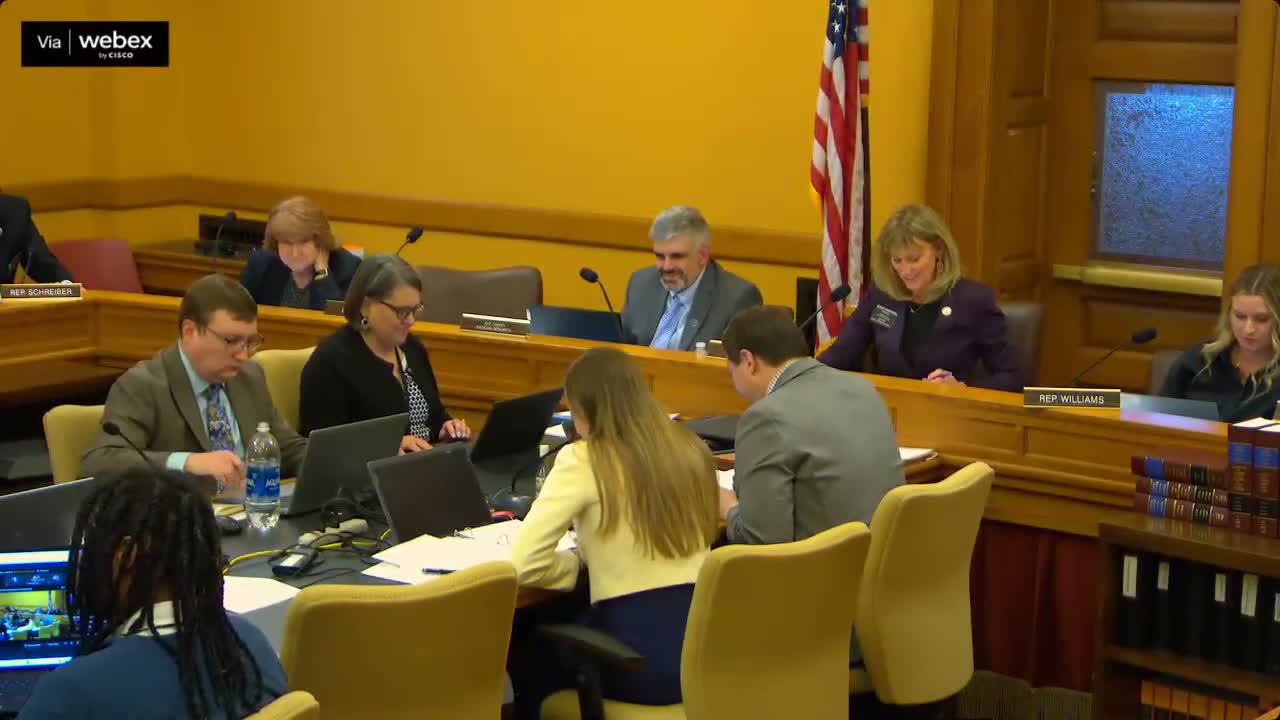
Summary
HB26‑13 directs the victim compensation board to establish and pay forensic exam fees (reimbursed by defendants when possible) with an expected net program cost partially offset by federal grants; HB26‑14 creates limited exceptions to confidentiality for records needed in child abuse or fraud prosecutions. Both bills passed favorably in committee.
The Judiciary Committee passed two related bills addressing the State Crime Victims Compensation Board.
House Bill 26‑13 would require the board to set and pay fees for sexual assault forensic examinations and permit reimbursement to the board from defendants when applicable. Danica Short (Revisor’s Office) and proponents said the bill also authorizes the board to use monies from the crime victims compensation fund and to adopt rules to carry out the provisions. Committee members asked about fiscal impacts and fund balance; staff reported an estimated annual cost to affected agencies and that the fund’s projected beginning balance for FY26 is approximately $8.9 million, with federal grant match covering a substantial share of costs.
House Bill 26‑14 creates two limited exceptions to confidentiality for records held by the victim compensation board: where records were not previously available to investigating/prosecuting agencies, and where records provided to the board are wholly or partly false or fraudulent. Supporters said the exceptions facilitate prosecutions and rulemaking to implement the fee system.
The committee voted to pass both HB 26‑13 and HB 26‑14 favorably. Members voiced concern about cash‑flow, fund transfers, and the appearance of potential conflicts where the board sets fees and pays them; proponents and the division chief said federal match and fund balances make the program manageable under current estimates.
What happens next: both bills passed favorably and will move forward; the committee asked staff for fiscal details and fund‑balance projections.