
Kansas hearing: bill would raise seed dealer fee caps, add late fees to shore up inspection program
Get AI-powered insights, summaries, and transcripts
Subscribe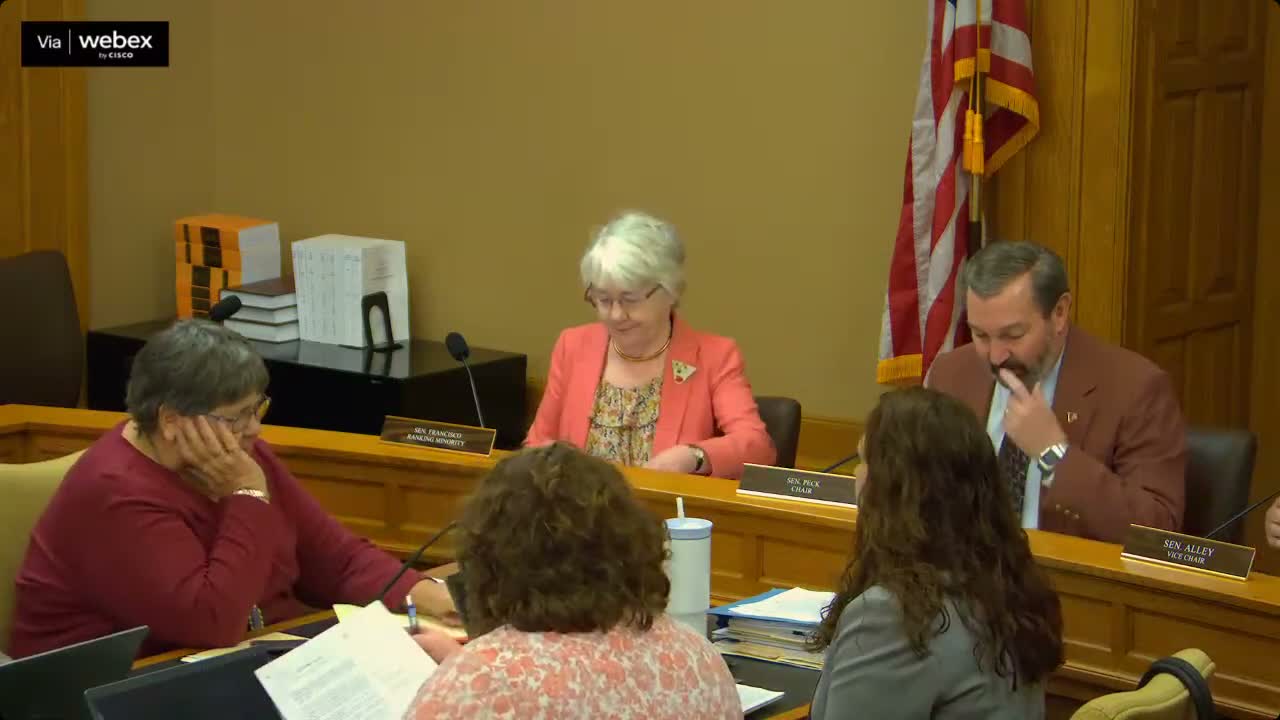
Summary
At a committee hearing on Senate Bill 425, the Department of Agriculture said raising statutory fee caps and adding modest late fees would let the seed inspection program cover costs; department offered initial fee settings below the caps and provided registrant counts and fiscal estimates.
Amber Lawrence, senior assistant adviser, opened a hearing on Senate Bill 425 and described the bill’s core change: an amendment to KSA 2‑14‑21a to increase statutory caps on seed dealer registration fees and allow modest late fees.
The bill would raise the maximum seed wholesaler registration cap from $300 to $400 and the seed retailer cap from $30 to $50; it would authorize a $25 late fee during the first month after renewal is late and a $50 late fee for renewals after Oct. 1. Lawrence said the bill would take effect July 1 upon publication.
Josh McGinn, assistant secretary at the Kansas Department of Agriculture, testified in favor of the bill, saying the seed program is a consumer‑protection program that has not seen fee increases since 1991 and currently produces roughly $127,000 in revenue. McGinn said the department is seeking higher statutory caps so the program can be self‑sustaining without shifting staff time from other plant‑protection work. “We are committing to only initially raising that fee and regulation to $330 for wholesalers and $40 for retailers,” McGinn said.
McGinn provided a breakdown of registrants the program regulates: 717 large retail locations (described as “big‑box” stores), 616 small businesses or individuals, and 364 cooperatives. He estimated the fee increase itself would raise about $43,000 annually and that late fees could add another $10,000–$11,000, a combined increase roughly matching the most recent fiscal note the department supplied.
Committee members pressed department staff on mechanics and enforcement. Senator Reichman asked how many entities are affected; McGinn supplied the registrant counts. Senator Alley queried fiscal projections and noted updated fiscal information had been submitted. Senator Fagg asked why the bill sets a cap rather than a fixed fee; McGinn explained that raising the cap gives the agency flexibility and would avoid returning to the Legislature for incremental increases.
The committee discussed late‑fee design and enforcement. McGinn said the department lacks statutory authority for late fees now and would need the bill to assess them. He cited the department’s live‑plant dealer program as precedent, saying a small late fee there reduced late renewals by 59%. McGinn also told the committee that roughly 500 registrants are currently late on renewal payments but the agency does not track how many days late each account is.
The chair noted written neutral testimony on SB 425 from the Kansas Grain and Feed and the Kansas Agribusiness Retailers Association and the Kansas Cooperative Council, closed the hearing and said the committee would decide later whether to work the bill.
The hearing record ends with the chair scheduling further consideration; no committee motion or final vote on SB 425 was taken at this meeting.