
Kansas committee hears bill to ratify Wildlife and Parks fee rules under REINS process
Get AI-powered insights, summaries, and transcripts
Subscribe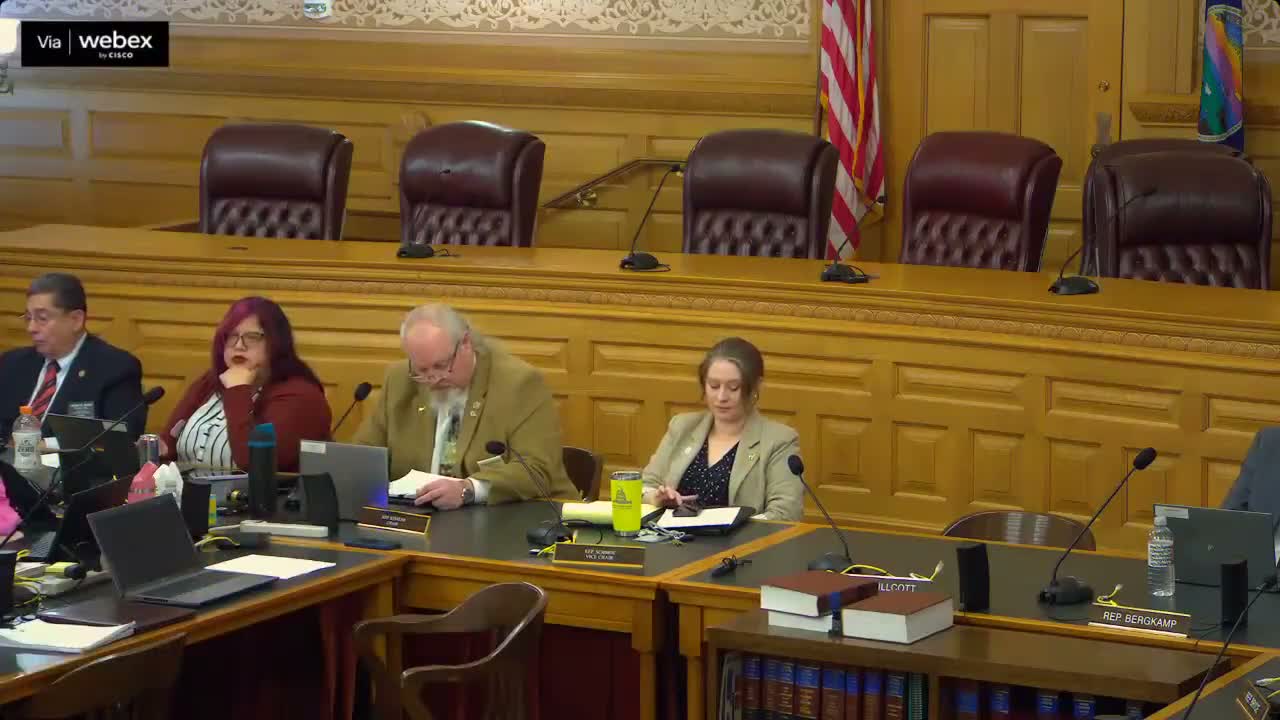
Summary
The Committee on Federal and State Affairs heard testimony supporting House Bill 2568, which would authorize adoption of amended Department of Wildlife and Parks rules on camping, utility and motor vehicle fees and invokes KSA 77 4 41's $1,000,000 economic-impact ratification threshold. Proponents said fee revenue would remain within park funds and address a roughly $5 million operations shortfall since 2017.
The Committee on Federal and State Affairs heard from agency and industry proponents Tuesday on House Bill 2568, which would authorize adoption of two amended Kansas Department of Wildlife and Parks rules related to camping, utility and motor vehicle fees.
Kyle, a committee staffer, told members that KSA 77 4 41 requires legislative ratification when an economic impact statement estimates $1,000,000 or more in implementation and compliance costs over the first five years, and that HB 2568 would authorize two rules cited in the bill packet (KAR 1-15-2-2 and KAR 1-15-2-3).
The bill’s supporters framed the measure as a procedural compliance and funding step. Eric Stafford of the Kansas Chamber said the bill “follows that process” enacted in the REINS Act and praised the Kansas Department of Wildlife and Parks for submitting the rules for legislative review. “If the economic impact statement comes back and says that over a 5 year period the regulations will cost more than 1000000 dollars, then a bill needs to be approved by the legislature authorizing those specific regulations,” Stafford said.
Connor O'Flanagan, State Park Director, described the policy rationale: Kansas State Parks are primarily fee-funded and the agency has not completed a comprehensive fee adjustment in roughly a decade. “Since 2017, our park operations cost has increased by over $5,000,000,” O'Flanagan said, adding that revenues from the proposed fee changes would remain in the park fee fund and be used for park operations and capital improvements.
O'Flanagan outlined public outreach and internal review: five town halls across the state, multiple commission meetings and a regional fee comparison showing Kansas rates would remain at or below the regional average. He also said the changes were intended in part to reduce unfair competition with private campgrounds that charge higher rates.
Committee members asked technical questions. Representative Rees sought clarification about daily camping rates and the DMV vehicle park pass; O'Flanagan explained campsite rates are charged per site per day and that DMV passes are annual vehicle-entry passes tied to registration. Representative Howell asked whether the estimated five-year, $1,000,000-plus implementation cost would require State General Fund dollars; O'Flanagan said the projection reflects fee increases and would not be funded from SGF. He added that, since camping season sales for the current year had already started, fee revenue would likely be counted in FY27 and could prompt an amendment if the bill passes.
Chair Carpenter expressed support for the bill and suggested adding a cost-of-living (Kansas CPI) indexing amendment so the Wildlife and Parks Commission could adjust fees without annual legislation. Carpenter noted the commission’s chairman Whitney Damron and said indexing would be subject to commission approval.
There was no neutral or opposing oral testimony and the chair closed the hearing on HB 2568. Written testimony from the department and other proponent materials were noted in the record.