
Bill would require conservators to notify banks and other financial institutions of court orders, proponents say
Get AI-powered insights, summaries, and transcripts
Subscribe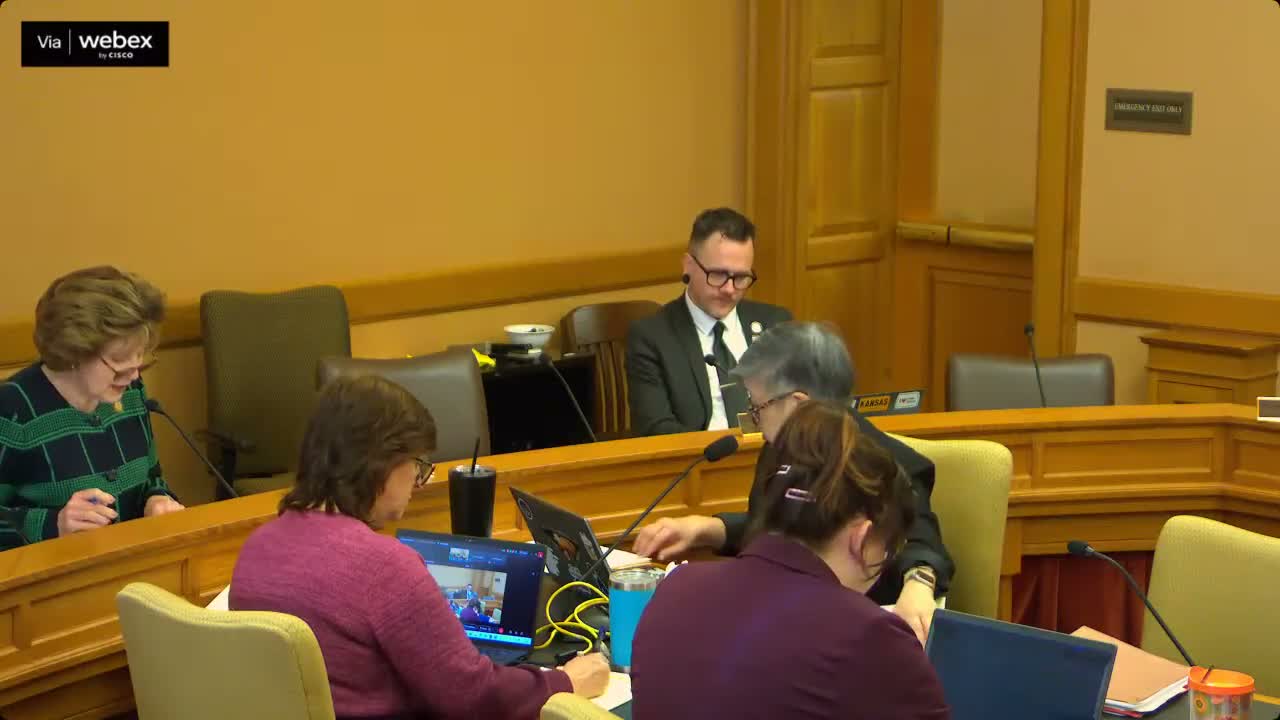
Summary
Senate Bill 412 would add a duty for conservators to notify non-parties, including financial institutions, of court orders affecting conservatee assets after a complaint about a bank not receiving a freeze order; sponsors and the Office of the State Bank Commissioner discussed scope and asked for narrower drafting on who counts as a 'non-party.'
The Senate Committee on Financial Institutions and Insurance took testimony on Senate Bill 412, which would amend the probate code to require conservators to notify non-parties — specifically including financial institutions — of any court order commanding performance or safekeeping of a conservatee’s assets.
Brock Rayler, general counsel for the Office of the State Bank Commissioner, described a recent complaint that prompted the proposal. Rayler said a joint account with rights of survivorship allowed a third-party withdrawal while two account holders were under conservatorship and that the bank had no knowledge of a judge’s freeze order. "The judge determined that excusable error existed," Rayler said, and the office closed the complaint because the bank lacked notice; Rayler said the bill would address situations where judicial orders were not provided to financial institutions.
Senators pressed on statutory language. Senator Gossage asked whether the term "non-party" is too broad; Rayler acknowledged the phrase could be broad and said the conservator is best placed to notify financial institutions. Senator Warren and others urged tighter drafting and guidance so conservators know which accounts and institutions must be notified; Rayler said the office would work offline with sponsors to narrow and clarify the language.
Committee members also noted practical complexities — joint-account survivorship, lockboxes and brokerage or annuity accounts — and expressed interest in an amendment limiting the duty to financial institutions or otherwise providing clearer instructions. The committee recorded written proponent testimony from Kelly Banswell of the Bankers Association and closed the hearing on SB 412 with no opponents listed in the transcript.
No committee vote or formal action on the bill appears in the transcript; conferees offered to help draft narrower language to address senators’ concerns.