
Senate tax committee hears bill to create 5¢/gallon E15 retailer tax credit; proponents say it supports farmers and consumers
Get AI-powered insights, summaries, and transcripts
Subscribe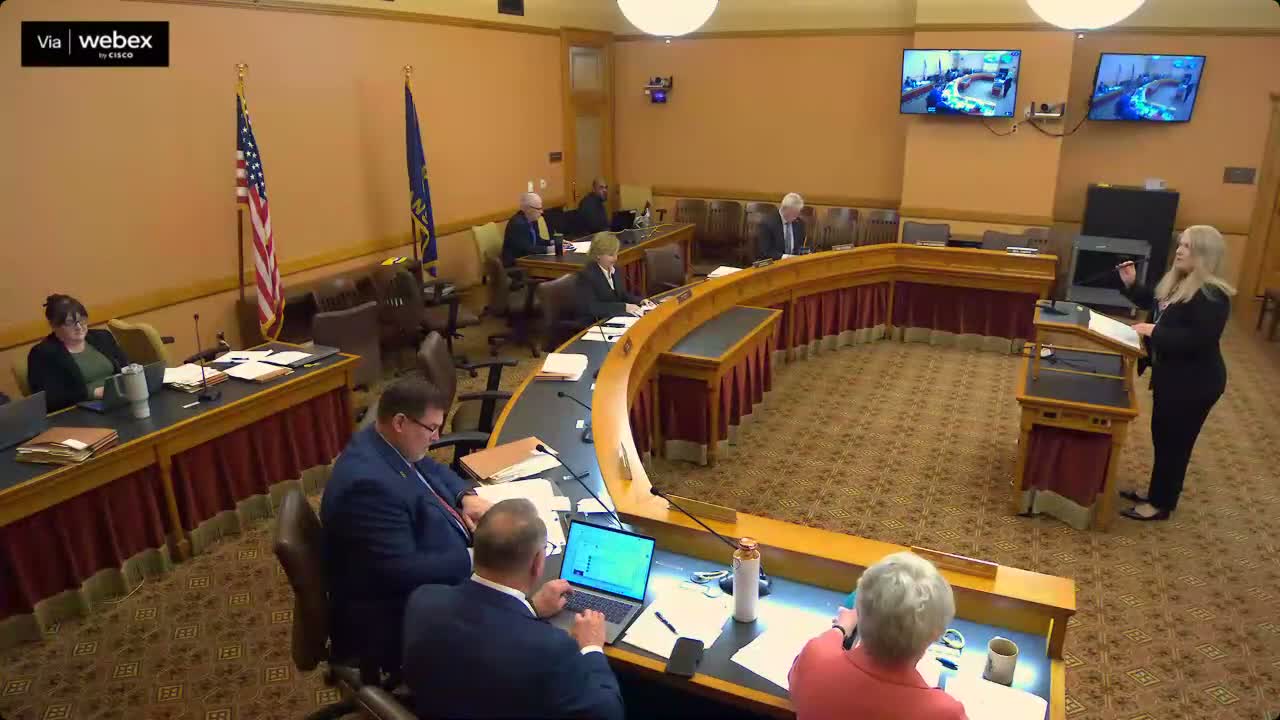
Summary
Senate Bill 498 would repeal an older alternative-fuel credit and create a retailer income-tax credit of 5¢ per gallon for E15 and higher blends from tax years 2026–2031, capped at $2.5 million per year; supporters told the Senate Tax Committee the incentive offsets upfront retailer costs and boosts demand for Kansas corn and sorghum.
The Senate Tax Committee heard testimony on Senate Bill 498, which would discontinue an existing alternative-fuel income tax credit after tax year 2026 and add a five-year retailer credit worth 5¢ per gallon for sales of higher-ethanol blends (E15 or higher) dispensed through metered pumps. The bill would limit the new credit to tax years 2026 through 2031, make the credit nonrefundable, allow unused credits to carry forward (up to five years for the new credit), and cap total annual credits at $2,500,000.
Amelia, presenting the bill, told the committee the measure would amend KSA provisions to discontinue the current credit for expenditures on qualified alternative-fueled motor vehicles and fueling stations for tax years commencing after 12/31/2026 and would add the new retailer credit and related definitions. "The bill would also add a new income tax credit that you can find in new subsection H," she said during her opening summary.
Proponents said the credit addresses upfront capital costs for retailers that want to add E15 service. "There are structural infrastructure hurdles that exist—the actual pumps themselves, maybe some of the underlying tanks," said Randy Stuckey of Renew Kansas Biofuels Association, who testified the credit follows models adopted in neighboring corn-producing states and would help small retailers afford pump and tank upgrades. Stuckey also said the U.S. Environmental Protection Agency has approved E15 for model-year 2001 and newer vehicles, which he described as covering "over 95% of the cars on the road today."
Taylor Williamson of Kansas Corn Growers noted the market impacts the sponsors expect if blend rates rise: "A 1% increase in the blending percentage of ethanol leads to 16,000,000 additional gallons of ethanol or 5,700,000 bushels of corn," he said, arguing that greater ethanol use supports farm income and creates multiple revenue streams from ethanol processing. Travis G. (appearing for Poet) told the committee Kansas produced about 600,000,000 gallons of ethanol in 2024 and said proponents estimate the $2.5 million credit, if fully used, could translate into roughly $11,000,000 in consumer savings at the pump annually.
Witnesses emphasized the policy is intended as a time-limited incentive: proponents described a five-year program designed to induce retailers to invest in pumps and blending equipment, after which the market would sustain E15 sales through price competition. "Once a retailer does make that changeover from E10 to E15, E15 will sell itself on price," Randy Stuckey said.
Committee members asked several technical and fiscal questions. The chair noted the fiscal note was not prepared by staff present at the hearing and said the committee would follow up to obtain or update fiscal details. Senators asked about vehicle compatibility, fuel mileage, and differences in regional market saturation; witnesses responded that modern engines accommodate E15 and that availability varies by region, creating justification for targeted retailer incentives.
The hearing closed after proponents were excused and written testimony was noted. No committee action on SB 498 occurred at this meeting; the chair indicated staff would provide updated fiscal analysis as requested.
Next steps: the committee closed the public hearing on SB 498 and will wait for an updated fiscal note and any scheduled executive-action agenda before taking a vote.