
Senate committee approves SB 380 to curb utilities’ role in fast EV charging, adds 2031 review
Get AI-powered insights, summaries, and transcripts
Sign Up Free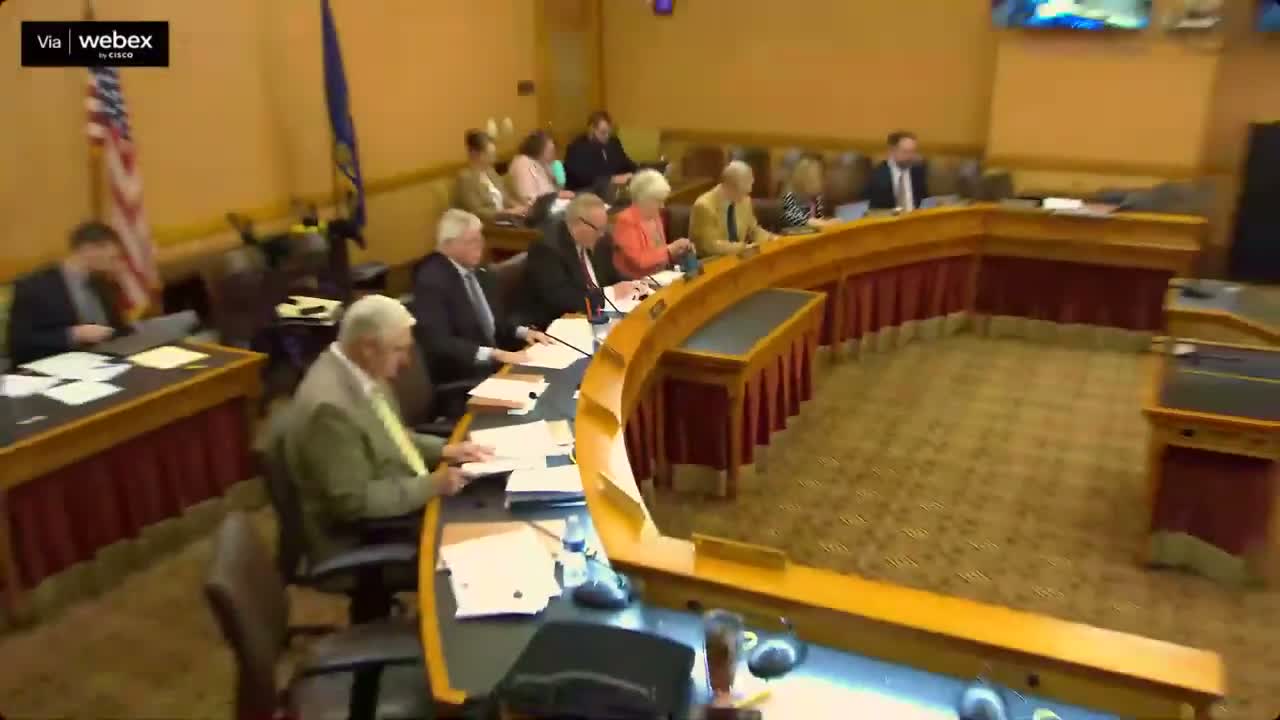
Summary
The Senate Committee on Utilities advanced Senate Bill 380 after adopting an amendment requiring a 2031 legislative review; the bill prohibits utilities from including new fast EV charging stations in the rate base, requires nondiscriminatory rates, and preserves exclusions for preexisting and employee/fleet chargers.
The Senate Committee on Utilities voted to advance Senate Bill 380, a measure that would limit how utilities may operate and recover costs for electric vehicle (EV) fast‑charging stations. The committee approved an amendment requiring a legislative review of the law during the 2031 regular session and advanced the bill as amended by voice vote.
Nick Meyer, assistant reviser in the Office of Revisor of Statutes, told the committee SB 380 “would enact the new law relating to electric vehicle charging services and charging stations.” Meyer said the bill would apply to retail electric suppliers and public utilities that provide, own, operate or maintain fast EV charging stations and would require those entities to “offer fair, reasonable, and nondiscriminatory rates” to other entities that provide similar EV services. He said the bill also would prohibit utilities from gaining an “unreasonable competitive advantage” by operating fast chargers and would bar utilities from including EV fast charging stations in their rate base so costs could not be recovered from ratepayers. Meyer noted exclusions for chargers constructed before the bill’s effective date and for employee or fleet charging stations.
Senator Clifford offered an amendment to require a review of the law by the Senate Committee on Utilities and the House Committee on Energy, Utilities and Telecommunications (or successors) during the 2031 regular session. As explained by Meyer, the amendment requires at least one public hearing during that review, solicits testimony from affected stakeholders and state agencies, and allows the committees to issue a summary of findings and recommendations for the legislature. Senator Francisco asked whether the language should require each committee to hold a hearing or allow a single joint meeting; the amendment author agreed to accept language permitting a joint hearing.
Following discussion, Senator Clifford moved the amendment and Senator Townsend seconded; the committee approved it by voice vote. Clifford then moved to advance SB 380 as amended; Senator Peterson seconded. Senator Bowser praised the bill as “a much better bill this year than it was last year,” noting apparent stakeholder cooperation and no recorded opponents. The committee advanced SB 380 as amended by voice vote; the record shows the chair announcing “motion carries.”
Members discussed additional amendments to be drafted for subsequent consideration. Senator Peterson said she would draft proposed deadlines for railroad responses tied to crossings—60 days for perpendicular crossings and 120 days for longitudinal crossings of one mile or less—and Senator Bowser said she plans to offer language requiring utility crews working near railroad tracks to follow Federal Railroad Administration safety standards. Senator Francisco urged committee members to coordinate potential amendment language to avoid duplicative filings and suggested revisiting the fee schedule to account for potential railroad costs such as flagging and staffing. Senator Thompson raised concern that some proposed response windows might be too short and suggested modest extensions could be necessary in practice.
The committee closed its business and adjourned with the bill advanced out of committee; further amendments and debate were anticipated when the measure returns for additional consideration.