
NVIDIA proposes Phase 4 Santa Clara office campus; neighbors raise concerns over height, noise and traffic
Get AI-powered insights, summaries, and transcripts
Subscribe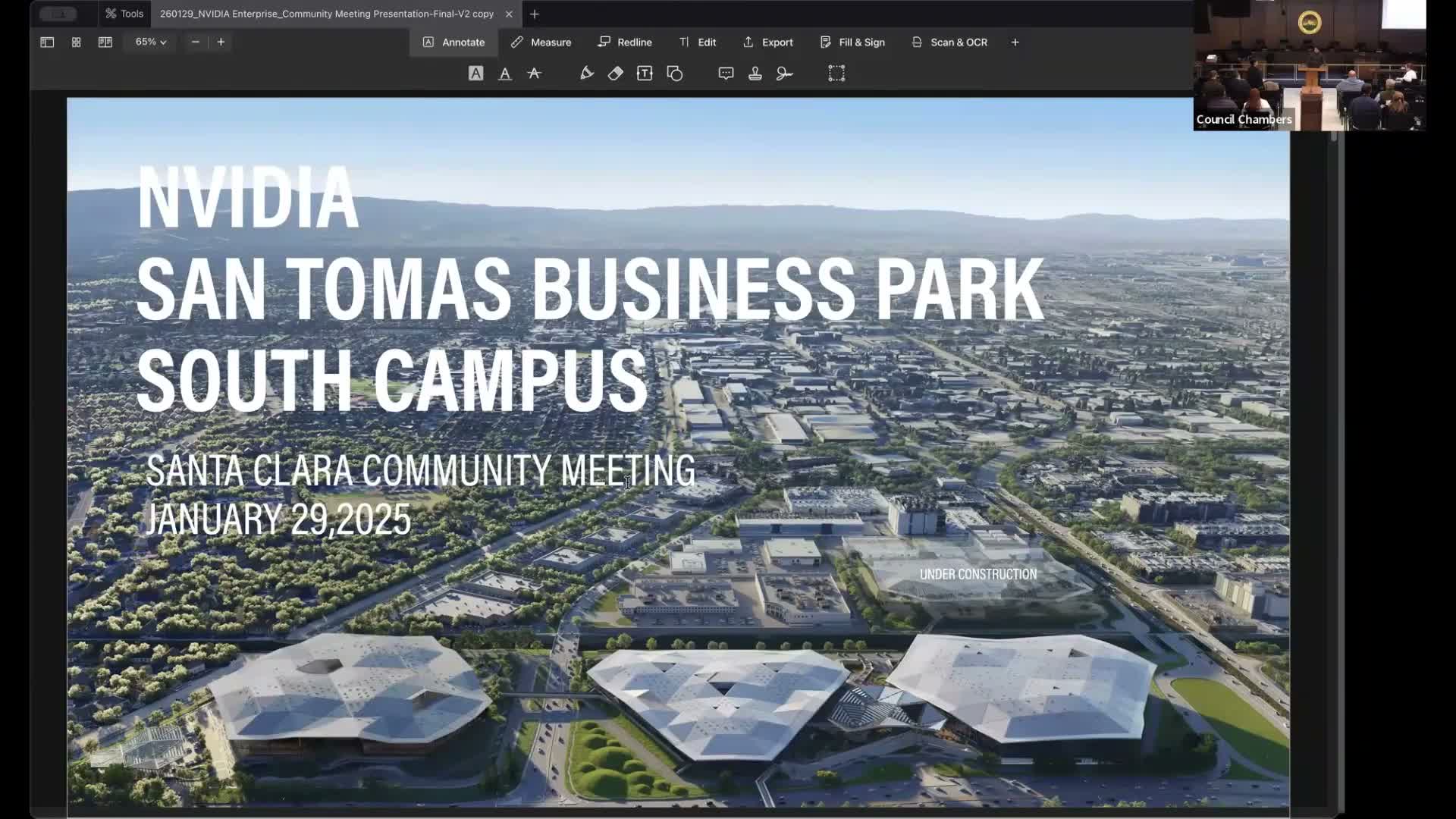
Summary
NVIDIA and its design team presented a proposed Phase 4 office expansion in Santa Clara — about 692,000 square feet with buried parking and LEED Gold goals — while residents pressed the company and city for limits on construction hours, dust and truck staging and asked for more renderings and tenant relocation help.
NVIDIA representatives and their design team presented plans for a Phase 4 office expansion in Santa Clara on the meeting’s opening, saying the development would add approximately 692,000 square feet of office, more than 2,000 parking stalls and aim for LEED Gold certification. Ryan Trinidad, NVIDIA campus development director, said the company has been in Santa Clara for more than 28 years and reaffirmed its commitment to stay and grow in the city.
Why it matters: The proposal prompted sustained neighborhood reaction at the community meeting, with residents citing potential loss of privacy, nighttime construction noise and traffic impacts from an estimated 3,000 employees. City and developer representatives said a traffic analysis, conditions of approval and a construction management plan will limit hours, control dust and route truck traffic, but residents pressed for specific limits and more visual materials showing impacts from backyards.
Design and site details: Eugene Lee of Gensler described the project as a campus of three-story office buildings with an undulating roofline designed to relate to the existing Phase 1 and Phase 2 buildings. The team said existing lot coverage is about 35% and the proposed coverage would be about 45%; parking will be one level at grade and two levels below grade to free surface area for landscaping. The presenters said the project would recycle water for landscaping and pursue LEED Gold standards. The site borders San Tomas Expressway to the north, a creek along the western boundary and rail tracks to the south.
Neighborhood concerns: Several neighbors, including Charlie Tonda and Donata Makuta of Roosevelt Circle, described the planned building as "massive," saying it will "loom" into backyards and reduce privacy. Tonda said the peak height under the requested variance would be about 124 feet and asked for renderings from the backyard perspective. Makuta asked for strict limits on demolition and construction hours, controls on reversing beepers and assurances about asbestos and dust containment during demolition.
Developer and city responses: Presenters said the building's highest point is set back more than 300 feet from the property line and that additional landscaping and window-height treatments are planned to reduce perceived intrusion. They said the city will perform a traffic analysis and that conditions of approval typically set limits on construction hours, noise and hazardous‑materials removal; a construction management plan will also specify truck routing and staging. The presenters encouraged residents to report violations to the city’s posted construction contact for the project.
Tenant impacts and timing: Wesley Lau, representing a tenant organization at the proposed site that provides mentorship to students, said their lease will not be renewed and asked whether a short-term extension could be arranged. NVIDIA said it hopes to start construction in about a year and offered to follow up with Lau about options. Presenters estimated excavation and construction will take about 24–30 months because parking is being buried.
Other community input: Some nearby business owners expressed support, saying the project could raise property values and bring economic activity; Richard Scott and Francisco both praised the design and said the zoning has long allowed R&D/office uses. Chat participants and residents reiterated requests for posted contact info, restrictions on using Roosevelt Circle for staging or turnarounds and, jokingly, asked whether affected households could receive stock grants.
What’s next: Developers said entitlements and the city’s approvals will determine final conditions, and they offered to meet individually with residents to review setback diagrams and share additional renderings and schedule details. City planner Rebecca Bustos said staff will read chat questions and coordinate follow-up.
The meeting closed with developers remaining available for follow-up and an invitation for residents to submit contact information for direct outreach.