
Kansas committee hears bill to require dentists' explicit opt-in for virtual credit card payments
Get AI-powered insights, summaries, and transcripts
Subscribe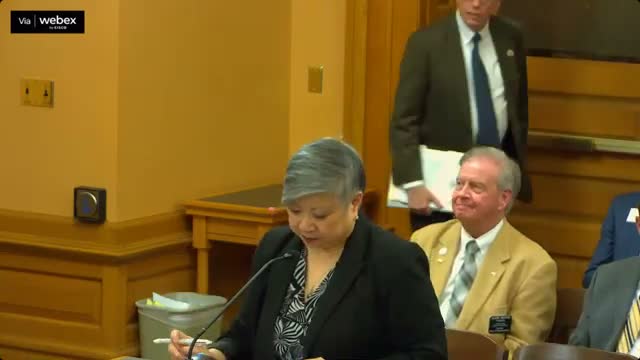
Summary
Proponents told the Committee on Insurance that House Bill 2564 would close a loophole by requiring dentists to expressly opt in to receive claims payments by virtual credit card or electronic funds transfer, preventing insurers from automatically re-enrolling providers into fee-bearing payment methods.
House Bill 2564, discussed at a Committee on Insurance hearing, would require dental benefit plans (or their contracted vendors or health maintenance organizations) to obtain a dentist’s clear, written agreement before paying claims by credit card or electronic funds transfer, with the dentist’s selected method remaining effective until changed or a new contract is executed.
The bill’s proponents—Kevin Robertson, executive director of the Kansas Dental Association, oral surgeon Dr. Dan Nielsen of Great Plains Oral Surgery in Olathe, and Dr. Nathan Niles of Arkansas City—told lawmakers the measure closes a loophole created after a 2022 law aimed at letting dentists opt out of virtual credit card payments. "The bill is really quite simple," Robertson said, summarizing that the proposal aligns with recent NCOIL language and ADA concerns. Robertson and other witnesses said insurers had been re-enrolling dentists in virtual card payments through contract or automated processes, imposing transaction fees of roughly 2–5 percent.
Dr. Nielsen described the operational impact on dental offices, saying staff spent months per practice to opt out of virtual card payments and that offices then saw insurers opt them back into fee-bearing payment methods after short contract windows. "We estimate, and it's conservative, a 150 plans took us 6 months, to get that done," Nielsen said, adding that card-processing fees and extra staff time to reconcile payments erode practice revenue and patient service time. Nielsen and others said preferred alternatives include direct deposit or checks that do not impose processing fees on providers.
Committee members asked whether the problem is limited to dental plans; Robertson said the complaint has been most common in dentistry but that other health groups have considered similar fixes. The witnesses also described how insurers’ automated contract renewals—sometimes on 90-day cycles—created a "revolving door" in which previously filed opt-outs lost effect when insurers treated subsequent contract periods as new agreements.
No in-person opponents appeared; the chair noted written opponent testimony was on file. The hearing closed after proponents’ testimony and committee questions. The bill’s sponsors characterized the change as a technical fix intended to preserve the legislature’s original intent from 2022 and to reduce administrative burdens and unanticipated costs for providers.
Next steps: the committee closed the public hearing; the transcript does not record a committee vote on HB2564 during this session.